
Varanasi: Four members of a Tamil Nadu family have submitted DNA samples at Banaras Hindu University for possible comparison with skeletal remains linked to soldiers killed at Ajnala after the 1857 uprising.
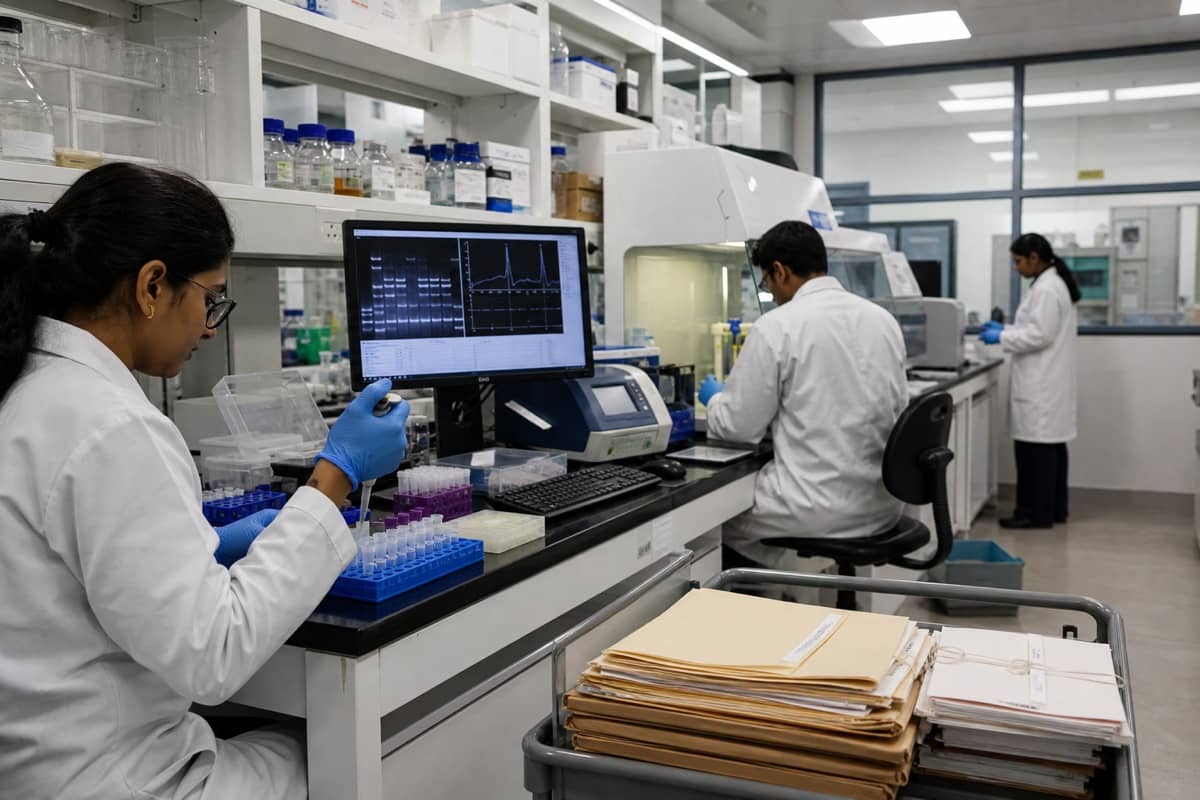
The family travelled from Santhur village in Tamil Nadu’s Krishnagiri district to BHU’s Gyan Lab. Karthikesh Rajaram Tiwari, his wife, his brother and his sister-in-law provided samples after the family said an ancestor may have been among the men killed at Ajnala.
The submission is an investigative step, not proof of a biological match. Researchers will need to assess the family’s documented lineage, the quality of available genetic material and whether a scientifically reliable comparison can be made.
The Ajnala remains were recovered from a well in Punjab and are associated with soldiers of the 26th Native Bengal Infantry who were captured and killed in 1857. Scientific work involving DNA and isotope analysis has previously examined the geographical origins of the men.
Earlier research analysed genetic material from 50 samples and isotope evidence from 85 specimens. The findings indicated links to the Gangetic plains rather than the Punjab region, broadly matching historical accounts that the regiment included men from areas now within Uttar Pradesh, Bihar, West Bengal and Odisha.
That regional finding does not identify individual soldiers. Establishing a specific family relationship after more than a century and a half requires careful genealogy, suitable reference samples and statistical genetic analysis. Researchers must also account for degraded DNA and the possibility of incomplete family records.
A meaningful comparison may require samples from more than one branch of a family and evidence showing an unbroken relationship with the claimed ancestor. Even then, a result may indicate only a probability or shared lineage rather than a unique individual identification.
The Tamil Nadu family’s visit adds a new reference set to the continuing identification effort. Any result should be made public only after scientific validation; until then, the claimed ancestral connection remains unconfirmed.
The process also requires sensitivity because the remains represent people killed in colonial violence and families seeking historical recognition. Scientific testing, archival research and decisions about memorialisation should therefore remain transparent and respectful.
BHU researchers have played a role in the broader effort to combine forensic science with historical records. The work may eventually help restore names and family histories to men long represented only by collective remains.
Tamil Nadu Family Gives DNA Samples at BHU in Ajnala Identification Effort
By Harsh Mehra2 min read
About the author
Harsh Mehra
Harsh Mehra reports for Dalimss News. 1208 stories on Dalimss News, most often in India.
Related Stories

India
Gurugram art dates: canvas early-bird price ends tonight
India
TMC Varanasi jobs: walk-ins and October application deadlines
India
Gurugram reports 28,394 tonnes of bajra purchases
India
IIVR Varanasi courses: October deadlines and who can apply

India
MG Windsor Indulge at Rs 17,99,800: check the Pro alternative

India