AI-Linked Traffic Warning Screen Begins Pilot at Sohna Chowk
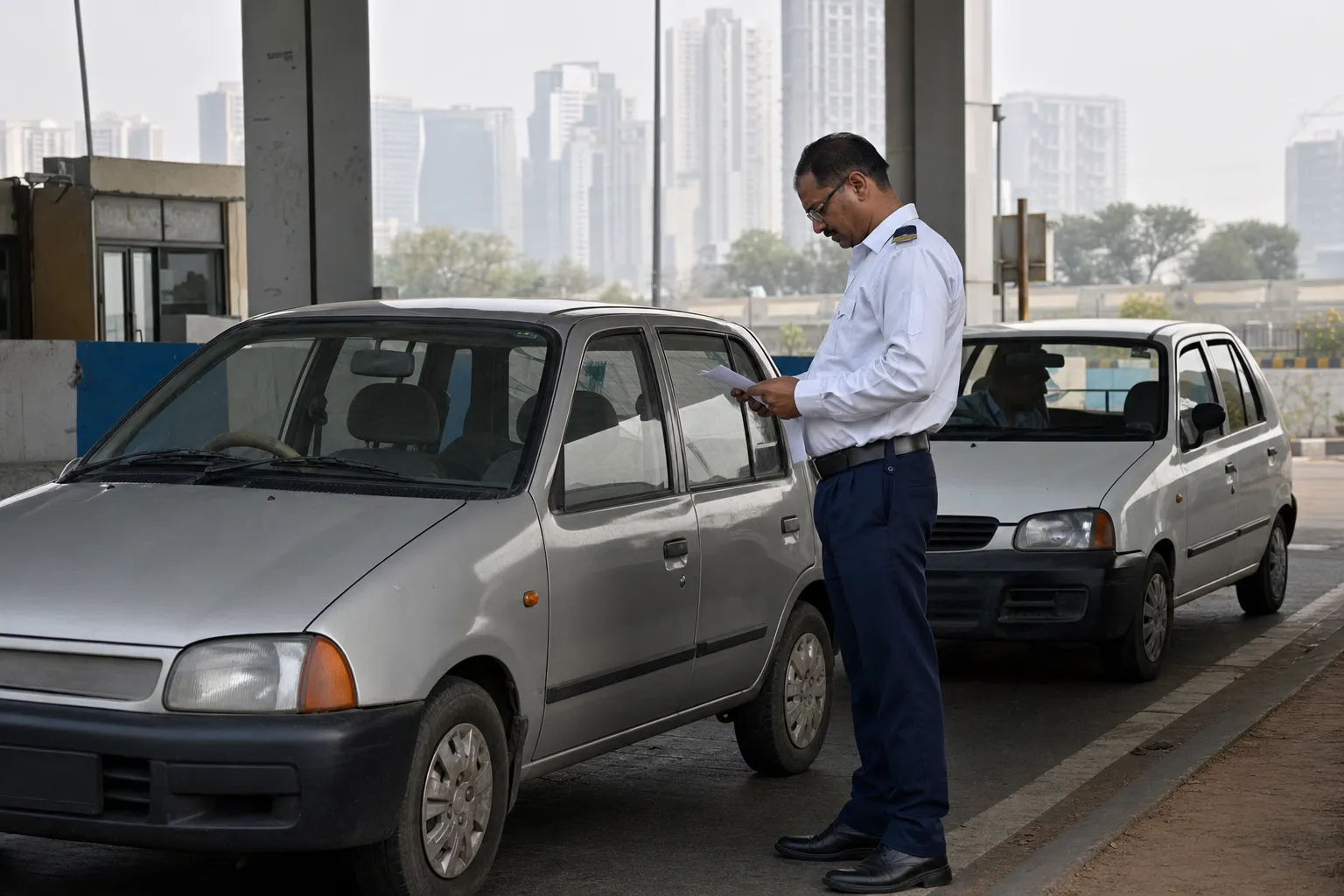
A new screen at Sohna Chowk is turning a routine traffic signal into Gurugram's latest road-enforcement experiment. The AI-linked warning system is designed to scan vehicle number plates and display selected compliance information, including a newly issued e-challan, earlier pending challans and unpaid penalties. Traffic police are treating the installation as a pilot rather than a citywide launch.
The LED display has been installed through a corporate social responsibility initiative. According to traffic officials, cameras at the junction will read a registration plate and connect it with available enforcement records. The system is also intended to flag an expired pollution-under-control certificate or registration detail. When a fresh e-challan is generated, the registration number can appear on the screen along with the number of previous challans and the outstanding amount.
That is a more public form of warning than the text messages and online portals vehicle owners usually rely on. The police expectation is straightforward: an immediate, visible reminder may prompt motorists to take a pending fine or expired document seriously. If the Sohna Chowk trial is found useful, similar screens may be considered at other large and busy junctions in the city.
The pilot, however, should be judged on more than how eye-catching the screen looks. Number-plate recognition can misread characters because of glare, mud, non-standard plates or a camera angle. Ownership records may also lag after a vehicle is sold. A visible alert therefore cannot replace the official challan record, a proper notice or the motorist's right to challenge an incorrect entry.
Privacy is another practical test. The stated purpose is traffic compliance, not the display of a motorist's name, address or other personal information. Keeping the screen limited to the registration identifier and relevant vehicle-status fields would reduce unnecessary exposure. Clear retention rules and a simple correction channel would make the technology easier for residents to trust.
Sohna Chowk is a logical place for the trial because it handles dense, mixed traffic and gives police a large sample of vehicles. But the junction's congestion also means that a driver should not have to slow abruptly or look away from the road to read a crowded screen. Information has to be brief, legible and positioned without becoming a distraction of its own.
The system does not by itself catch every violation, nor does its installation prove that crashes or rule-breaking have already declined. Those outcomes need before-and-after data: plate-read accuracy, the number of alerts that led to payment or document renewal, false matches and any measurable change in violations at the junction.
For now, motorists should continue checking challans through official channels instead of waiting to see their vehicle on a public display. The strongest version of this pilot would combine a timely nudge with accurate records and a fair correction process. Gurugram has no shortage of smart-city hardware; what residents will watch is whether this screen produces dependable enforcement after the novelty fades.
Sources and reporting
Based on Gurugram traffic-police information about the pilot installation and the data fields intended for display.
Related Stories
Mayor Announces Stricter MCG Drive Against Stray Cattle
Court Stays Further Eviction at Baba Balak Nath Temple Complex
HRERA Orders Rs 19.28 Lakh for Delayed Sector 82 Flat Possession

STF Arrests Agra Man With Six Country-Made Pistols in Sohna
FDA and Police Seize Codeine Syrup, Alprazolam in Sohna Raid