Fifty-Three Varanasi Schools Enter Upgrade Plan As District Library Takes Shape
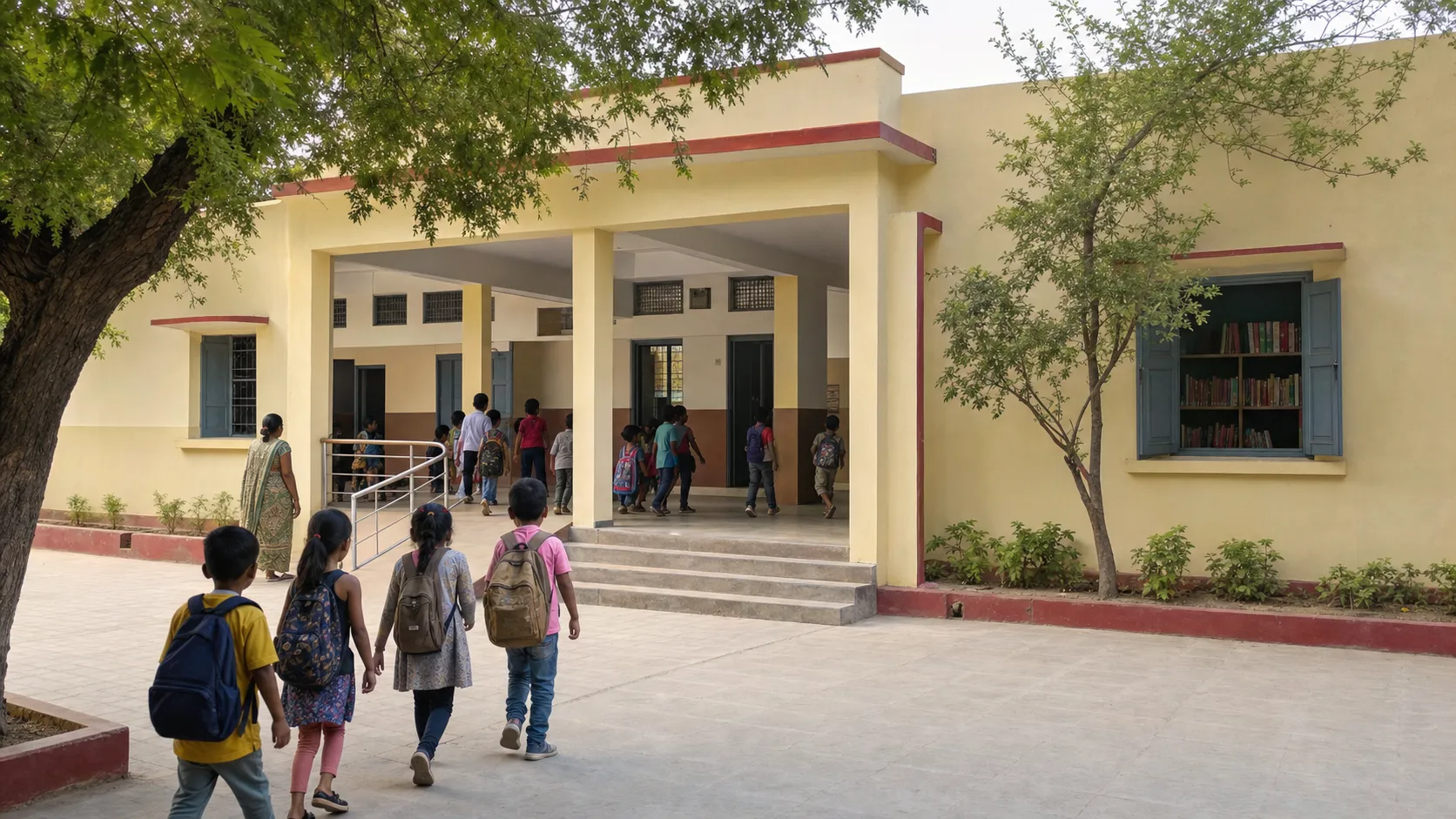
VARANASI: Fifty-three school buildings inside Varanasi’s municipal boundary are set to be formally inaugurated after upgradation, while a new district library and the rejuvenation of government high schools at Jakhini and Lalpur are moving to the foundation-stone stage.
The education package, part of Sunday’s development programme, is large enough to affect several neighbourhoods but still short on publicly available school-wise detail. Parents will want to know what “upgradation” means at each campus. A repaired boundary wall and fresh paint are useful; they are not the same as safe classrooms, working toilets, drinking water, ventilation and reliable electricity.
In Varanasi’s older municipal schools, space is often tight and buildings have accumulated changes over decades. Good renovation should begin with structural and fire-safety checks, then address roofs, wiring, staircases and exits before cosmetic work. Toilets must have water and cleaning staff. A computer room without connectivity or a science room without consumables quickly becomes a locked display.
The district library could fill a different gap. Students preparing for board examinations, entrance tests and government recruitment often depend on crowded private reading rooms. A public library with long, dependable hours can offer a quieter alternative, particularly for young people whose homes do not provide study space. Its usefulness will depend on books, newspapers, internet access, seating and staff—not simply the size of the building.
Location and access details have not been set out in the main announcement. The eventual plan should consider bus and bicycle access, safe evening movement and facilities for readers with disabilities. A library that closes before college students return home, or one that is difficult to reach without a private vehicle, will underserve the audience that needs it most.
The proposed work at Jakhini and Lalpur government high schools deserves similar specificity. Rural and edge-of-city campuses have different needs from central schools. Laboratories, sports grounds, boundary security and transport conditions should be assessed with teachers and students who use the site every day.
There is also a maintenance question. Schools can look transformed on handover day and begin slipping within a year if repair budgets, cleaning and water supply are not assigned. Publishing the scope of work for each of the 53 buildings would allow school management committees to track what was promised.
Varanasi’s education conversation often centres on BHU, coaching institutes and competitive admissions. Municipal and government schools are where the city’s learning system is tested much earlier. A functioning toilet, a dry classroom in the rains and a library seat after school are not glamorous interventions, but they shape attendance and concentration.
Sunday will give the programme its public launch. The stronger next step would be a school-by-school list with completed works, pending items and contact details. Families should be able to inspect the upgrade without needing to decode a ceremonial announcement.
Sources and reporting
Based on the Prime Minister’s Office project note for the 2 August 2026 Varanasi development programme, reviewed on 1 August 2026.
Related Stories

AISA’s Azamgarh meeting calls for teachers, laboratories and libraries
ABVP’s DUSU manifesto puts student housing and academic services on the campaign agenda

AP TET 2026 results released; check the correct examination cycle
Supreme Court Sets January 1 Deadline to Vacate Unsafe Chintels Flats
Human Rights Panel Orders Citywide Audit of Gurugram Drains