
VDA Says 83 Layouts Approved in Six Months Under Seven-Day Process
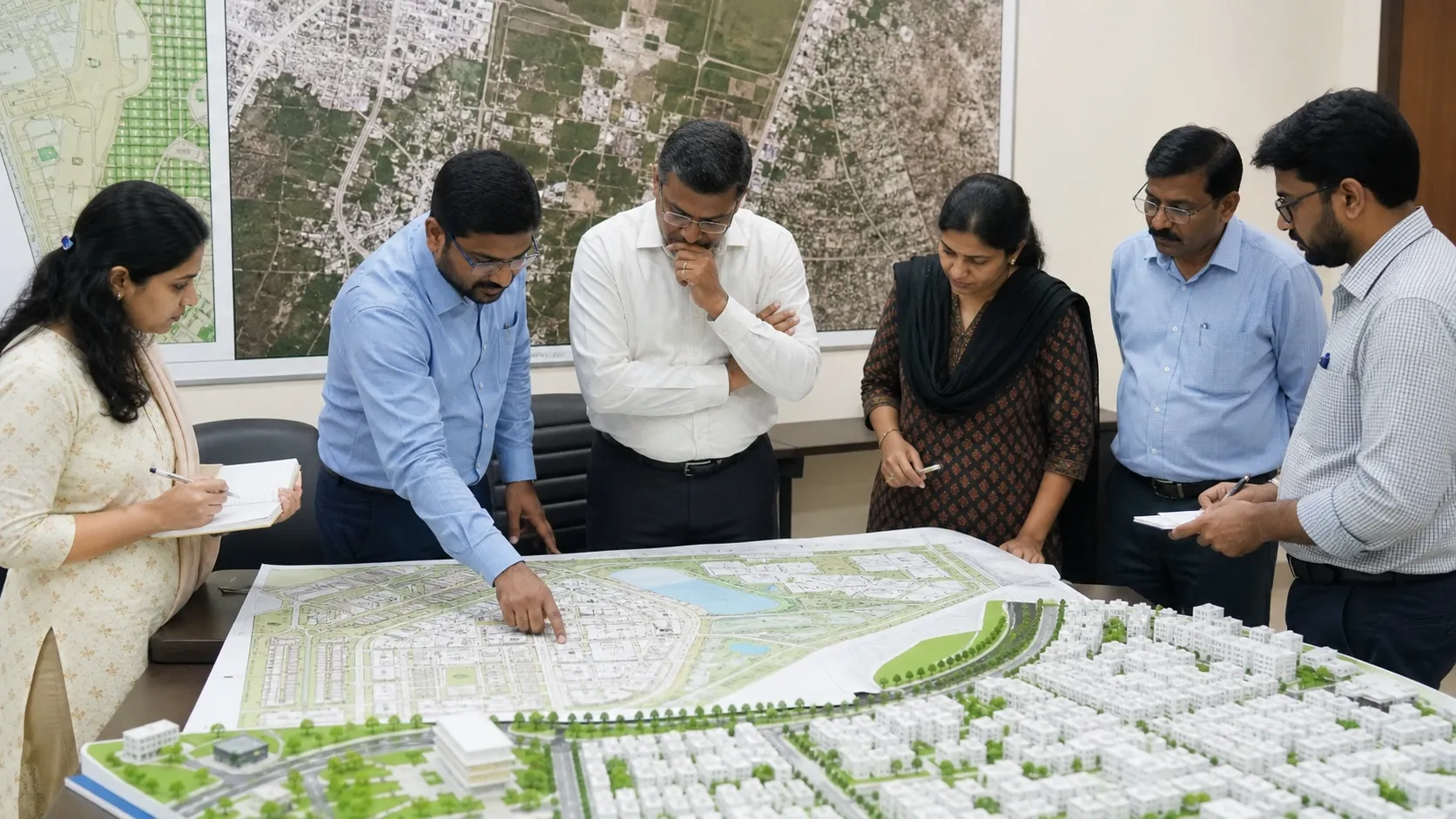
The Varanasi Development Authority says it approved 83 layouts over the past six months after moving compliant layout and building-plan applications through a seven-day process. The authority presents the figure as evidence that formal planning permission can be faster and more predictable, giving landowners and developers less incentive to bypass scrutiny.
A layout approval is not a minor paperwork step. It establishes how plots connect to roads, where parks and public facilities sit, and whether land use allows the proposed development. When agricultural land is divided and sold without those checks, buyers can discover years later that a house plan cannot be sanctioned or that the promised access road was itself sold as a plot.
VDA says buyers in an approved layout do not have to pay development charges again when seeking sanction for an individual building plan. That can reduce cost, but only when the project truly appears in the authority’s records and the plot matches the sanctioned map. A brochure carrying the phrase ‘VDA approved’ should never substitute for checking the approval number, boundaries and current status.
The authority’s statement points to recurring problems in unauthorised plotting: narrow lanes, missing parks, absent civic land and road widths too small for traffic or emergency vehicles. These are not abstract planning defects. They affect whether a fire tender can enter, whether rainwater drains, whether children have safe open space and whether utilities can be installed without repeatedly cutting a lane.
A seven-day service standard is welcome if it applies to complete, compliant files and does not weaken technical review. The authority should publish average processing time, reasons for rejection and a searchable map of approved layouts. That would help citizens distinguish genuine speed from a claim based only on the quickest cases, and it would reduce dependence on agents.
Eighty-three approvals suggest that formal development is possible at scale, but approval is only the beginning. Roads, parks and shared facilities shown on paper must be delivered and protected after plots are sold. Enforcement against unauthorised colonies should be consistent and paired with clear buyer education. In a fast-growing Varanasi, the safest property decision is the one verified in public records before money changes hands.
Prospective buyers should also inspect the site itself. A sanctioned map cannot reveal every ground-level issue: whether an approach road is physically open, drains connect, boundary markers match the sale deed or high-tension lines cross the plot. Legal title checks and an independent survey remain necessary. Regulatory approval reduces one class of risk; it does not turn a property purchase into a risk-free transaction.
Sources and reporting
Based on the Varanasi Development Authority’s public statement dated July 17, 2026. Buyers should independently verify each project and approval record.
Related Stories

Festive Special to Gorakhpur Gets Gurugram Halt
Fifth Accused Held in Rs 25 Lakh Sector 47 Robbery

Courier Staffer Booked Over 105 Missing One8 Returns

HC Sets Rs 50 Lakh Costs for Accused's Return to India

Gurugram Swimmer, 20, Crosses English Channel