Kathak Students Take the Stage at Varuna Sandhya in Cantonment’s Nehru Park
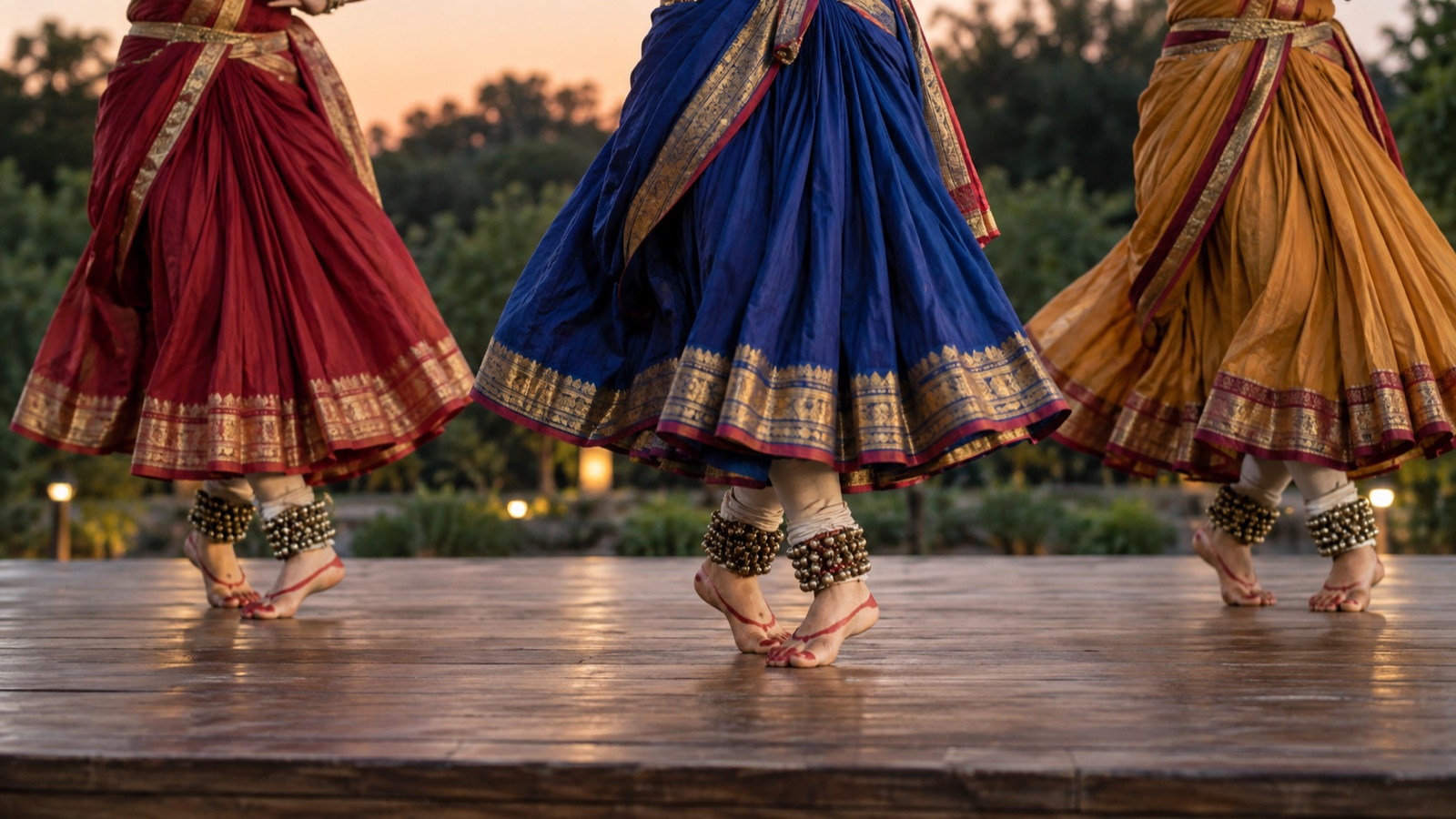
VARANASI: A group Kathak presentation by students of Dr Mamta Tandon featured at Varuna Sandhya in Nehru Park, Cantonment, on Saturday, September 12. The programme brought a classical dance performance into a public park setting, with the participating students sharing the stage.
Mandavi Singh, Shruti Jaiswal, Vyakhya Srivastava, Ratna Sharma, Ananya Kharwar and Vishalakshi Tripathi were among the dancers. The Cantonment Board and the Deepika Cultural Society of India organised the evening with support from India Tourism.
Society president Ajay Gupta presented certificates to the performers. Tanuj Kumar Varma conducted the programme, and Cantonment Board engineer Sachin Kumar Srivastava delivered the vote of thanks.
The account of the evening identifies the performers and organisers but does not provide a complete repertoire. Specific compositions, rhythmic cycles and the order of individual pieces have therefore not been attributed to this presentation.
Reading the footwork
For someone encountering Kathak for the first time, its language is easier to follow when movement and rhythm are considered together. The Centre for Cultural Resources and Training describes precise footwork, turns and rhythmic patterns among the form’s defining features.
Ankle bells make the dancer’s movement audible. A sequence can build around repeated beats and return to a point of resolution, allowing the audience to listen as well as watch. Spoken rhythmic syllables also form part of Kathak’s performance vocabulary, although the exact accompaniment varies between presentations.
Narrative expression is another side of the form. Gesture and facial expression can communicate a character or an episode, while other passages concentrate on movement itself. These are features of Kathak generally, rather than a claim about which sections the students performed on Saturday.
A shared stage for learners
Group presentation adds a visible relationship between individual preparation and collective timing. One dancer’s turn or pause can be understood alongside the movement of the others. The audience need not recognise every technical term to notice how a group begins, moves and arrives together.
That makes a park programme a useful point of entry into an art form sometimes encountered only through a brief online clip. A full presentation allows the eye to follow the relationship between feet, posture and expression instead of isolating a single spectacular spin.
Saturday’s event also placed the students’ names alongside their teacher’s, recognising performance as part of learning rather than treating the group as an anonymous backdrop. Certificates marked their participation in the evening.
For Varanasi’s cultural calendar, the reported development is this completed Nehru Park programme. No date for the next Varuna Sandhya edition, booking arrangement or future cast was announced in the available account; any further schedule will need confirmation from the organisers.
Sources and reporting
Account of the Varuna Sandhya programme held on 12 September 2026; background on Kathak from the Centre for Cultural Resources and Training. No direct interview was conducted.
Related Stories

Ramkatora Gathering Remembers Former Varanasi MP Shyam Lal Yadav

BHU’s Anviti Art Contest Imagines Future Worlds; Sanjay Mishra Listed for September 15 Closing

267 Children Join On-the-Spot Essay Competition at BLW’s Bal Niketan

BHU Opens Sunday Gita Discourse Series for New Academic Session
Thatheri Bazaar Ganesh Festival Opens September 14 With Five-Day Programme