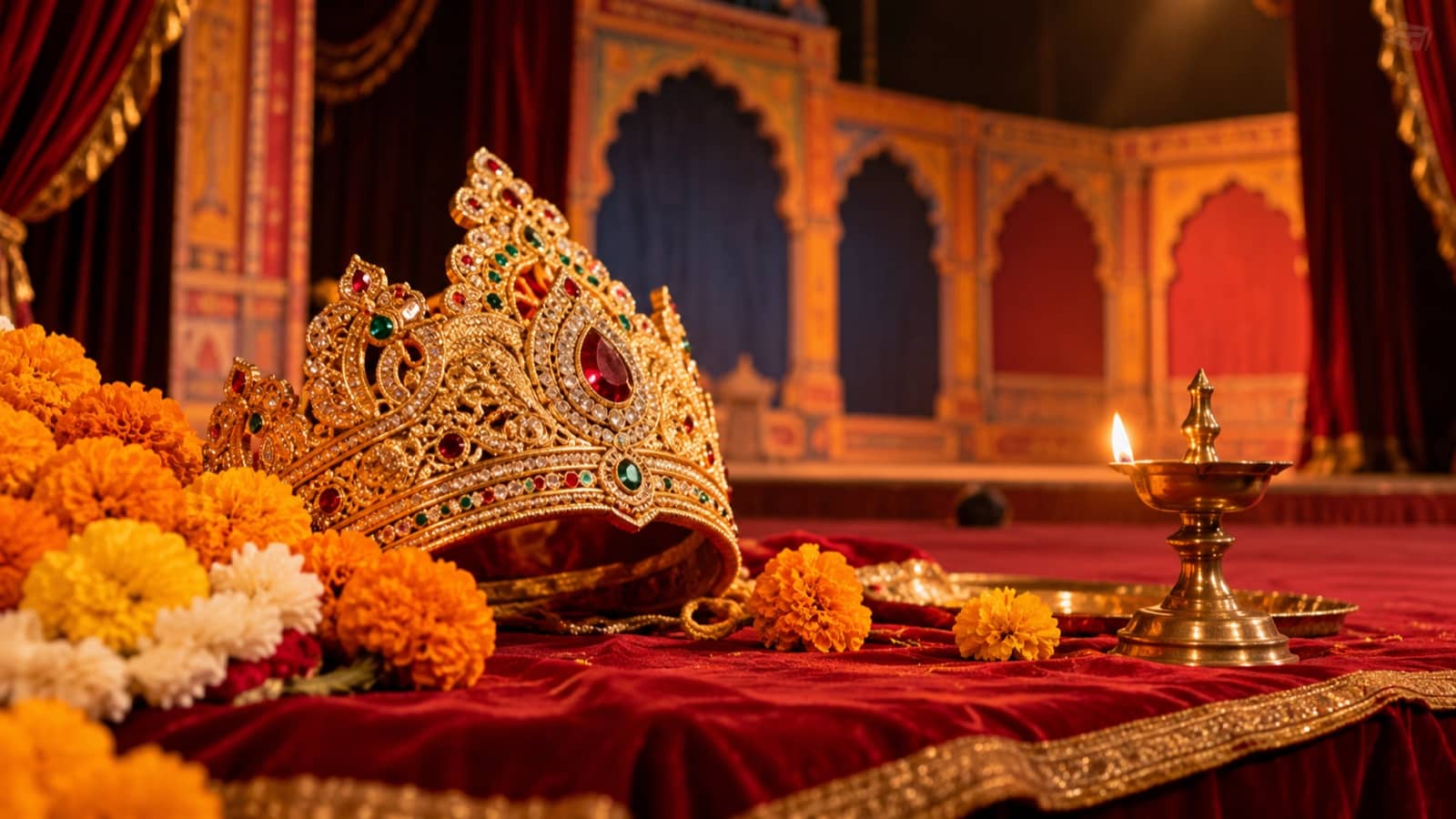
VARANASI: Rama and Sita took their places on the throne at the Ayodhya setting in Visheshwarganj on Saturday, October 24, as Shri Adi Ramlila Lat Bhairav Varuna Sangam Kashi presented the coronation episode of its performance cycle.
The scene began with worship and a havan involving the characters of Rama, his brothers and Sita. Ramlila vyas Pandit Dayashankar Tripathi conducted the havan before the performance moved towards the royal throne and the act of coronation.
The character of Guru Vashishtha performed the rajtilak amid recitation by Brahmins and flower offerings. The audience responded with devotional calls as the story shifted from the trials of exile and conflict towards Rama’s return to kingship.
The coronation scene unfolds
The character of Kaushalya performed aarti, while figures representing Shiva, Brahma and other deities offered praise within the enacted sequence. These were episodes of the Ramlila narrative, presented through performers and ritual action at the neighbourhood’s designated setting.
Characters including Vibhishana, Sugriva, Hanuman, Jambavan and Nishadraj were also present with their groups. Their appearance brought Rama’s companions into the coronation tableau, connecting the final royal scene with the wider story followed during the performance cycle.
The significance of a rajyabhishek scene lies in that narrative transition. A throne and crown are its visible centre, but the sequence also gathers family, allies and the religious preceptor around the returning ruler, turning a familiar episode into a collective public observance.
Volunteers recognised after the performance
Committee office-bearer Kanhaiya Lal Yadav, an advocate, joined Shyam Sundar Singh, Kewal Kushwaha, Nikhil Tripathi, Shivam Agrahari and others in offering garlands during the programme.
Workers who had contributed to the Ramlila were honoured. Devotees also received prasad at a bhandara, extending the occasion beyond the principal stage action to include the people who supported the event and those who had gathered to watch it.
UNESCO describes Ramlila as a performance tradition bringing together scenes of the Ramayana through song, narration, recitation and dialogue. Its description also recognises the community contribution involved in costumes, masks, make-up and other preparations, alongside the performers in the main roles.
That wider context is relevant to Saturday’s recognition of volunteers. A neighbourhood Ramlila is sustained not only by its central characters, but by the practical work that allows successive episodes and their associated observances to take place.
The October 24 programme belonged to the Lat Bhairav tradition at Visheshwarganj. It was a separate local performance from other coronation or Bharat Milap observances elsewhere in Varanasi, with its own venue, participants and closing community activities marking this stage of the season.