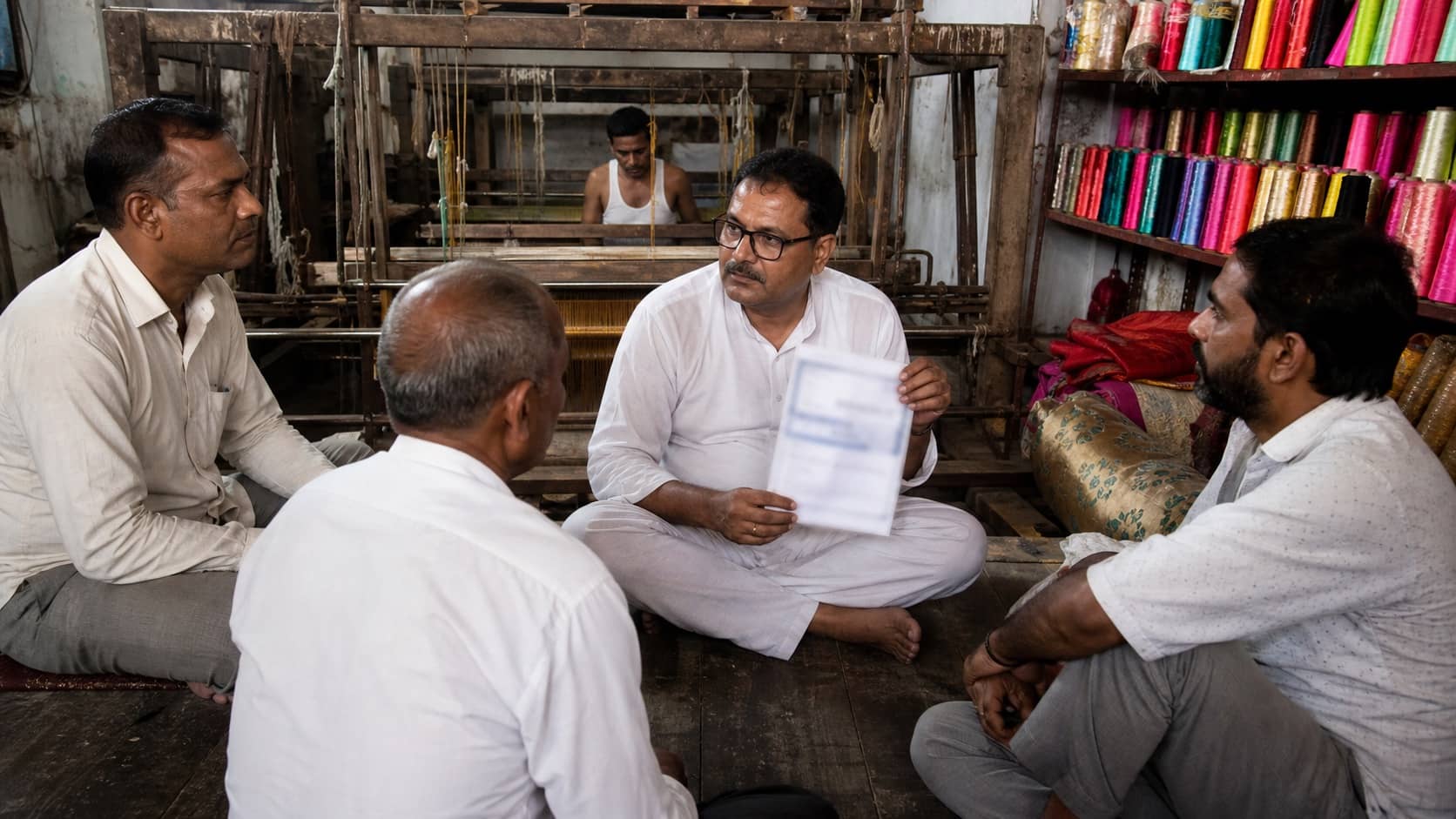
VARANASI: Weaver representatives from several Uttar Pradesh districts met at Gulista School in Kazisadullapura on Sunday and renewed their demand for a lower flat electricity rate for loom-based units. The gathering sought a tariff of ₹400 per kilowatt, including taxes, against what participants described as a current effective burden of about ₹860 per kilowatt.
The Bunakar Udyog Mandal meeting also asked for old power arrears to be removed and for the maximum sanctioned load under the relevant arrangement to rise from five kilowatts to 75 kilowatts. Representatives said the five-kilowatt ceiling does not reflect the requirements of workshops operating multiple looms, lighting, fans and associated equipment.
Participants linked electricity costs with a broader crisis in the weaving economy. They said some skilled workers are leaving the trade or migrating, while owners under pressure have sold machines below value. The claims reflect concerns raised in earlier meetings in Lucknow, Kanpur and Varanasi, and representatives said the matter had also been discussed with state MSME minister Rakesh Sachan.
Hafiz Moinuddin chaired Sunday’s session, which brought together members from different weaving centres. The group’s central argument was that predictable power pricing would allow small units to estimate costs before accepting orders. Volatile or high bills are particularly difficult for businesses working on thin margins and long production cycles.
Banarasi textiles are sold as premium craft, but much of the production chain operates through small family units. The retail price of a sari may bear little resemblance to the cash available to the person running the loom after silk, zari, design, credit and intermediary costs are deducted. Electricity is one of the few recurring inputs over which a small weaver has almost no bargaining power.
A higher load ceiling could help units formalise their actual consumption instead of splitting connections or limiting equipment. At the same time, any revised subsidy would need clear eligibility rules so that benefits reach working looms rather than unrelated commercial users. Metering, verified unit lists and periodic review would make the scheme easier to defend publicly.
The demand for waiving arrears is more complicated. A blanket write-off can offer immediate relief but may not solve the billing structure that created the dues. Weaver groups and the power department would need to separate disputed bills, penalties and genuine consumption, then design an affordable settlement for viable units.
No new tariff decision was announced at the meeting. The representatives plan to continue pressing the state government for negotiations. Their request deserves a detailed response because it concerns more than one bill: it is about whether a globally recognised craft can remain a workable livelihood in the neighbourhoods where it was built.