VARANASI: Speakers at a Sunday seminar in the Banaras Locomotive Works institute hall called for a broad public movement to restore the Assi to its original identity as a river and tributary of the Ganga. The programme was organised by Vishwa Vedic Sanatan Nyas and brought together advocates, academics and residents concerned about the waterway’s condition.
Advocate Saurabh Tiwari, the principal speaker, argued that the Assi should not be accepted merely as a drain. He urged the government and district administration to take concrete steps for conservation and revival. Other participants said residents across Kashi would have to organise around the river’s survival and uninterrupted flow if restoration is to remain on the public agenda.
Dr Suman Rao conducted the programme and Abhinav Verma delivered the vote of thanks. Nyas national president Dr Santosh Singh welcomed the guests. Hiralal Mishra Madhukar, Santosh Tiwari, Dr Hansraj Singh, Reena Singh, Rakesh Sharma, Pankaj Singh and Poonam Yadav were among those present.
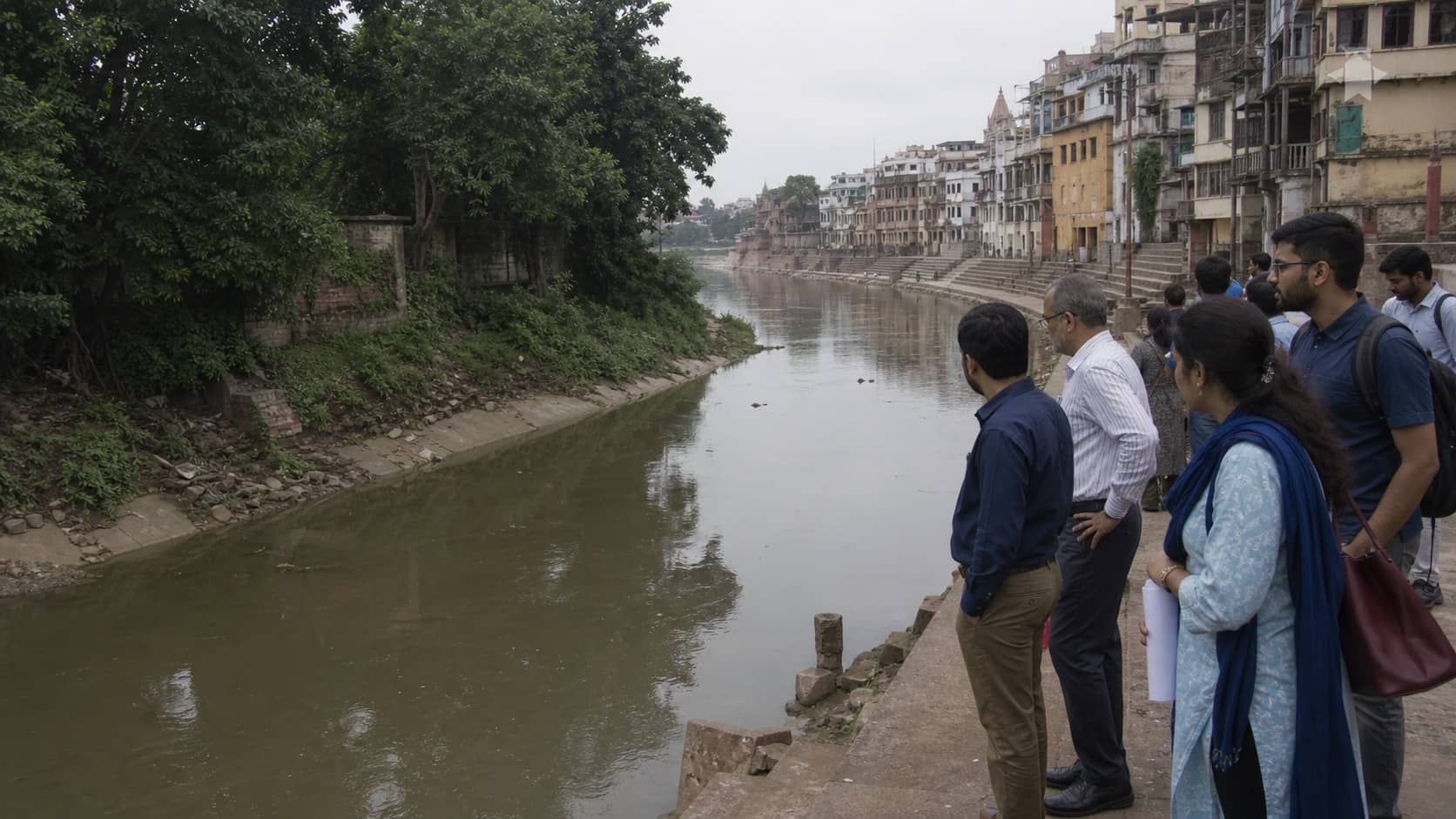
The name Varanasi is conventionally linked to the Varuna and Assi, yet the two waterways occupy very different places in the modern city. The Assi’s visible stretches have been narrowed, channelled and burdened by sewage and construction. For many residents, the waterway is encountered as infrastructure rather than as a living river system.
Changing that condition requires more than a symbolic cleaning drive. Authorities would need to map the original channel and floodplain, identify sewage inflows, maintain environmental flow and prevent fresh encroachment. Any intervention must also account for homes and businesses that have grown around the present alignment over decades.
A public movement can keep attention on the issue, but it works best when demands are measurable. Ward-level maps, water-quality results, the number of drains intercepted and a timetable for treatment would allow citizens to track progress. Without such data, restoration can be reduced to periodic slogans and short stretches of cosmetic work.
The Ganga connection makes the Assi more than a neighbourhood concern. Untreated flow entering a tributary ultimately affects the larger river, while a restored urban channel can improve drainage, reduce stagnant water and create ecological space. The benefits are civic and environmental even for residents who do not use the religious vocabulary of the campaign.
Sunday’s seminar did not announce a government project or a funded restoration plan. Its contribution was to insist on a different starting point: the Assi should be understood as a river with an ecological history, not simply as a drain to be covered or ignored. The next test is whether that argument produces a documented proposal and sustained public scrutiny.