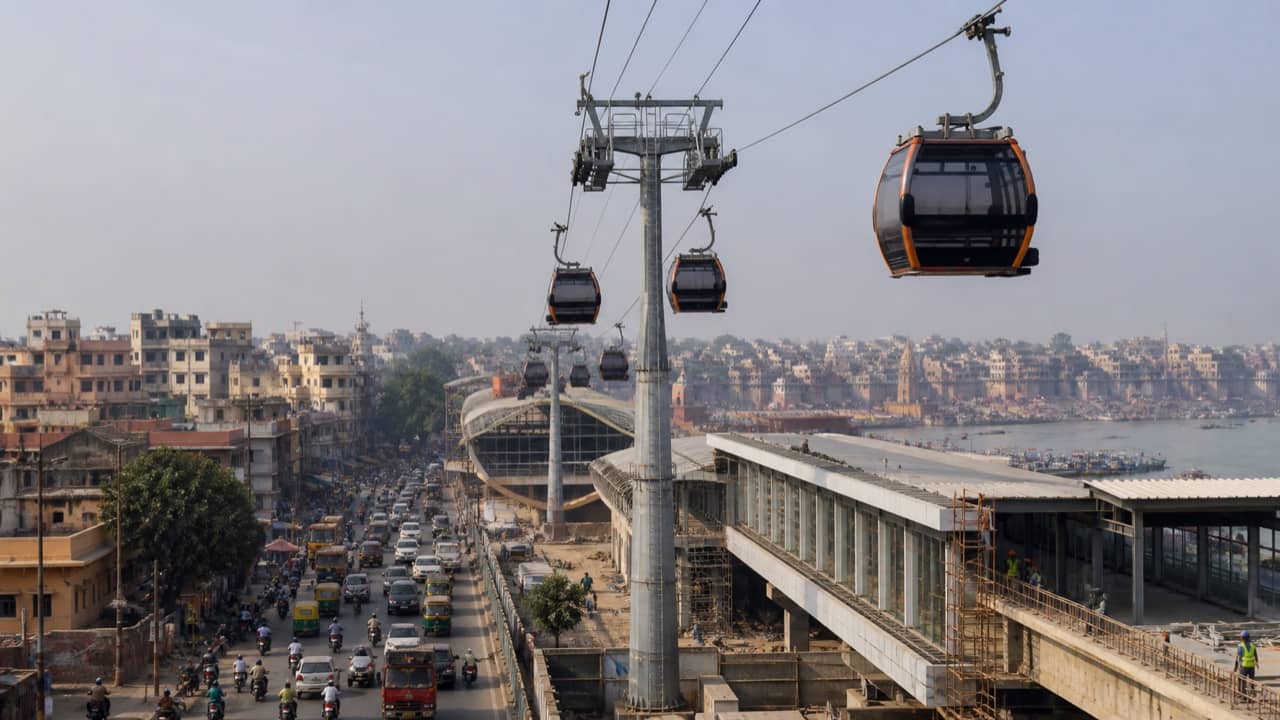
VARANASI: Construction teams on the city's urban ropeway have been asked to close pending work with November as the completion target, following a multi-site inspection by divisional commissioner S Rajalingam. The Cantt Station-Rathyatra stretch has completed construction work, while alignment checks and finishing tasks continue beyond it, according to officials quoted in the report.
Rajalingam reviewed Godowlia, Girjaghar and Rathyatra stations with project director Pooja Mishra and executing agencies. Boarding and deboarding facilities are being developed at Godowlia, and the control room at Girjaghar is nearing completion. The commissioner examined safety arrangements, artwork and finishing and directed agencies to accelerate pending items and coordinate rather than allow one contractor's delay to hold up another package.
A station can look nearly finished from the road while critical work remains behind the hoarding. Power systems, evacuation routes, communications, passenger barriers, fire arrangements and software must function together before the public enters. Alignment checking is especially important because a ropeway is a continuous system: a small error at one support or station can affect ride quality and safety across the line.
The new deadline is an update to a project already covered through load trials and earlier construction milestones. It is not the same as an opening date. Completion is followed by testing, certification, staff drills and permission to carry passengers. Public communication should preserve those distinctions so residents do not plan journeys on the basis of an aspirational month.
If commissioned reliably, the ropeway is intended to connect the railway-station side of the city with crowded central areas and reduce some pressure on roads. Its actual benefit will depend on interchange: safe walking routes, feeder transport, clear fares and space for queues. A fast aerial ride loses value if passengers spend the saved time negotiating a blocked station entrance.
Officials should publish a station-by-station progress dashboard and identify which approvals remain after civil work. Emergency simulations should include power failure, passenger illness and evacuation from a stopped cabin. Disability access needs to be tested with users, not verified only through drawings. Transparent milestones will make any revision to November easier to explain.
Residents should treat construction zones as active work sites and should not enter for photographs. When trial cabins are visible, that does not mean rides are open. The credible launch signal will be an official commissioning notice with operating hours, fares, station access and safety certification. Until then, November is a work target rather than a passenger promise.
This report is based on a Times of India account published on 26 August 2026. Dalimss News independently rewrote, checked and contextualised the available information. Where a claim, allegation or opinion is attributed to a person or institution, it remains their statement; no on-scene reporting or independent interview is claimed.