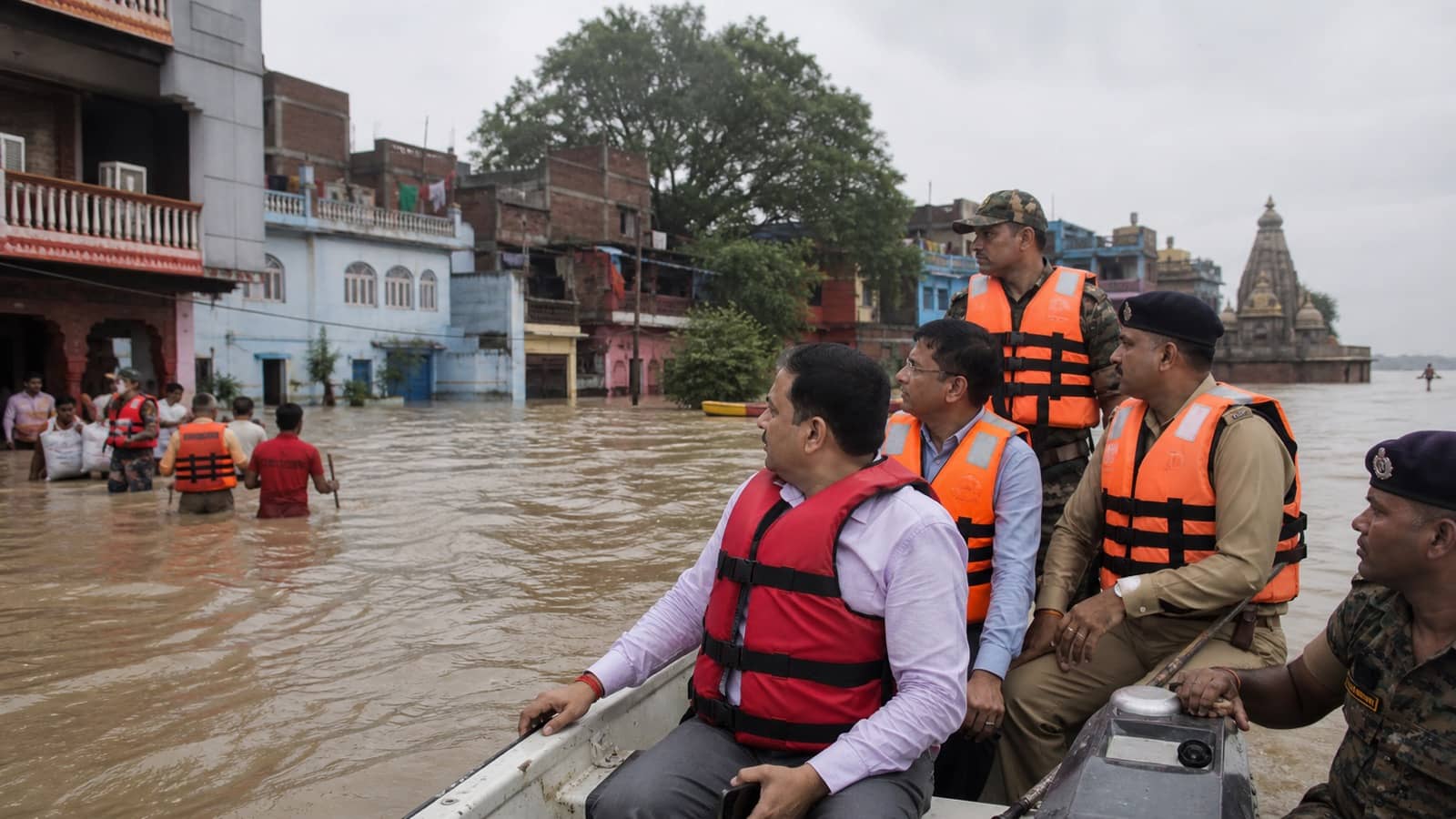
VARANASI: Police Commissioner Mohit Agarwal and District Magistrate Satyendra Kumar inspected flood-affected parts of Varanasi by motorboat as the administration shifted its focus from river readings to the practical needs of families living with water inside their neighbourhoods.
The officials reviewed low-lying areas along the Ganga and Varuna and visited relief arrangements serving displaced residents. According to a Varanasi bureau report, teams were directed to maintain the distribution of food and essential supplies, secure vulnerable stretches and respond to problems involving accommodation and children's education at camps.
The inspection matters because flood management can fail in the distance between a control-room instruction and a submerged lane. A camp may be listed as open but lack dry bedding; cooked food may arrive without drinking water; a rescue boat may reach the main road but not the last cluster of houses. Travelling through affected areas allows officials to see where access has narrowed and where residents remain reluctant or unable to leave.
Senior officers from the police commissionerate, water police, NDRF and civil administration accompanied the visit. That mix is necessary in Varanasi, where the response covers both river rescue and dense urban neighbourhoods. Police manage barricades and movement, revenue teams identify affected households, municipal workers address sanitation, power officials isolate unsafe lines and health staff monitor illness and medicine requirements.
Residents in camps should be given a clear point of contact for missing rations, medical support, sanitation, lighting or family tracing. Pregnant women, people with disabilities, patients who require regular medicines and older people living alone need to be identified early rather than after a crisis. Children also need safe spaces away from traffic, cooking areas and the water's edge.
The official visit does not by itself resolve every complaint, and the real test will be follow-through after teams move on. Supply registers, camp occupancy and evacuation requests should be updated daily because conditions can change within hours. If water recedes, mud, contaminated wells, damaged wiring and mosquito breeding become the next set of risks.
The administration appealed to residents not to enter flooded or waterlogged areas unnecessarily. That warning is especially relevant for people arriving to film the scene or take photographs. Rescue routes must remain open, and private vehicles should not block approaches used by boats and ambulances.
For families who have left home carrying only a few bags, reassurance has to be concrete: a dry place to sleep, predictable meals, medicine, information and a safe route back when conditions permit. The motorboat inspection established the chain of command on the water. What follows on land will determine how effective the relief operation proves to be.