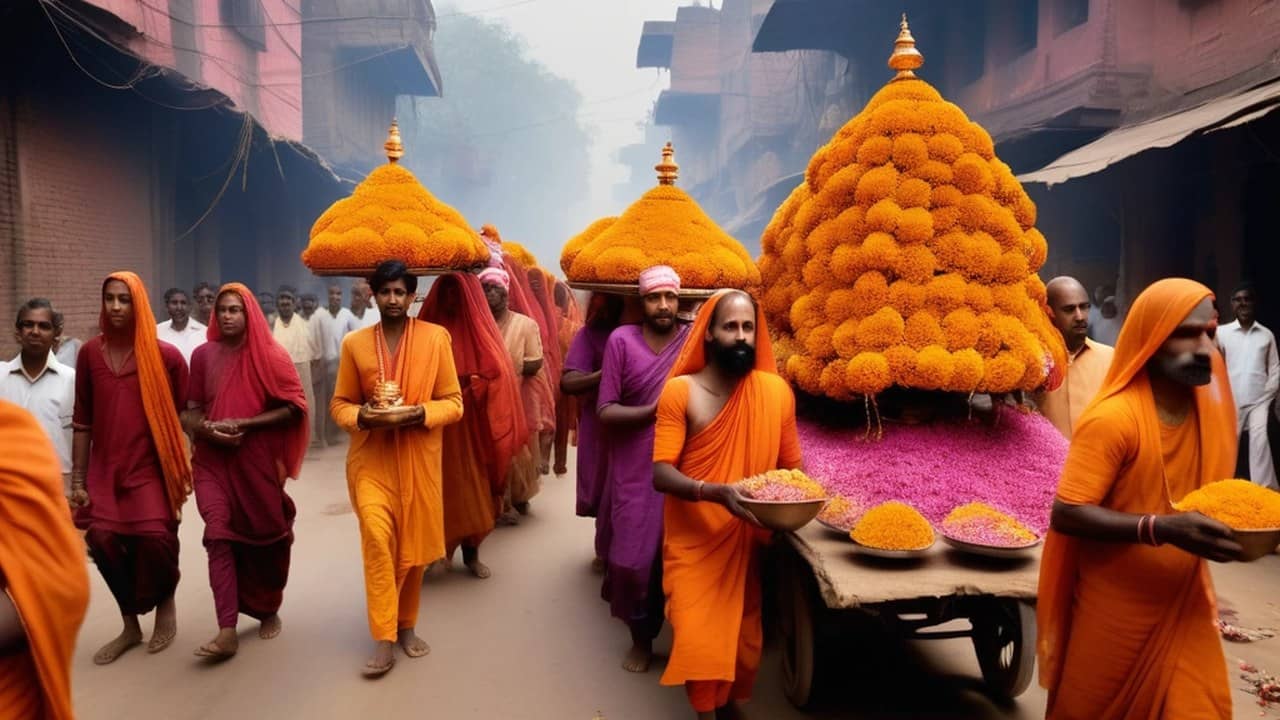
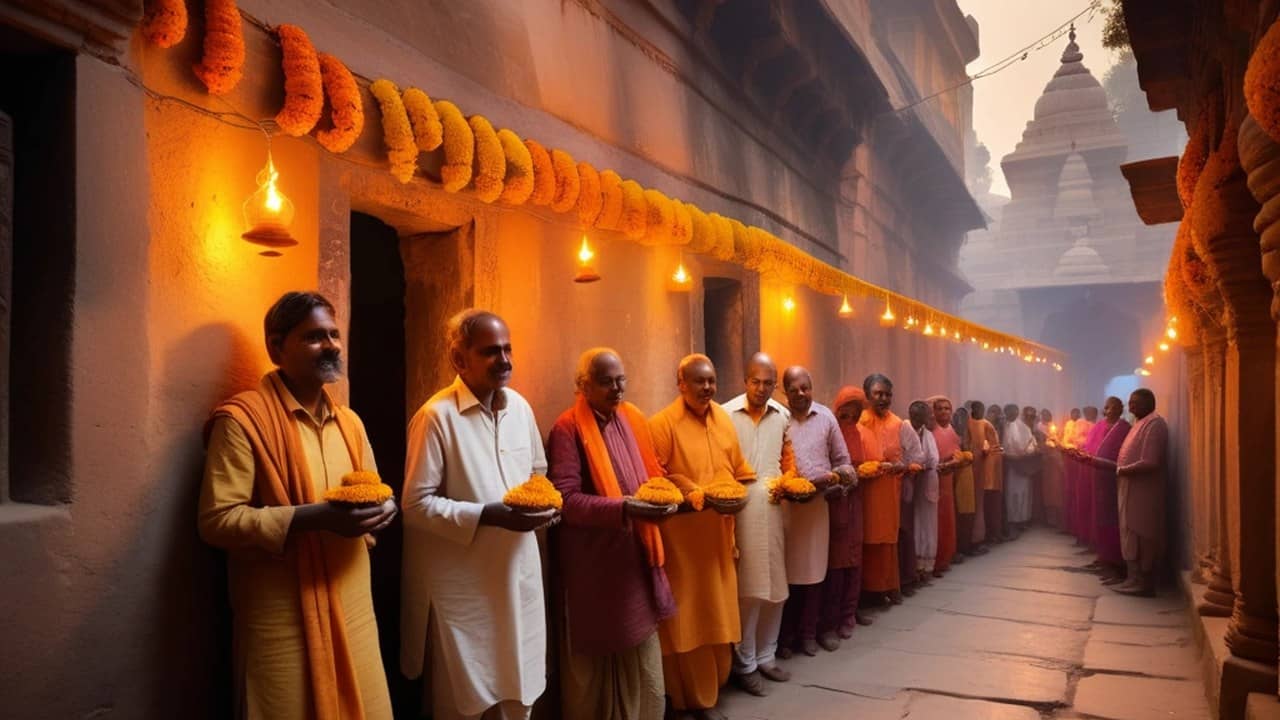
Shardiya Navratri begins on Sunday, 11 October, and runs for nine days until Monday, 19 October, with Vijayadashami on Tuesday, 20 October. In Kashi the nine days have a fixed pattern of their own. Each day belongs to one form of the goddess, and each form has a shrine in the old city that families visit in a set order, known as the Nava Durga darshan. This guide lays out the order, the lanes you will walk and what to plan for.
The order below is the one traditionally followed in Kashi. Temple committees and priests set their own opening hours and queue arrangements, and these can change from one day to the next, so check with the shrine on the day if timing matters to you.
Day one, Sunday 11 October, is Shailputri, whose shrine is at Marhia Ghat in the Alaipura area. On the first day families also install the sacred pot at home to begin the nine-day observance. The panchang gives the auspicious time for that, and a local pandit can tell you the exact minute for your household.
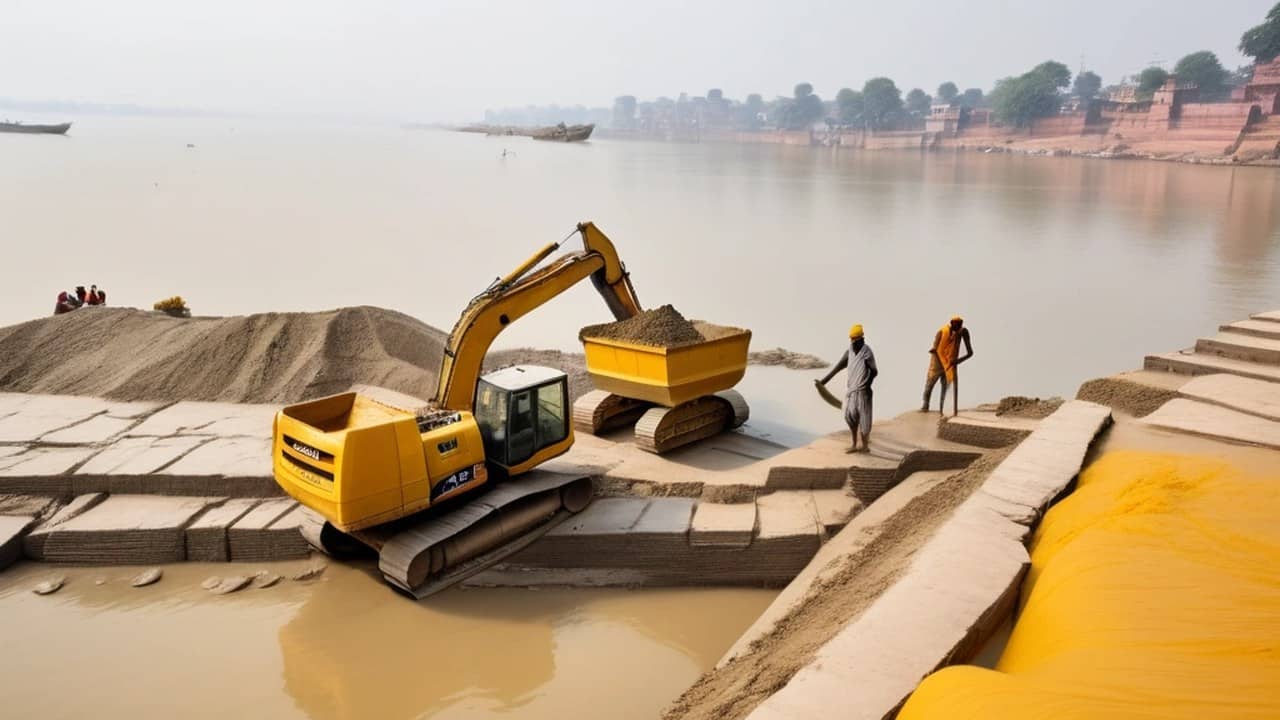
Day two, Monday 12 October, is Brahmacharini, worshipped at Balaji Ghat near Panchganga. This is a riverside shrine, and silt left by the falling Ganga has made the approach to several ghats slippery. Older visitors should go slowly.
Day three, Tuesday 13 October, is Chandraghanta, whose temple stands in the lane of the same name in the Chowk area. This is a narrow stretch of the old city where vehicles do not go in, so plan to walk the last part. Day four, Wednesday 14 October, is Kushmanda, whose shrine is the well-known Durga Kund temple in the south of the city. It is the Nava Durga shrine most residents of Varanasi already know, and it is reachable by road.
Day five, Thursday 15 October, is Skandamata, worshipped at the Jaitpura area near the Bageshwari Devi temple. Day six, Friday 16 October, is Katyayani, whose shrine is the Atma Vireshwar temple at Scindia Ghat. Like Balaji Ghat, this is a riverside stop with steps, and the lanes leading to it are tight.
Day seven, Saturday 17 October, is Kalratri, worshipped at Kalika Gali near Dashashwamedh. The lanes around Dashashwamedh are among the most crowded in the city on an ordinary evening, and the stretch is walk-only, so allow extra time. Day eight, Sunday 18 October, is Mahagauri, whose temple is the Annapurna temple in Vishwanath Gali, in the same lanes that lead to the Kashi Vishwanath temple. Day nine, Monday 19 October, is Siddhidatri, worshipped at Siddhamata Gali near Golghar in the Maidagin area.
Which shrines are on a road and which need a walk through lanes is the first thing to sort out before you set off. Durga Kund can be reached by road, and so can the Jaitpura area, though the last stretch may still be on foot. Chandraghanta, Kalratri, Mahagauri and Siddhidatri sit inside the narrow lanes of the old city, and the last stretch has to be walked. Footwear is left outside at all of them, so carry a small bag, and the stone floors can be cold in the early morning.
The best time to visit is early. Many old-city temples open before dawn for the morning aarti, and the first hours after that tend to be quieter than the afternoon or the evening, when families come from work. Some shrines close for a short while around midday for the offering of food to the goddess, so do not plan a visit in the middle of the day without checking first.
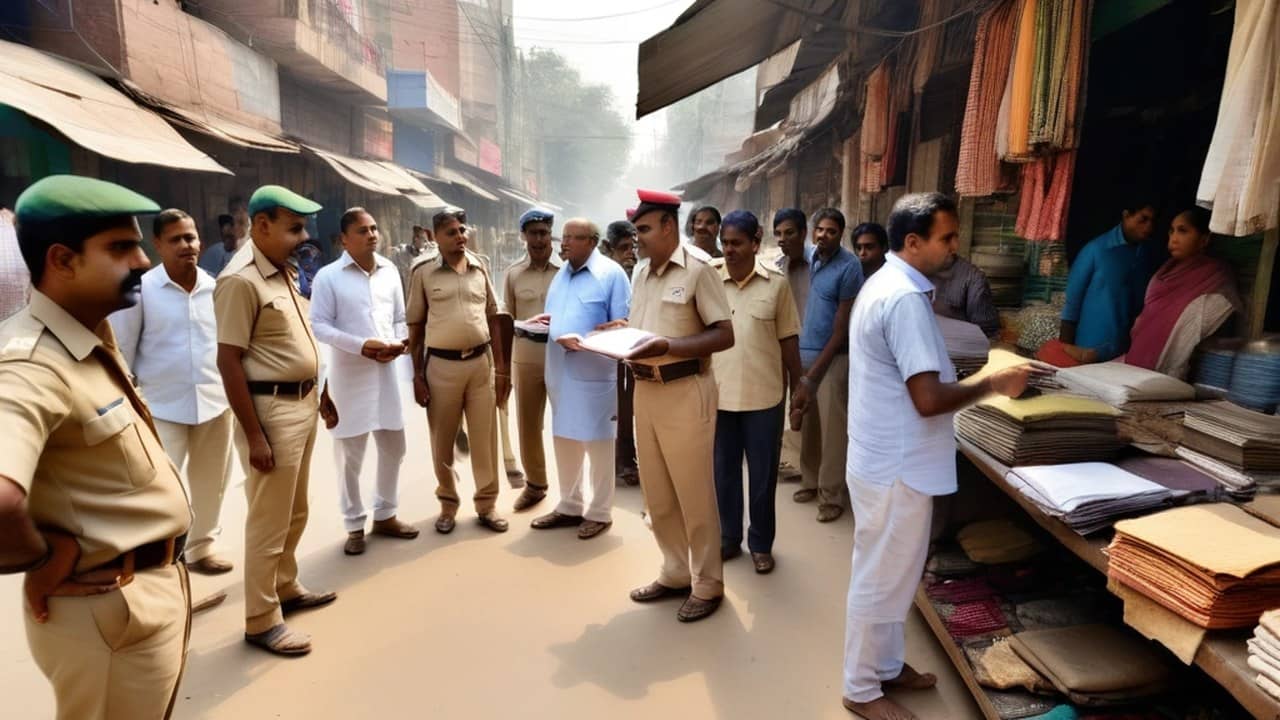
For traffic, no separate Navratri traffic plan or no-vehicle zone had been announced by the Varanasi police when this guide was published. Some travel portals have listed fixed daily no-vehicle hours for the Godowlia, Dashashwamedh, Maidagin and Chowk belt, but those timings have not come from the police and should not be relied upon. If the police commissionerate issues a plan, it will be reported here and this guide will be updated at the same address. Police have directed pandal committees to arrange CCTV cameras, fire safety and volunteers, as set out in our report on the 512 Durga Puja pandals and 725 idol sites in Varanasi.
There is one clash to keep in mind for the last two days. From 19 October, the sale of meat and fish is to be stopped within a wide radius of Namo Ghat ahead of the Indian Air Force display, and the city is preparing for large crowds that week. The details are in our report on the meat and fish sale ban around Namo Ghat and in our guide to the Varanasi air show. If you are planning to be in the city for Mahagauri and Siddhidatri darshan, expect more people and more checks on the roads near the river.
A few practical points help on any of the nine days. Carry water and a little cash for flowers and offerings. Keep valuables at home or hidden, because the lanes are crowded and thefts are common in crowded queues. If an elderly relative is travelling with you, the road-accessible shrines are the easier choice for them.
Once Navratri ends, the next big date in the calendar is Diwali, which falls on 8 November this year. The timings for Lakshmi Puja that Kashi scholars have given are in our Diwali 2026 guide for Varanasi.