Diwali falls on Sunday, 8 November 2026, and for the first time in three years Kashi's scholars say there is no argument over the date. Amavasya, the new moon tithi on which Diwali is celebrated, will cover both the evening Pradosh Kaal and the midnight of 8 November, leaving no room for a second claimant day.
That is a change from recent years. In the last few years, the scholars explained, Amavasya began around sunset on one day and ran until sunset on the next, so both evenings could appear to qualify. Different readings of the scriptural rules then led to confusion in homes and temples over which night to light the lamps.
Dr Subhash Pandey, who was a member of the panchang uniformity team in Varanasi, said that when the calculation of the panchang is done correctly, there is no ambiguity about the tithi, but the calculation and the assessment have to be precise. This year, he said, the position of the tithi is such that the confusion has simply not arisen.
The clearest timings so far come from Prof Nagendra Pandey, former president of the Shri Kashi Vishwanath Temple Trust, who worked them out from two of Kashi's traditional almanacs, the Hrishikesh and Mahavir panchangs. According to him, Amavasya begins at 10:50 am on 8 November, and the Diwali muhurat starts from that moment. That gives about 13 hours and 10 minutes for Diwali observances until midnight.
Other almanacs differ slightly on the start. Standard national panchang listings put the beginning of Amavasya closer to 11:30 am on 8 November, with the tithi ending a little after 12:30 pm on 9 November. Small differences of this kind are common between panchangs, which use different calculation methods and reference points. On the main point, the date, all of them agree on Sunday, 8 November.
For most households, the hour that matters is the evening. Prof Pandey said Pradosh Kaal, the window of about two hours and 24 minutes that begins at sunset, is the most auspicious time for Lakshmi Puja and for lighting the diyas. In Varanasi, the sun sets a little after 5 pm in early November, so Pradosh Kaal will begin around then and run into the evening. Families who follow exact minutes usually take them from their own household panchang or family priest.
Prof Pandey also said that, by his calculation, the Mahanisha, the deep-night period that some families mark with special worship, will fall at midnight under the Vishakha nakshatra. Lakshmi, Ganesh and Kuber will all be worshipped on the same day, he said.
The scholars also described some of the customs tied to the day. Keeping a fast and performing Lakshmi Puja in Pradosh Kaal is considered especially rewarding, and a meal may be taken during Pradosh Kaal. Amavasya is also a day for remembering ancestors: tradition holds that a shraddh may be performed, and a lamp carried in the hand is shown towards the south for the ancestors.
There is one more observance on the same morning. In the North Indian tradition, Hanuman Jayanti is marked on the Chaturdashi tithi that comes just before Diwali's Amavasya. Prof Pandey said that this year it must be observed on the morning of 8 November before 10:50 am, while the Chaturdashi lasts, and cannot be observed after Amavasya begins.
The rest of the five-day festival, according to standard panchang listings, runs as follows. Dhanteras is on Friday, 6 November. Diwali and Lakshmi Puja are on Sunday, 8 November. Govardhan Puja, also called Annakut, is on Tuesday, 10 November, and Bhai Dooj on Wednesday, 11 November. Listings differ on whether Narak Chaturdashi, or Chhoti Diwali, falls on Saturday or on Sunday morning this year, so check the custom your family follows.
The weeks before Diwali are busy in Varanasi too. Sharadiya Navratri begins on Sunday, 11 October, and Vijayadashami is on Tuesday, 20 October. The municipal corporation has already started its civic arrangements for Navratri and Durga Puja, and the city is preparing 512 Durga Puja pandals across its neighbourhoods.
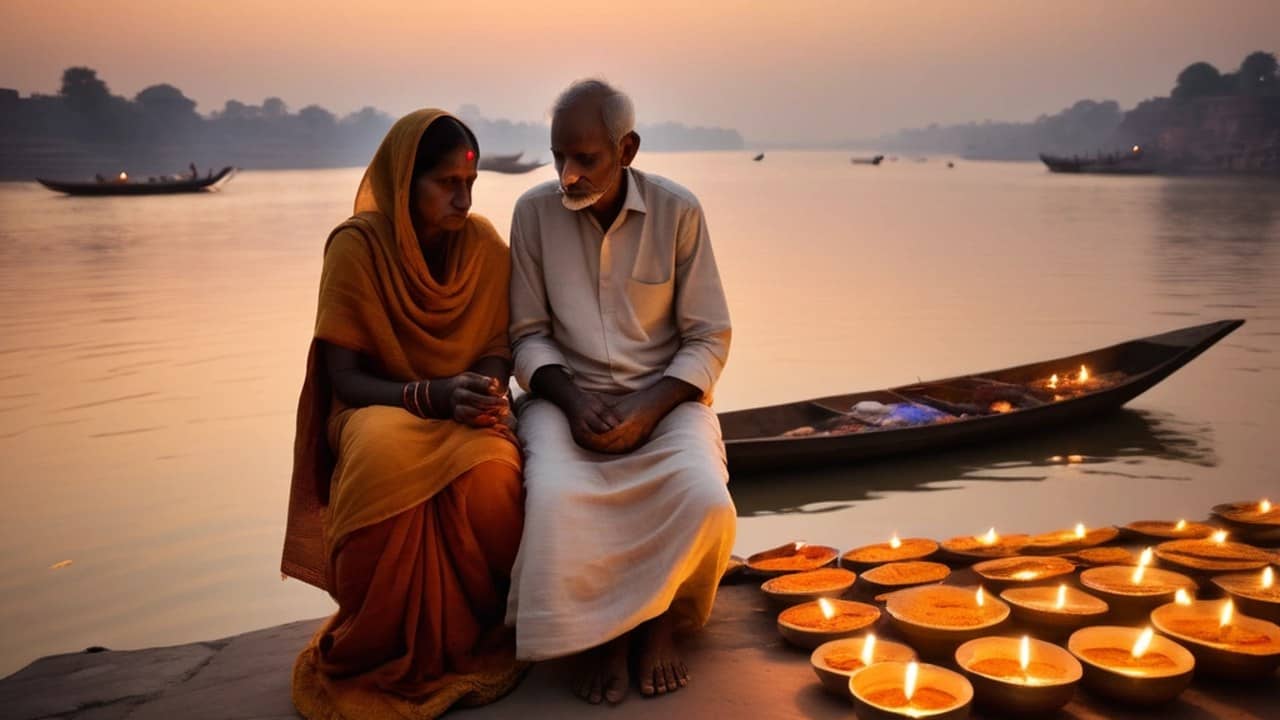
After Diwali, the city's attention turns to Dev Deepawali, celebrated on Kartik Purnima, when the ghats are lit with lamps. Tourism plans for that period are already moving, with the Sarnath light and sound show set to restart by Dev Deepawali with HD projection. We will report this year's Dev Deepawali date once the administration's schedule is out.
For those planning a trip home or to Kashi for the festival, the practical points are familiar ones. Trains to and from Varanasi fill up quickly around Diwali, so book seats as early as possible and keep an eye on the festival special trains that the railways usually announce closer to the date. The ghats, the Kashi Vishwanath temple area and the main markets such as Godowlia and Dashashwamedh get very crowded in the festival week, and evenings near the river are busiest.
Households lighting diyas on rooftops and balconies should keep lamps away from curtains, dry leaves and electric wiring, and keep water or sand nearby. Children handling lamps and crackers need an adult close at hand.
This year, at least, families will not have to settle the date over the phone with relatives in another city. Sunday, 8 November, is Diwali in Kashi, and the scholars say the panchang itself has made that decision easy.