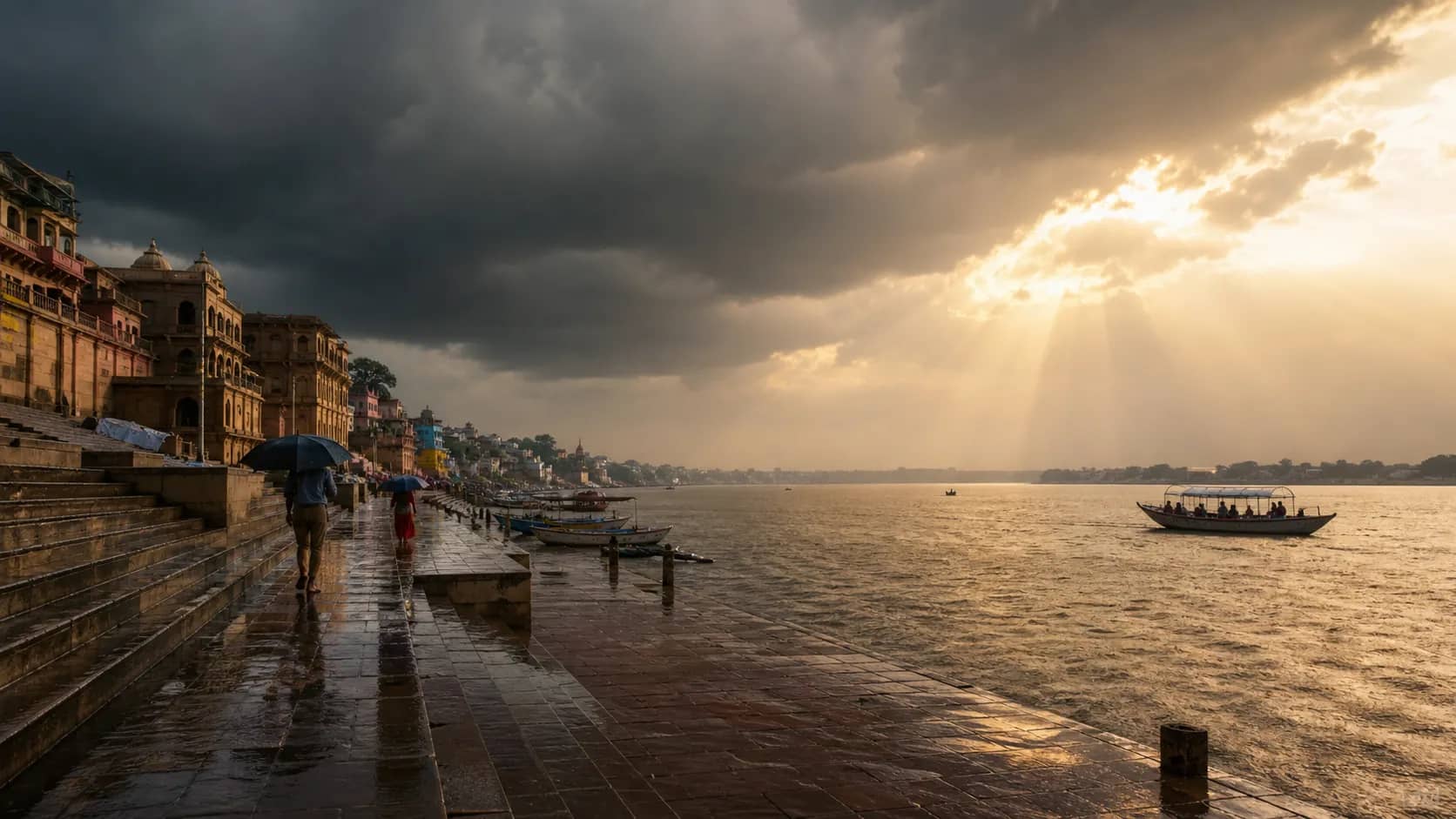
VARANASI: The southwest monsoon is expected to remain over Varanasi roughly a week longer than usual this year, with cloud activity forecast to clear from the region by around October 12.
The delayed withdrawal follows an exceptionally wet August in which the city received far more rain than its monthly average. Amar Ujala's weather report said Kashi may see the monsoon depart seven days behind the normal schedule, extending the period in which short, heavy spells and local thunderstorms remain possible.
Monsoon withdrawal is not the same as the date of the last shower. Meteorologists look for a sustained change in circulation, moisture and rainfall pattern across a wider area. A dry day in Varanasi does not by itself mean the season has ended, just as a post-withdrawal thunderstorm does not mean the monsoon has returned.
For residents, the practical message is to keep rain planning in place through the first half of October. Roof leakage, waterlogged plots and damaged roads will not recover immediately after the clouds thin. Households in low-lying areas should continue watching local advisories, while commuters should expect sharp differences between neighbourhoods during isolated showers.
Farmers will read the forecast crop by crop. Additional moisture can support late paddy and replenish ponds, but persistent rain near harvest can increase lodging, fungal disease and drying problems. Vegetable growers and nurseries are especially sensitive to a few hours of intense rainfall even when the seasonal total looks favourable.
The Ganga and Varuna respond to rain across their catchments, not only to what falls within the municipal boundary. A local break in weather may therefore coexist with elevated river levels if upstream districts continue receiving rain. Flood and drainage monitoring should remain active until both rainfall and river trends settle.
Forecast dates carry uncertainty. Large-scale weather systems can accelerate or delay withdrawal, and the October 12 estimate may be refined as newer observations arrive. Readers should use daily warnings from the India Meteorological Department and district authorities for decisions involving travel, schools or river activity.
A later monsoon also compresses the civic maintenance calendar. Road restoration, drain repairs and construction work need dry surfaces, while festival preparations intensify in the same period. Departments will have to use short weather windows rather than waiting for an absolute end to the season.
Varanasi has already experienced a monsoon of extremes—a hesitant July followed by a record-setting August. A seven-day-late exit would be a fitting final turn, but the most important date will be the one confirmed by the sky and the weather office together.