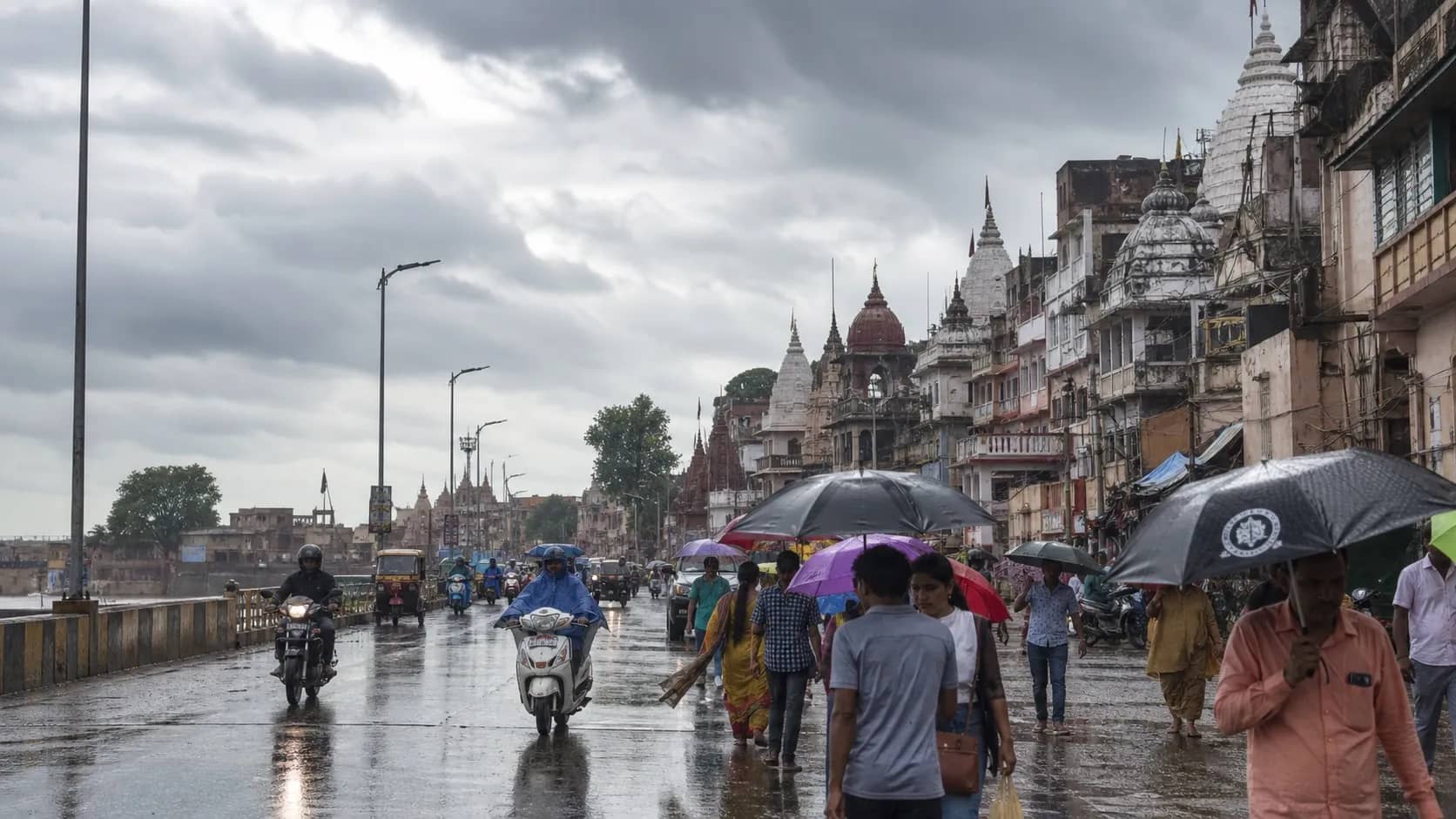
VARANASI: The prospect of a sustained heavy-rain spell over Varanasi has weakened, although residents should keep umbrellas close because broken clouds and short, localised showers may continue through August 25.
The stronger system over the Bay of Bengal lost intensity before producing the widespread downpour earlier alerts had suggested for the city. Meteorologist Professor Manoj Srivastava said the weakened system is now more likely to bring scattered light rain and cloudy periods than a continuous heavy spell. That distinction matters in Varanasi, where rainfall can vary sharply between neighbourhoods within the same hour.
Wednesday’s maximum temperature was reported at 31.5 degrees Celsius and the minimum at 24.6 degrees. Humidity remained uncomfortable, and intermittent cloud cover offered only temporary relief. Schools up to Class 8 had been closed as a precaution in anticipation of difficult weather, but the expected intensity did not develop across the city.
A reduced heavy-rain risk should not be mistaken for an all-clear on waterlogging. Drains and low-lying roads can fill quickly during a short burst, especially where silt, plastic waste or construction material obstructs runoff. Motorcyclists should slow near underpasses and stretches where the road surface disappears under water. A shallow-looking patch can conceal a broken edge, open drain or deep pothole.
The forecast is also relevant to households near the Ganga and Varuna. River levels respond to rainfall across a much larger catchment, not only what falls inside Varanasi. A dry afternoon in the city therefore does not automatically mean the flood situation has stabilised. Residents in vulnerable areas should continue to follow district advisories and watch local water-level updates.
For farmers on the city’s rural fringe, patchy rainfall brings its own difficulty. One village may receive a useful shower while another nearby remains dry, making broad assumptions about field moisture unreliable. Farmers should examine soil conditions before irrigation rather than planning only from a citywide forecast.
Weather alerts are probabilistic, not promises. They identify conditions that can produce heavy rain, while the eventual path and strength of a system determine what reaches a particular locality. The decision to close schools was a preventive call made before the outcome was known; it should be judged against the risk information available at the time.
Through August 25, the sensible expectation is changeable weather: humid intervals, clouds gathering and dispersing, and the possibility of brief rain. Residents should keep phones and documents protected while commuting and avoid sheltering beneath unstable trees or hoardings during gusty showers. The most disruptive rain may have missed Varanasi this time, but the monsoon has not left the city.