
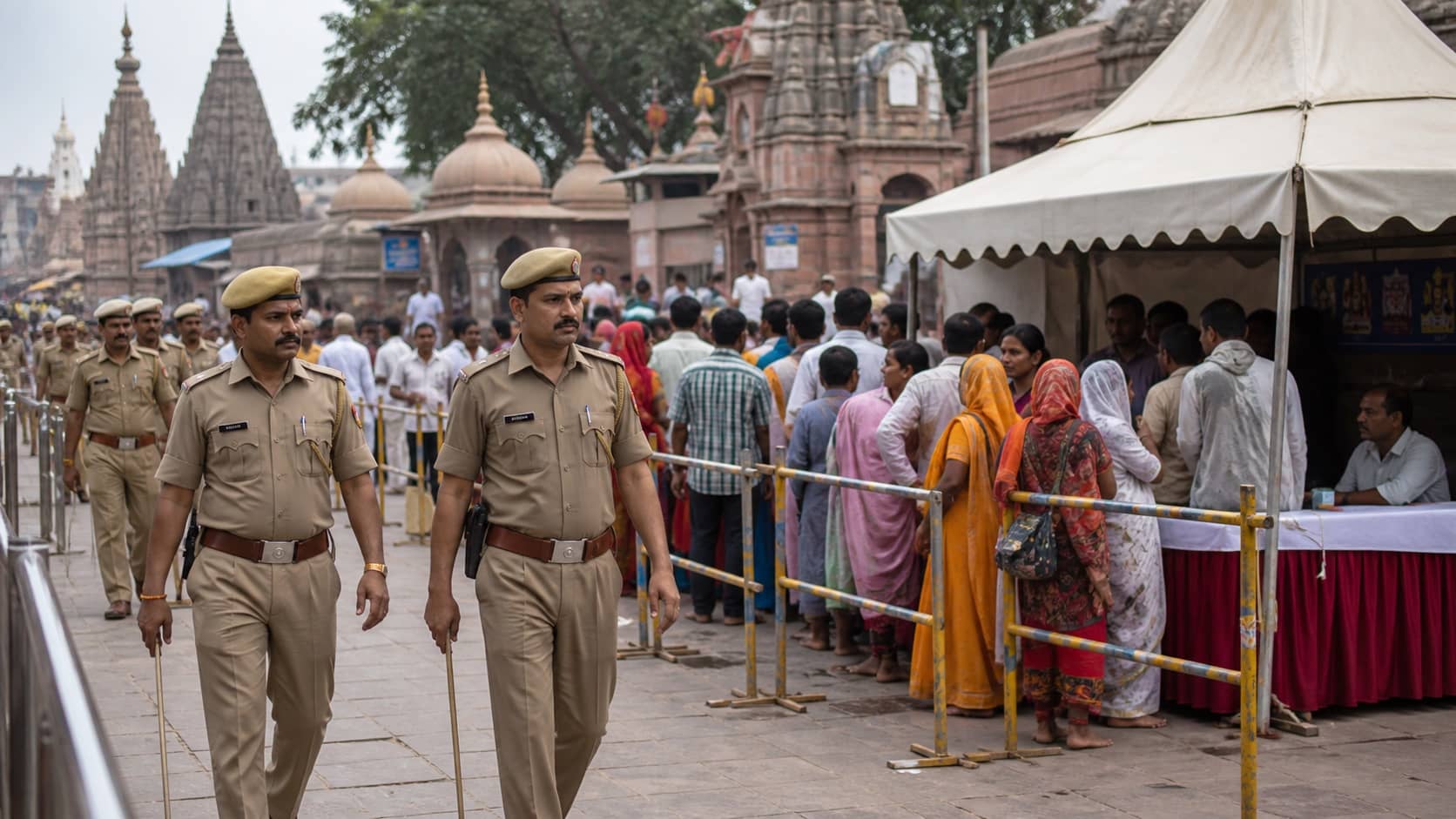
VARANASI: Chowk police have arrested five people accused of approaching devotees near the Kashi Vishwanath temple and collecting money in the name of arranging darshan or worship.
The arrests were made on Wednesday night during an operation led by Chowk station in-charge Dilip Mishra, according to the police account reported locally. The five men were described as coming from Bihar, Madhya Pradesh and Varanasi. Police allege they sought unauthorised payments from pilgrims who may have been unfamiliar with the temple’s official arrangements.
An arrest does not establish guilt. Investigators must document where each person was found, what was said to devotees, whether money changed hands and whether witnesses or video support the allegation. The men are entitled to challenge the police version in court.
The setting makes the allegation significant. Visitors arriving in Kashi often have limited time, are navigating crowded lanes and may believe a confident stranger who promises a faster queue or a special ritual. Language differences and anxiety about missing a train can make elderly pilgrims especially vulnerable.
Devotees should use the temple trust’s official website, marked counters and clearly identified staff for any paid service. Cash should not be handed to someone merely because the person claims to know a priest, guard or official. An authentic facility should provide a stated fee and receipt. Free darshan should not become conditional on an unofficial payment.
Enforcement must also distinguish between legitimate priests, registered service providers and people falsely selling access. Broadly treating everyone who offers religious assistance as a tout would be unfair and counterproductive. Clear identification cards, displayed rate information and visible help desks make that distinction easier for both pilgrims and police.
The temple precinct has undergone major physical redevelopment, but the visitor’s experience is shaped by what happens before the entry gate: transport, footwear counters, queue information and unsolicited approaches. A simple multilingual board explaining official services and warning against cash solicitation could prevent complaints more effectively than periodic arrests alone.
Anyone who believes they were cheated should note the location, description and payment method and report the matter promptly. A digital transaction record can help, while confronting a group in a congested lane may create additional risk.
The five arrests are the beginning of a legal process. Police will need to show individual evidence rather than rely on a general claim that touting occurs near the shrine. The temple administration, meanwhile, should use the incident to make legitimate procedures unmistakable. In a city welcoming millions of pilgrims, trust is protected not only by catching alleged offenders but by removing the confusion on which such solicitation depends.