Varanasi’s Auto Count Runs 250% Above Permits as QR Plan Loses Grip
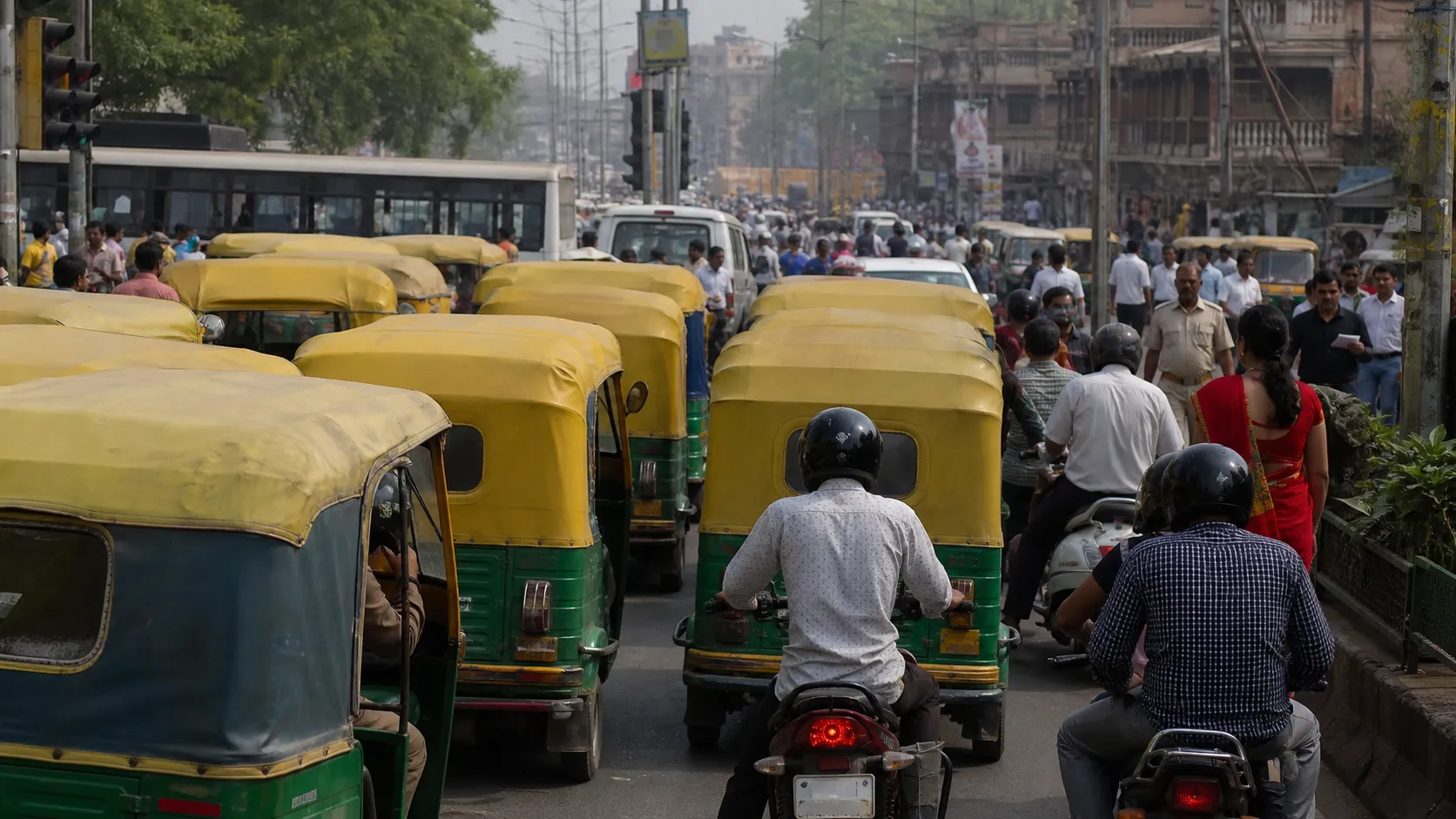
At several Varanasi crossings, the traffic signal is only half the story. The other half is the informal auto stand that forms beside it—one vehicle stopping for a passenger, two more pulling around it and an entire lane shrinking in seconds.
The scale of the problem is now visible in the numbers. The city is reported to have about 250 per cent more auto-rickshaws operating than the permitted strength. In practical terms, that means the road network and its designated stands are trying to absorb several times the number envisioned by the permit system.
An identification plan based on QR codes in the Kashi traffic zone has not brought the expected order. The idea was sensible on paper: give authorised vehicles a scannable identity, make checking easier and separate compliant operators from those working outside the rules. But a code is useful only when registration is complete, field checks are regular and violations lead to predictable action.
Varanasi’s auto-rickshaws remain essential. They connect neighbourhoods that city buses do not serve frequently, offer last-mile access from stations and carry elderly passengers through a city where walking distances can be deceptive. Any enforcement drive that ignores that daily dependence would punish commuters along with irregular operators.
The problem is concentration rather than mobility alone. Autos cluster around Cantt, Godowlia approaches, Lanka, Sigra, Maidagin and other high-demand points, often waiting or turning where road space is already tight. A vehicle carrying passengers is part of the transport solution; a long queue occupying a moving lane becomes part of the congestion.
The permit gap also creates an uneven market. Drivers who pay fees, maintain papers and follow assigned conditions compete with vehicles that may avoid those costs. Passengers, meanwhile, have no quick way to know whether a vehicle has been verified, whether the displayed QR code is valid or where to report a problem.
Fixing this will require more than another sticker campaign. The transport department, traffic police and municipal body need one reconciled database, clearly marked stands and route-wise demand estimates. QR checks should return basic verification without exposing personal data. Repeated violations should be recorded across agencies instead of disappearing between separate registers.
There is also a planning question: if demand genuinely supports more autos, the permit ceiling should be reviewed transparently rather than ignored in practice. If the road cannot support them, enforcement must be steady and paired with better buses and last-mile alternatives.
Varanasi does not need fewer ways to move. It needs the vehicles it already depends on to stop competing for the same few metres of asphalt.
Sources and reporting
Based on current transport and traffic figures reported for Varanasi on 4 August 2026, including the stated 250% gap above permitted auto-rickshaw strength and the status of the Kashi Zone QR identification effort.
Related Stories
Railways Orders Weekly Puja Special 09465 via Varanasi Through November

Hindi Diwas Marked Across BHU, Sanskrit University and Kashi Vidyapith

Lohta Police Register FIR After Bhitari Villager Alleges Hostage Beating
Baragaon Police Book Named Youths After Kazisaray Tea-Stall Assault and ₹1,900 Loot
Mayor Announces Stricter MCG Drive Against Stray Cattle