Varanasi Records More Than 100mm Rain in 24 Hours, Third Such Spell in 15 Years
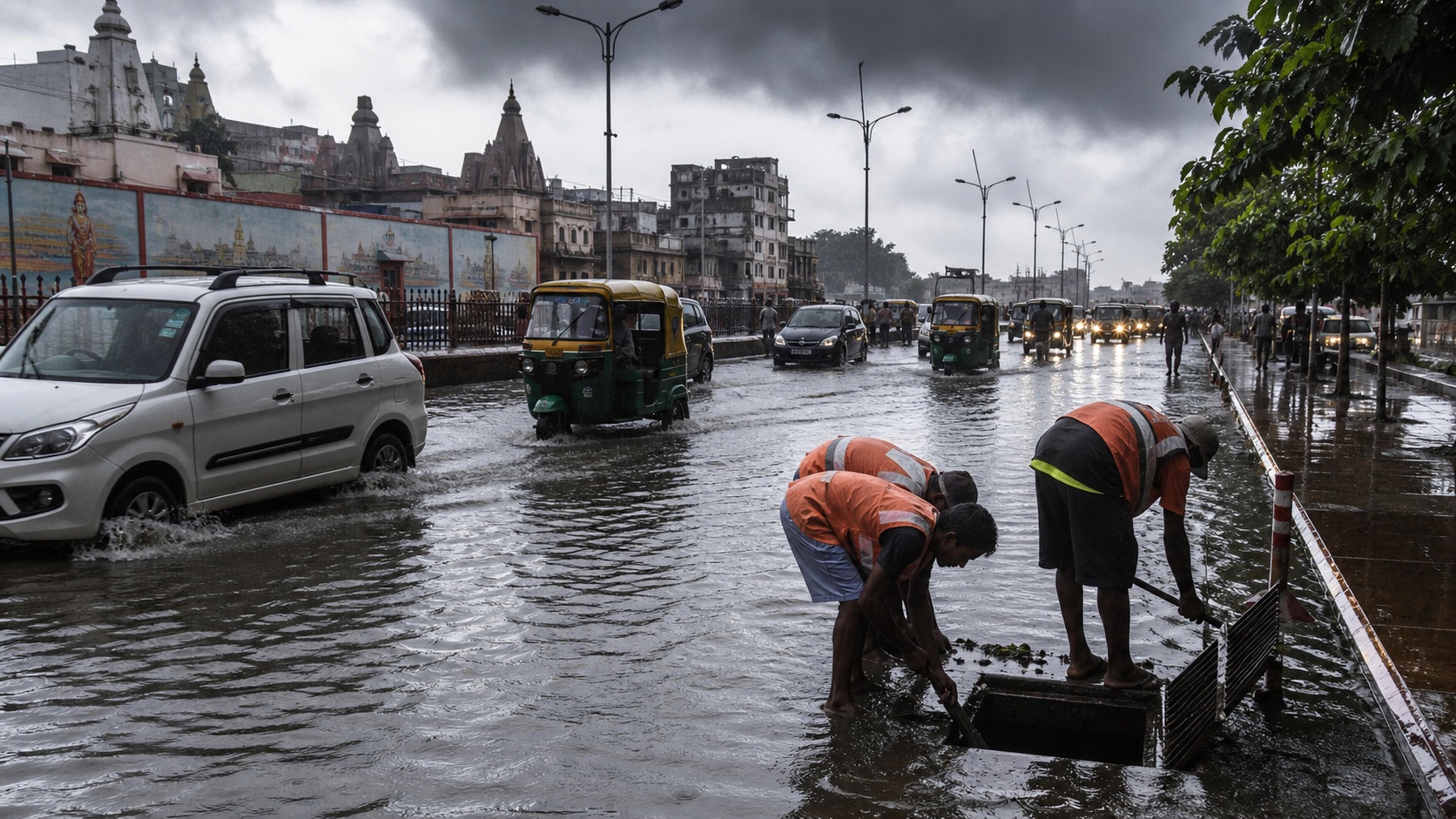
Varanasi: Varanasi crossed the 100-millimetre mark for rainfall in a 24-hour period this week, a threshold the city has reached only three times in the past 15 years. The heaviest pocket was reported around Harahua, where roughly 100mm fell during a concentrated three-to-four-hour stretch between Wednesday and Thursday.
The total is distinct from the earlier four-hour city reading of about 51mm: rain gauges across a district can record sharply different amounts, and the 24-hour figure captures a wider period. Since June, the seasonal total has now moved beyond 300mm. The monsoon deficit, which stood near 50 per cent earlier in the week, narrowed to about 29 per cent after the spell.
For historical perspective, the city’s August daily record remains 165mm, set on 12 August 1987. Last year produced a 161mm day, while 2020 recorded 103mm. This week’s downpour was therefore exceptional without being unprecedented, and it finished around 65mm below the long-standing record.
The rain pulled the maximum temperature down to 29.8 degrees Celsius, about 3.7 degrees below normal, while the minimum settled near 26 degrees. Relative humidity reached 90 to 95 per cent and winds were reported around 15 kilometres an hour. The small gap between daytime and nighttime temperatures made the air feel persistently damp even after the strongest rain eased.
On the ground, the statistics translated into waterlogged roads, submerged potholes and slower movement around Banaras railway station and several urban neighbourhoods. A streetlight pole fell near Sundarpur, underlining the need to treat leaning poles and broken cables as live hazards until the electricity department declares them safe.
One very wet day can improve seasonal totals but cannot repair every consequence of an uneven monsoon. Farmers may welcome replenished fields and ponds, while urban residents face overflowing drains and contaminated standing water. Health teams should monitor areas where water remains for mosquito breeding, and municipal crews should clear drain mouths before the next forecast burst.
The figure also offers a useful test of drainage claims. Authorities should compare the rainfall map with complaints, pump deployment and the time each major road took to clear. A list of 22 flooded locations is more valuable when paired with causes—blocked inlet, undersized drain, low road profile or active construction—and a named officer responsible for follow-up.
Varanasi’s monsoon is becoming a sequence of long dry gaps interrupted by intense spells. Whether that pattern persists is a climatological question requiring years of data, but city planning cannot wait for perfect certainty. Roads, electrical systems and emergency routes have to work on the day when 100mm arrives, not only during an average shower.
Sources and reporting
Based on local weather observations for the 24 hours ending 6 August 2026 and historical August rainfall figures reported for Varanasi.
Related Stories
Court Issues Arrest Warrant for HSVP Brass
MCG Finalises Sohna Site for Fresh Waste

GMDA Seeks Station-Wise Metro Parking Plans

Thar Rams Rapido Cab After Sector 89 Quarrel
FDA Raids 3 Outlets Over Paneer Quality