UP Supplementary Budget Proposes ₹140.65 Crore for Works in Varanasi and Sambhal
Varanasi has returned to the state’s spending map through the supplementary budget, with the Uttar Pradesh government proposing a combined ₹140.65 crore for works in Varanasi and Sambhal. The announcement is significant, but the figure needs to be read carefully: it is a joint provision for the two cities, not a confirmed ₹140.65 crore allocation for Varanasi alone.
Supplementary budgets are used when a government needs legislative approval for expenditure that was not fully covered in the main annual budget. They can fund a newly approved project, meet a higher-than-expected cost or move a time-sensitive scheme forward without waiting for the next financial year. For a fast-growing city like Varanasi, that route is often important because civic, tourism and public-service projects do not always move at the same pace as the original budget calendar.
The immediate public question is what Varanasi’s share will be. A project-wise breakup, implementation agency, work sites and completion schedule had not been made public with the headline figure when this report was prepared. Those details will determine whether the proposal affects roads, public facilities, heritage areas, utilities or another sector—and which neighbourhoods will see activity on the ground.
That distinction matters in Kashi, where residents have heard many large project values over the past decade. A sanctioned amount, a tendered amount and money actually spent are three different milestones. The useful test is not the size of the announcement but whether the responsible department publishes a realistic schedule, secures the work site and provides a way to track progress.
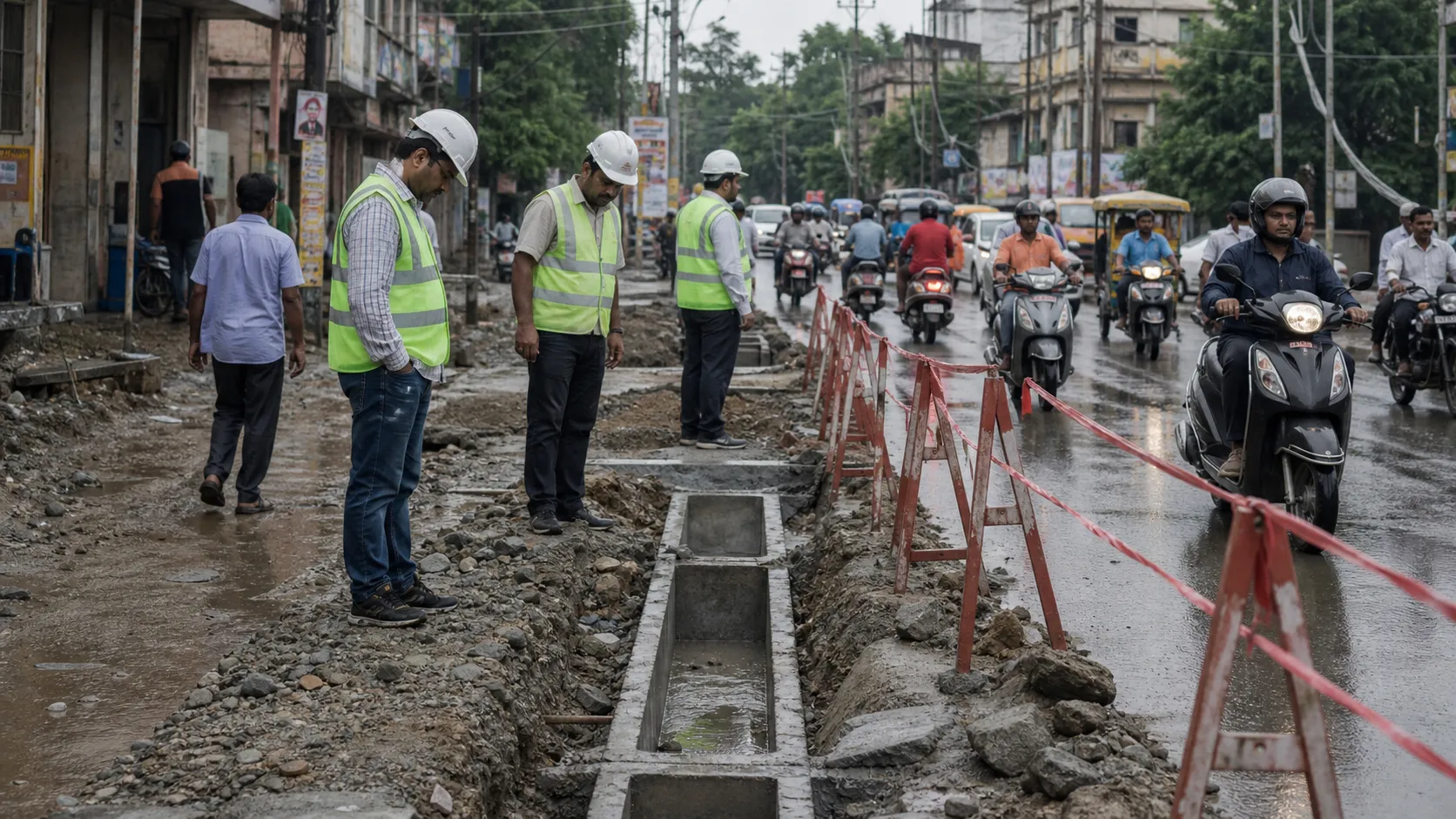
The timing also matters. August is peak monsoon season, when construction exposes weak diversions, unfinished drains and unsafe edges quickly. If any part of the proposed work involves roads or underground utilities, agencies will need to coordinate excavation and restoration. Repeatedly cutting the same corridor for different services is expensive and punishing for commuters.
Varanasi’s rapid expansion has created an unusual planning challenge. Old-city lanes, new residential belts, pilgrimage routes and peri-urban villages all need different kinds of intervention. A centrally located beautification project may be highly visible, while a drainage line or local health facility can have a larger daily impact. The eventual breakup should make that choice transparent.
For now, the ₹140.65 crore proposal is an intent backed by a budgetary route. The next documents will be more revealing: department-wise approval, Varanasi’s exact share, tender notices, site maps and deadlines. Residents should judge the allocation through those records rather than treating the combined figure as money already delivered.
If the state follows the proposal with specific, publicly trackable works, the supplementary budget can become more than a late-year accounting exercise. It can give Varanasi projects that are ready to move a cleaner path from file to field.
Sources and reporting
Based on the supplementary-budget proposal reported from the Uttar Pradesh government on 4 August 2026. The combined ₹140.65 crore figure covers planned work in Varanasi and Sambhal; a city-wise and project-wise breakup was not available at publication.
Related Stories
BHU: Below 4.0 CGPA Will Cost Hostel and Health Facilities
Sewer and Water Pipeline Work Starts in Four Wards Under CCTV Watch
BHU Issues 69-Page PhD Bulletin for About 1,500 Seats in Three Modes

Lolark Shashthi Draws Long Queues at Bhadaini’s Lolark Kund
Ganga Level Keeps Falling; Silt Clearing Starts as Boat Ban Holds