Truck Hits Pedestrian at Danaganj Crossing; Locals Rush Injured Man to Hospital
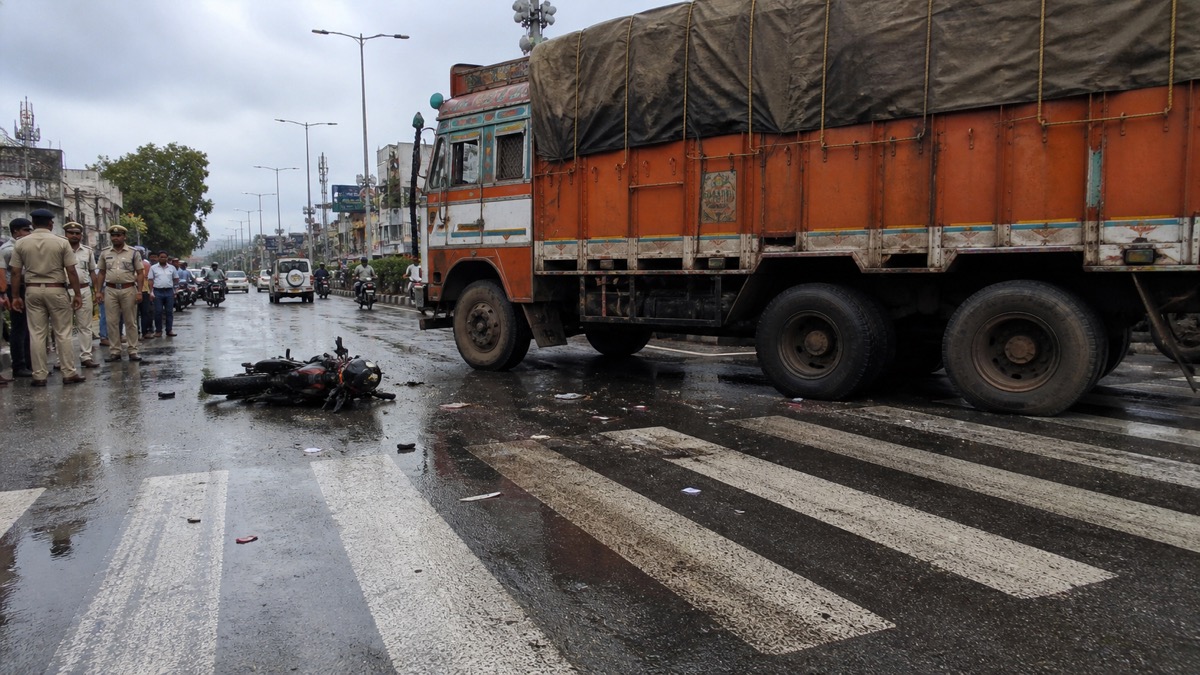
VARANASI: A man was injured after a truck struck him while he was crossing the road at Danaganj, prompting local residents to move him to a nearby health facility before the full circumstances of the collision had been established.
The immediate response from bystanders may have shortened the time to treatment, but the incident again exposes the danger faced by pedestrians on fast, mixed-traffic roads at the edge of Varanasi. Market movement, buses, freight vehicles, motorcycles and people crossing on foot often share the same narrow decision space.
Police will need to identify the vehicle, record the driver’s statement and examine the point of impact. Roadside cameras, nearby shop footage and witness accounts can help establish speed, visibility and whether either party had a clear signal or marked crossing. Until that work is complete, it would be premature to assign blame.
The first minutes after a collision
Bystanders should call the emergency number and avoid moving a seriously injured person unless remaining in the road creates an immediate danger. Untrained movement can worsen head, neck or spinal injuries. If traffic must be stopped, one person should warn approaching vehicles while another contacts medical help.
The injured man’s condition was not fully detailed in the initial report. Health providers and police should protect his privacy while ensuring the family receives accurate information. Photographs of victims should not be circulated on social media.
A road-design question
Danaganj and similar peri-urban stretches carry more traffic than many were originally designed to handle. A police case can address individual conduct, but it cannot replace safe crossing points, street lighting, visible markings and speed control near shops and settlements.
The road authority should inspect whether the collision site has a usable pedestrian refuge and whether parked vehicles obstruct sight lines. Heavy vehicles need adequate braking distance, while pedestrians need a place where crossing is predictable rather than improvised between gaps.
Enforcement also matters. Speed checks and action against overloaded or fatigued freight operations can reduce risk, but occasional drives are less effective than consistent monitoring. Drivers approaching a populated crossing should assume that someone may step out, particularly in rain or low light.
The investigation will determine the legal account of Thursday’s collision. The civic response should look beyond that single file. If people repeatedly cross at the same point, the road must acknowledge them with engineering and signage instead of treating every crash as an isolated mistake.
Any temporary diversion should be communicated to truckers as well as local commuters. Heavy vehicles cannot improvise a safe turn at the last moment. Clear signs placed far enough in advance, combined with a lower approach speed, would protect pedestrians while allowing legitimate freight movement to continue.
Sources and reporting
Based on a Dainik Bhaskar report published August 13, 2026. The cause of the collision and any criminal liability remain under police inquiry.
Related Stories
HC Flags Gurugram Water Crisis, Sets Oct 1 Hearing
Haryana Notifies Tolls on Three GF Road Sections
HSVP Clears Eatery and Warehouses in Sector 18
Rain-Soaked Ramnagar Stages Ram’s Birth on Ramlila Day Two
DTCP Notices 80 Homes in BPTP Astaire Garden