Trainee IPS Officers Study Varanasi’s Crowd, Temple and Riverfront Policing
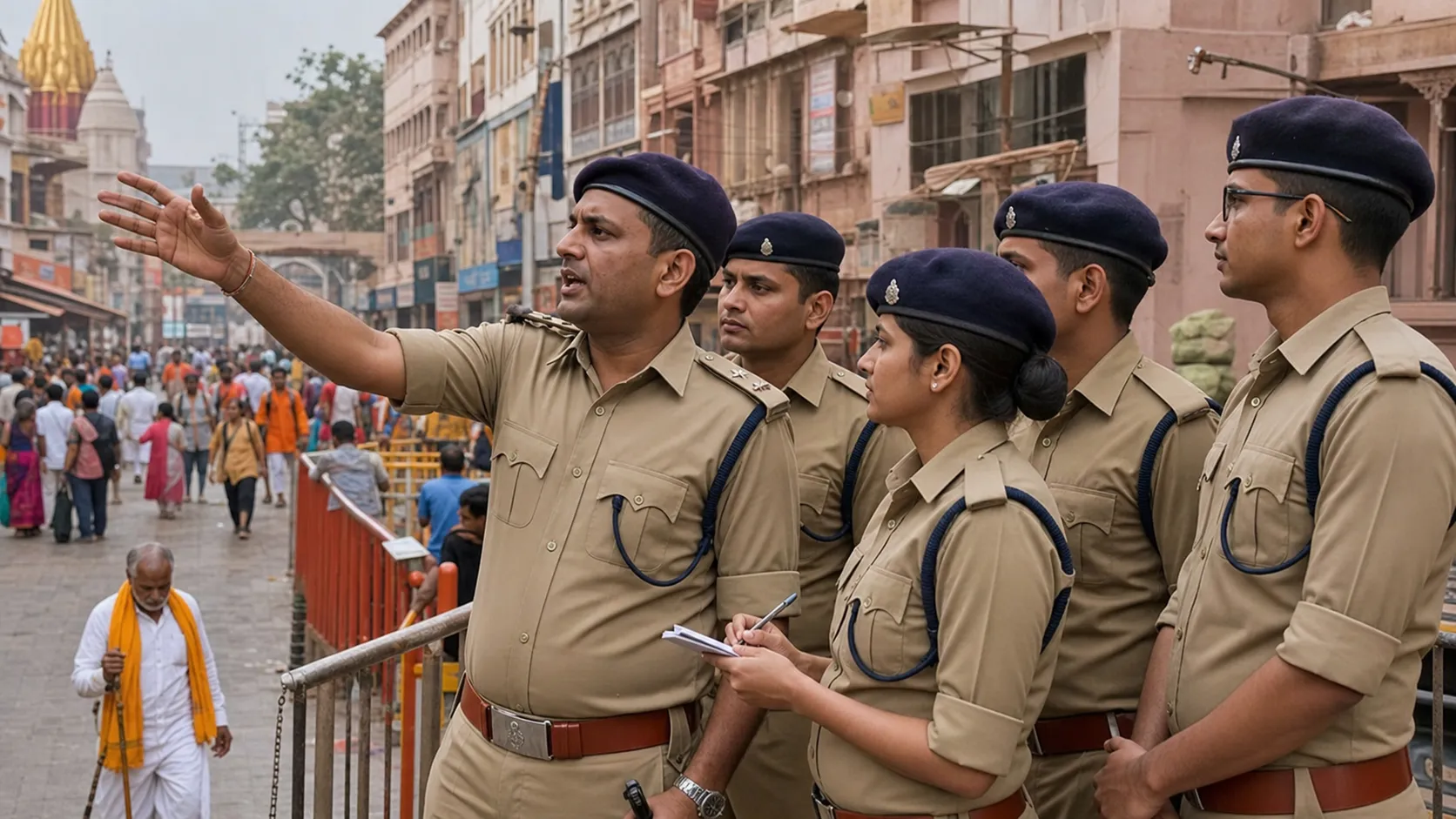
For a police officer in training, Varanasi is less a single posting than a stack of different cities operating at once. Trainee IPS officers visiting Kashi this week met the city’s police leadership to understand how everyday law enforcement changes when pilgrimage, narrow lanes, river traffic, VIP movement and neighbourhood life overlap.
The interaction placed field policing at the centre of the visit. Varanasi’s challenges are visible in short distances: a crowd moving toward Kashi Vishwanath, traffic backing up at a crossing, boats gathering along the ghats and residents trying to reach homes inside restricted zones. A plan that works for one flow can create pressure on another.
For trainees, crowd management is the obvious lesson, but not the only one. Effective festival policing begins before barricades appear. Officers need estimates of arrival patterns, communication with temple and civic authorities, emergency access routes, public announcements and staff rotation. Once a dense queue has stalled, the room for correction becomes dangerously small.
The city also tests the difference between security and convenience. A checkpoint may be necessary, but its placement can decide whether an elderly pilgrim walks an extra kilometre or an ambulance loses time. Good policing in a pilgrimage district therefore depends on reading the crowd, not simply controlling it.
Varanasi’s riverfront adds another layer. Ghat patrols, missing-person reports, drowning prevention, boat movement and nighttime events require coordination beyond an ordinary police-station boundary. During monsoon months, changing river levels can alter routes and risk zones within days.
The old city’s physical design shapes investigation as well. CCTV coverage, foot patrols and local information networks matter where a police vehicle cannot enter quickly. At the same time, technology must support rather than replace human judgement. A camera can show a crowd forming; an officer on the ground must understand why it is forming and how to redirect it without panic.
Training visits are most useful when they include uncomfortable questions. How are restrictions communicated to shopkeepers and residents? What happens when a route changes at short notice? Are women, children and people with disabilities considered in crowd plans? How are complaints recorded when visitors leave the city the same day?
The trainee officers’ meeting will not produce an immediate policy change, but it exposes future district leaders to a policing environment where symbolism and logistics are inseparable. In Kashi, a minor obstruction can become a major crowd problem, while a calm conversation in the right lane can prevent one.
That is the city’s real classroom: not a presentation about crowd control, but the daily discipline of protecting faith, mobility and ordinary neighbourhood life at the same time.
Sources and reporting
Based on the training interaction held between trainee IPS officers and Varanasi Police leadership on 4 August 2026. The report focuses on the operational themes presented by the city’s policing environment.
Related Stories
BHU: Below 4.0 CGPA Will Cost Hostel and Health Facilities
Sewer and Water Pipeline Work Starts in Four Wards Under CCTV Watch

BHU Issues 69-Page PhD Bulletin for About 1,500 Seats in Three Modes

Lolark Shashthi Draws Long Queues at Bhadaini’s Lolark Kund
Ganga Level Keeps Falling; Silt Clearing Starts as Boat Ban Holds