
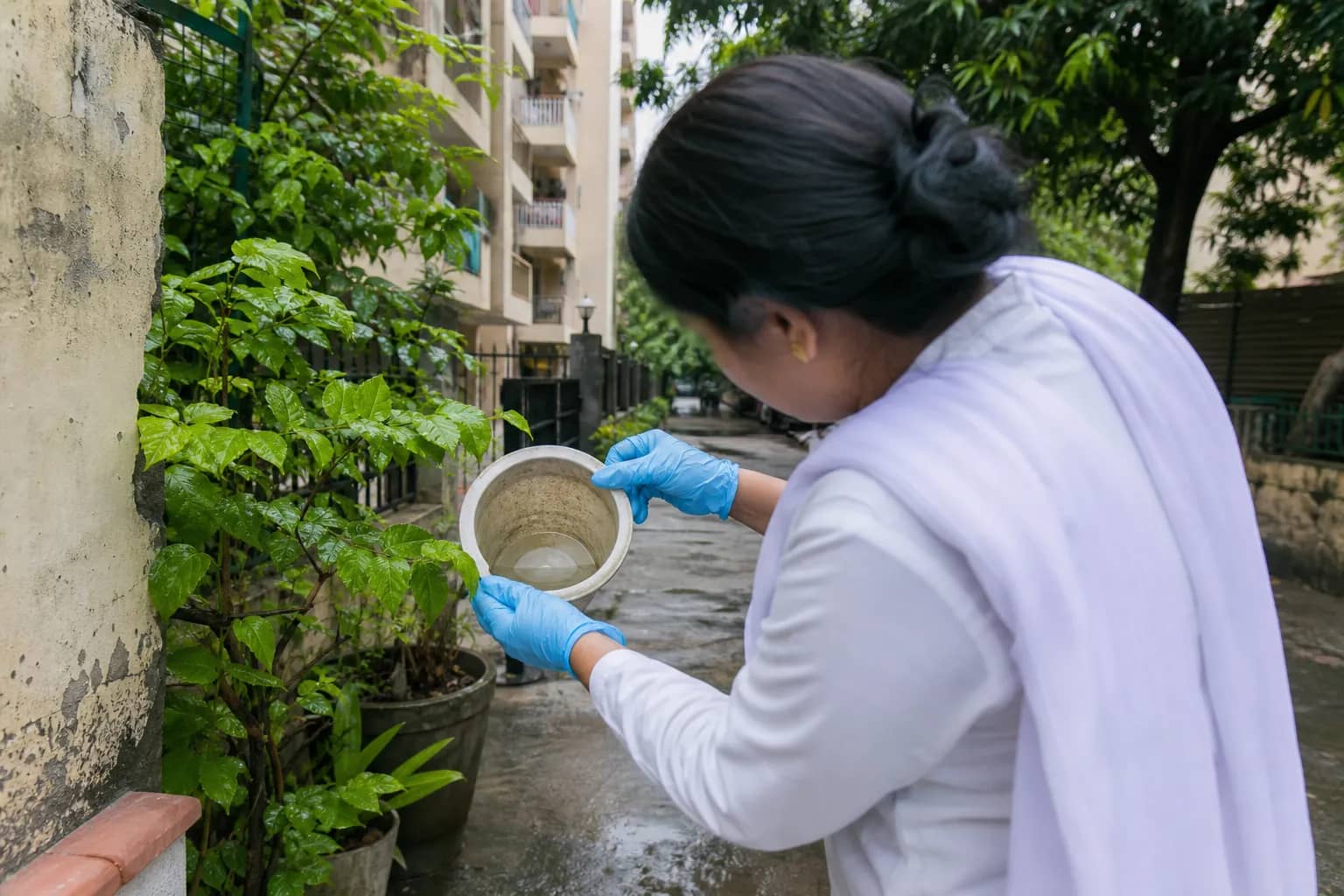
GURUGRAM: Three fresh dengue infections have taken Gurugram's case count to 29 this season, prompting health teams to intensify sampling, house-to-house fever surveys and checks for mosquito-breeding sites after recent monsoon rain.
The district health department collected 357 samples for dengue testing on Saturday. The cumulative number of samples examined this year has reached 6,848. No dengue-related death has been reported in Gurugram so far in 2026.
Rapid fever-survey teams covered 10,267 homes during the day, pushing the year's cumulative coverage beyond 10.1 lakh household visits. Workers also prepared 835 blood slides as part of malaria surveillance. Four malaria cases have been recorded in the district this year.
The rise is still limited in absolute numbers, but late-monsoon conditions can change the picture quickly. The Aedes mosquito that spreads dengue breeds in small collections of clean water, including coolers, trays, flower pots, buckets and roof corners. Repeated showers followed by warm days can create breeding pockets even where a street does not appear heavily waterlogged.
Nearly 1,500 breeding notices issued
Civic authorities have issued 1,485 notices under the Haryana Municipal Corporation Act to property occupiers where conditions conducive to mosquito breeding were found. A notice is a preventive enforcement step; it does not mean every inspected property has produced a confirmed dengue case.
Residents in Sector 9A, Sector 10, Udyog Vihar, MG Road and Sadar Bazar have separately raised concerns about stagnant water remaining for days. Such complaints require quick drainage or treatment because public-space accumulation can undermine household-level precautions.
Gurugram reported 64 dengue cases and no fatalities in 2025. The present tally of 29 should not be compared mechanically with the full previous-year number because the current transmission season is still under way. Surveillance intensity also affects how many infections are identified and counted.
What residents should watch for
Persistent fever, headache, pain behind the eyes, body ache, nausea or unusual weakness should prompt medical advice, particularly during the monsoon. People should avoid self-medicating with painkillers that can increase bleeding risk and should seek urgent care for warning signs such as severe abdominal pain, repeated vomiting, bleeding or marked drowsiness.
At home, coolers should be emptied and scrubbed regularly, open containers covered and discarded items removed before they collect rainwater. A quick weekly check is more effective than waiting for visible mosquito swarms because dengue mosquitoes commonly breed close to homes and bite during the day.
The district's response now depends on keeping surveillance and civic action connected. Testing can identify cases, but stopping local transmission requires breeding sites to be removed in both private premises and public areas. With no reported death so far, the immediate priority is to preserve that record while preventing the seasonal tally from accelerating.