
Varanasi ranked 34th with 150 points in the Central Pollution Control Board’s Swachh Vayu Survekshan 2026 for cities above 10 lakh population, local coverage of Monday’s national release confirmed on Tuesday — the city’s weakest showing in three years after finishing third in 2023, ninth in 2024 and eleventh in 2025. Lucknow topped the same national category with 198 points.

The slide from 191 points and a podium finish in 2023 to 150 points and rank 34 in 2026 is the story, not a one-year blip. Intermediate scores of 176.5 (ninth, 2024) and 184 (eleventh, 2025) show a ranking fall even when the absolute score bobbed. This year’s 150 is both a rank low and a score low relative to that three-year trail.

Local reporting around the release has pointed to construction dust, traffic load and PM10 performance as the usual suspects behind the lag. Those are diagnostic hunches tied to the survey’s known pillars, not a substitute for CPCB’s full indicator sheet. The desk is not inventing a pollutant-by-pollutant autopsy beyond what the ranking and the score already state.

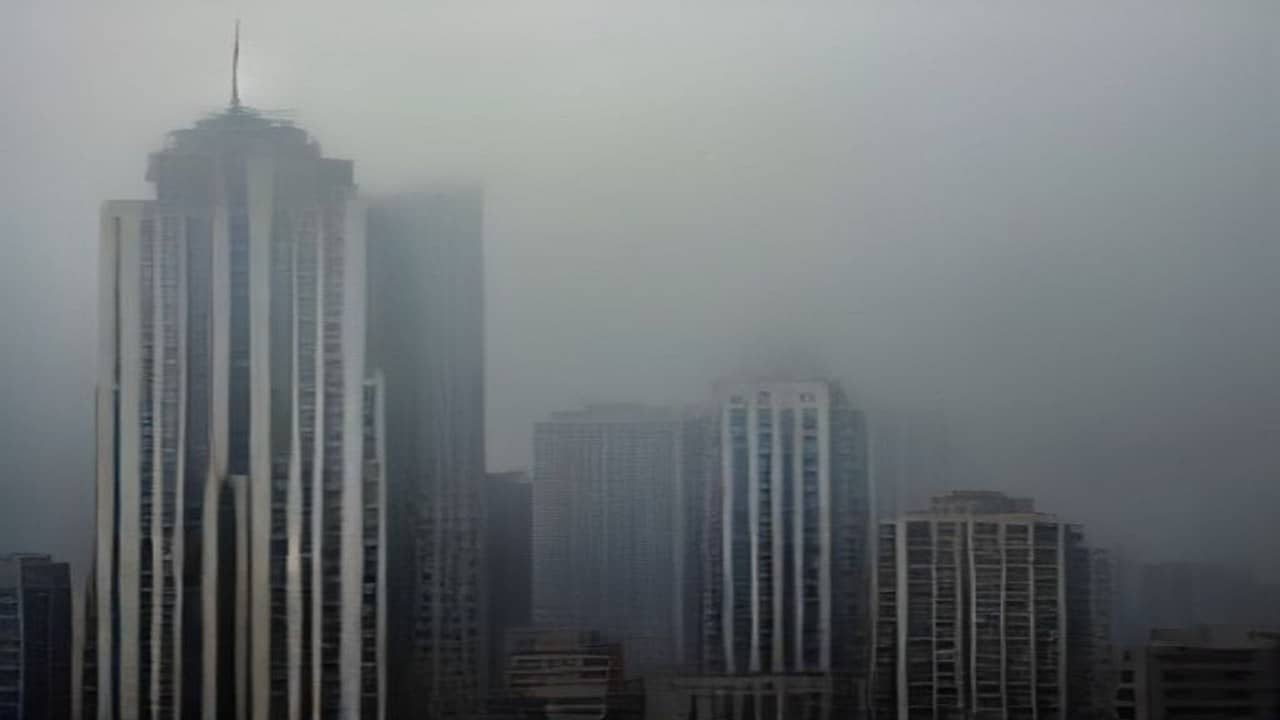
For a city that markets riverfront renewal and Smart City works, a clean-air survey drop is a governance embarrassment with a number attached. Construction that remakes corridors also lifts dust. Vehicle density on the same corridors lifts NOx and fine particles. Neither excuse deletes the CPCB rank.

Lucknow’s first-place 198 in the same >10-lakh category sharpens the contrast inside Uttar Pradesh. One state capital leads the table; Kashi sits at 34 with 150. Interstate bragging rights are secondary. Intra-state comparison is what residents will quote at ward meetings when they ask why fogging and road-washing schedules do not match the dust they breathe.

Ward-level complaints about uncovered debris piles and unpaved shoulders after utility cuts feed the same public anger the Survekshan number now quantifies. A national rank does not name a single contractor. It does give corporators and the municipal commissioner a score they cannot wave away as anecdote.

Municipal and transport departments that share the air file will be pressed for a recovery plan before the next Survekshan cycle. Rank recovery needs measurable dust control on construction sites, tighter debris covering, and traffic-management steps that actually cut idling — not another press note that restates the score.

Swachh Vayu Survekshan is not a monsoon flood story and not a river-gauge story. It is a separate accountability board. Publishing it beside this week’s water file is deliberate: the city can drown in one week and still owe residents cleaner air in the annual ranking.

Varanasi’s 34th place with 150 points is the CPCB fact. Prior ranks of 3, 9 and 11 are the trend. Lucknow’s 198 is the benchmark inside the category. Until the next survey moves those numbers, the clean-air claim for Kashi rests on a weak national footing.Varanasi Slips to 34th in Swachh Vayu Survekshan 2026 With 150 Points
By Harsh Mehra2 min read
About the author
Harsh Mehra
Harsh Mehra reports for Dalimss News. 1208 stories on Dalimss News, most often in India.
Sources and reporting
CPCB Swachh Vayu Survekshan 2026 Category I (>10 lakh): Varanasi rank 34 with 150 pts; prior 3rd/191 (2023), 9th/176.5 (2024), 11th/184 (2025); Lucknow 1st with 198; local framing cites construction dust, traffic, PM10.
Related Stories
India
Golden Sporting Club Durga Idol Immersed at Company Bagh After Old-City Procession
India
Forest Team Searches Varanasi School After Suspected Leopard Sighting; No Leopard Found
Varanasi
Varanasi employment roundup

India
Mauni Baba Ramlila Stages Bharat Milap at Nati Imli; Nadesar Holds Rajgaddi
India
Durgakund’s Shri Shyam Mahotsav Sets October 25 Programme for Worship and Bhajans

India