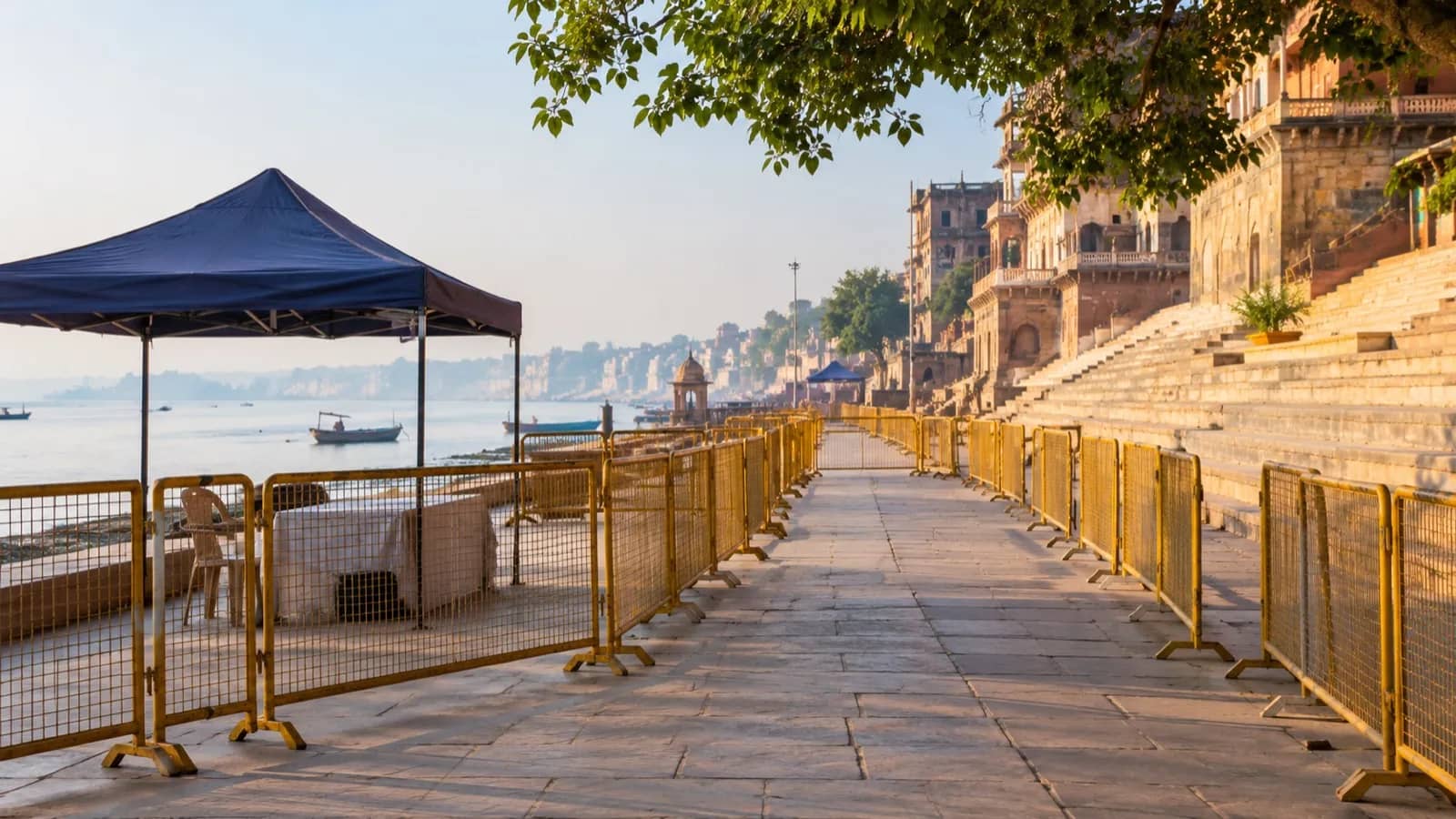
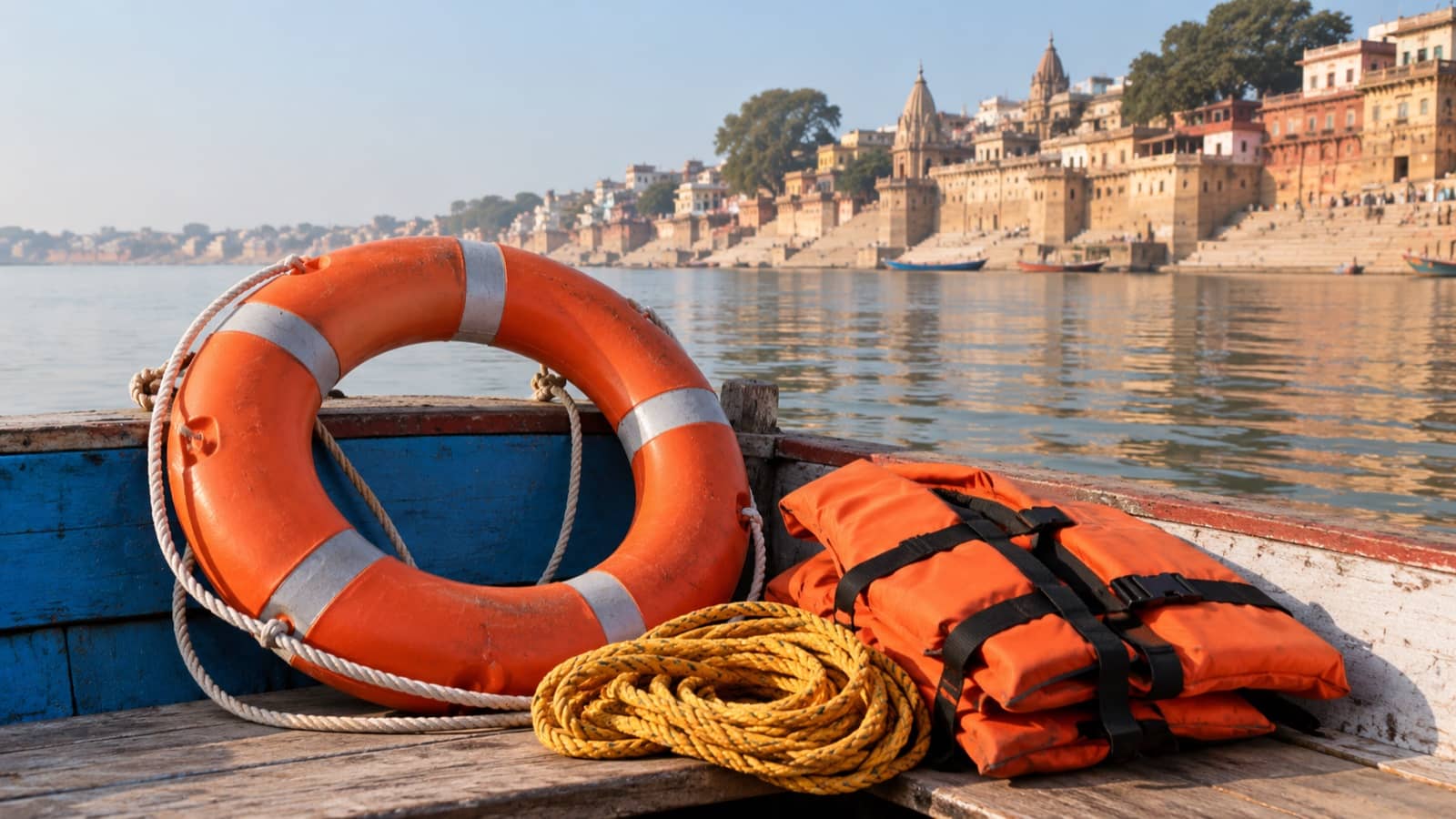
VARANASI: Personnel from the PAC’s flood-relief team, water police and State Disaster Response Force rehearsed a rescue on the Ganga at Namo Ghat on Friday, October 23, as senior officers reviewed arrangements for the air show.
PAC director general Alok Kumar Singh visited the riverfront and reviewed the drill involving flood-relief personnel from the 36th PAC Battalion at Ramnagar. He spoke to personnel about rescue work and inspected the Namo Ghat area before continuing to the battalion’s premises.
The activity was a planned exercise, not a response to a reported drowning. Its significance lies in bringing the three participating units together at the riverfront where air-show preparations were under way.
River deployment reviewed
Friday’s exercise placed river rescue within the wider event arrangements. The visiting officer sought information directly from personnel engaged in rescue duties. The available account confirms the participating units and location, but does not give response-time measurements or the number of boats involved.
A rehearsal allows teams to practise an emergency response before they are called upon in a real incident. It is distinct from a declaration that every part of a riverfront is safe for swimming, boating or unrestricted public access. Visitors still need to follow the directions issued at the location.
Ramnagar visit follows the drill
After leaving Namo Ghat, Singh reached the 36th PAC Battalion at Ramnagar, where he interacted with personnel. He inaugurated a ration shop at the battalion and addressed a gathering during the visit.
Commandant Dr Anil Kumar Pandey welcomed the director general. Deputy inspector general Manoj Kumar Sonkar was also present. The programme combined the review at the Ganga with a visit to the institutional base of the flood-relief personnel deployed there.
What visitors should keep in mind
General water-rescue guidance issued by the National Disaster Response Force advises that only trained people should enter the water to rescue someone in difficulty. Its community-awareness material describes offering a rope or stick for the person to hold, rather than moving close to them in the water.
That guidance is general safety information, not a description of the techniques used in Friday’s drill. The NDRF’s aquatic-response training material also stresses that a rescue conducted from the shore is safer than one requiring a rescuer to enter the water.
For anyone visiting the ghats, the practical distinction is between alerting trained responders and attempting an unfamiliar rescue. Keep access clear for emergency personnel and follow their instructions. Friday’s review concerned preparedness: the presence of a drill should not be mistaken for confirmation of a fresh accident at Namo Ghat.