Six Teenagers Rescued From Train in Varanasi; Two Held in Suspected Labour-Trafficking Case
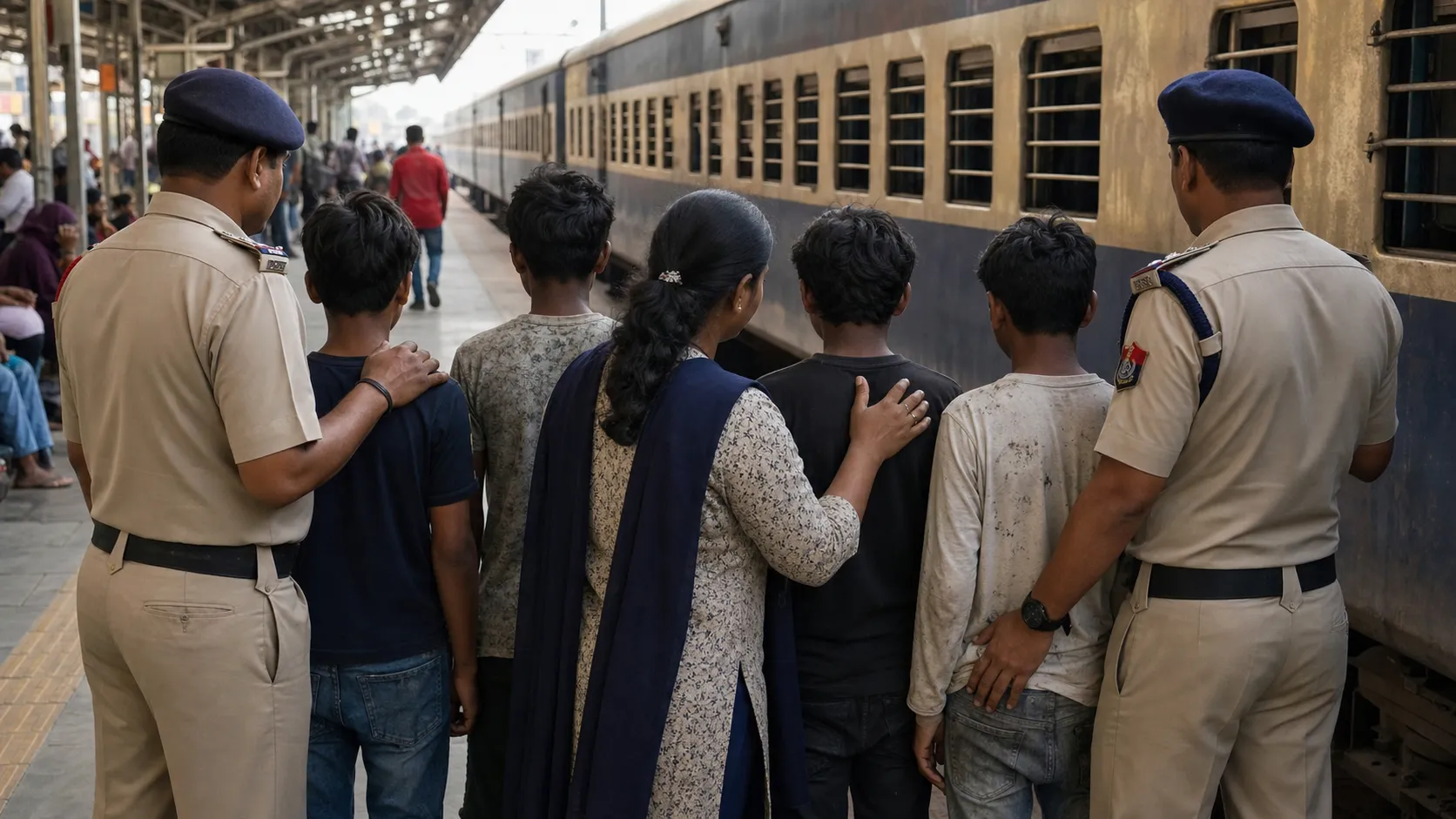
Six boys aged between 15 and 17 were removed from the Guwahati–Okha Express in Varanasi after railway-security personnel suspected they were being taken to Gujarat for labour, according to the Railway Protection Force. Two men accompanying them were detained in connection with the case.
The preliminary account says the teenagers were to be employed in a fish-packing unit. Officials believe financial hardship made them vulnerable to recruitment. Their names and identifying details have not been published because they are minors and must be treated as children in need of care and protection, not as accused passengers.
The two detained men are suspected of arranging or facilitating the journey. That allegation requires investigation, and detention does not establish guilt. Police and child-welfare authorities will need to examine travel arrangements, contact the families, verify promises of wages and determine whether coercion, deception, advance payments or an organised recruiting chain was involved.
The ages matter. Indian law places strict limits on the employment of children and adolescents, with hazardous work prohibited and protections extending beyond the question of whether a teenager appeared to travel willingly. A family’s consent or a child’s hope of earning money does not erase the duty to check the nature, hours and safety of the proposed work.
Long-distance trains are frequently used in labour movement because one escort can accompany several young people across states. Detection depends on trained staff noticing inconsistencies: a child who does not know the destination, identical answers delivered under pressure, no clear family contact or a promised job that cannot be explained.
Removing the boys from the train is only the first protective step. They should be presented before the appropriate child-welfare mechanism, counselled separately and provided safe accommodation while their families and circumstances are verified. Interviewing each child away from the accompanying adults is essential; a rehearsed group answer can conceal different experiences.
Rehabilitation is the harder part. If poverty or debt pushed the journey, simply returning the teenagers home may leave the same pressure in place. District authorities in their home areas may need to connect families with schooling, social protection or livelihood support. Otherwise, another recruiter can arrive after the headlines fade.
For passengers, suspected child trafficking should be reported discreetly to railway personnel or the emergency helpline rather than confronted publicly. A loud accusation inside a coach can frighten children and allow other suspects to disappear.
Varanasi’s rail network is a major transit point, which gives its security teams both opportunity and responsibility. This interception may have prevented six teenagers from entering an unsafe workplace. The quality of the case will now depend on careful evidence against the adults and patient, confidential support for the children.
Sources and reporting
Based on the RPF account of an interception involving the Guwahati–Okha Express in Varanasi, reported on 4 August 2026. The two detained men are suspected of labour trafficking; the allegation remains under investigation.
Related Stories

Railways Orders Weekly Puja Special 09465 via Varanasi Through November

Hindi Diwas Marked Across BHU, Sanskrit University and Kashi Vidyapith

Lohta Police Register FIR After Bhitari Villager Alleges Hostage Beating

Baragaon Police Book Named Youths After Kazisaray Tea-Stall Assault and ₹1,900 Loot
Mayor Announces Stricter MCG Drive Against Stray Cattle