Damaged Shikhara at Shivpur’s Panchon Pandav Temple Triggers Safety Concern
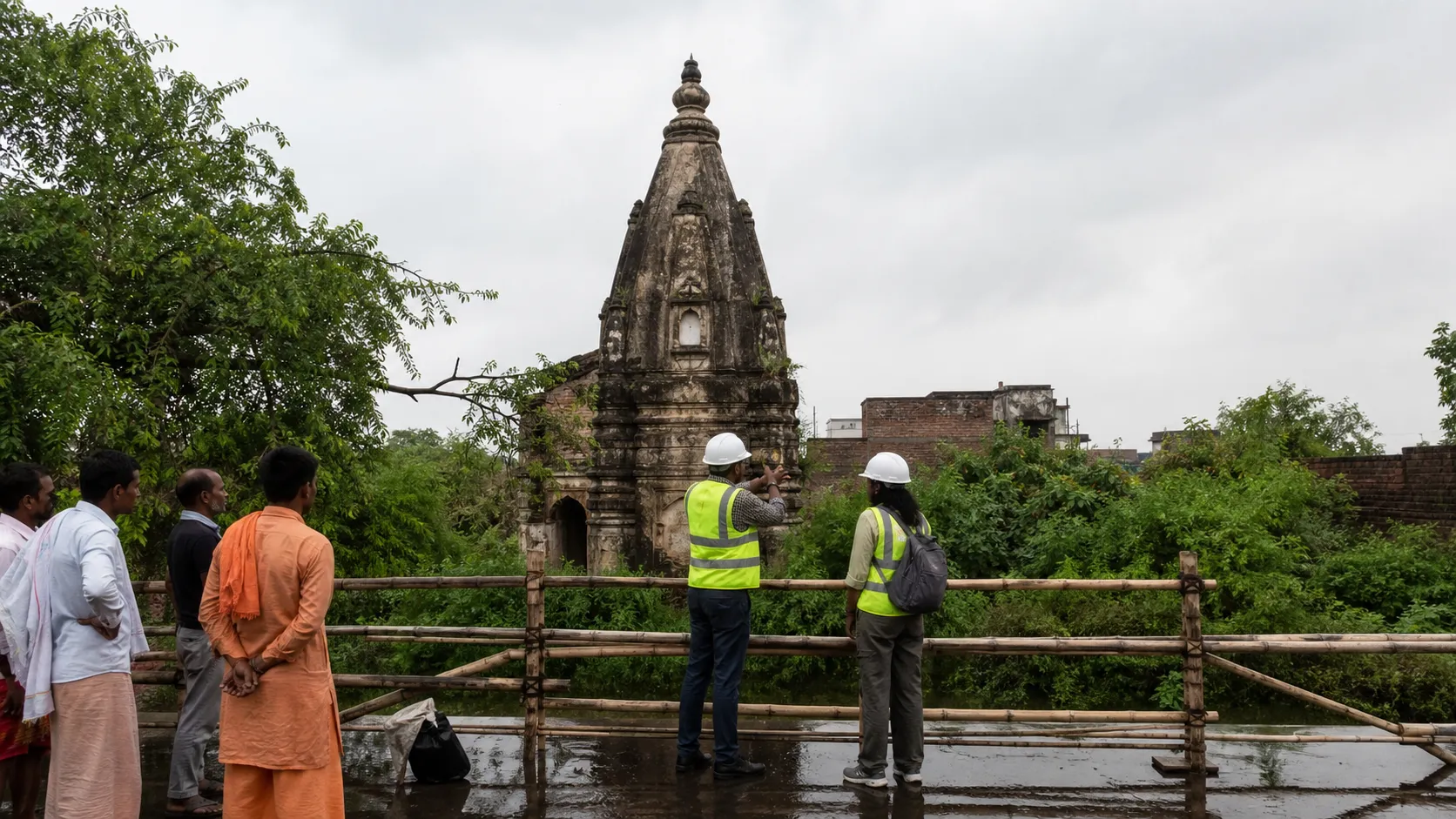
A damaged shikhara at the Panchon Pandav temple in Shivpur has become a public-safety concern for residents who say the structure needs urgent inspection and repair. Their worry is immediate: pieces from an ageing upper structure can fall without warning, particularly after repeated monsoon rain.
People in the area have alleged that no adequate protective arrangement has been placed around the vulnerable section. They are seeking temporary safety measures as well as a permanent repair plan. The exact extent of the damage and its cause have not yet been established through a structural assessment made public.
That assessment should be the first step. Temple towers can deteriorate for several reasons—water ingress, vegetation, failed mortar, earlier alterations or movement within the supporting masonry. A visual patch applied from the outside may hide the symptom while leaving the underlying weakness untouched. Engineers and conservation specialists need to inspect the shikhara from a controlled platform, document loose material and determine whether the danger is localised.
Until then, the area directly below the damaged portion should be kept clear. A soft warning or a rope that visitors can cross is not enough if material may fall from height. Authorities and the temple management should agree on a defined exclusion zone, visible signs and a safe route for worshippers and nearby residents.
The Shivpur concern sits at the intersection of faith, heritage and ordinary municipal responsibility. A place of worship may be managed by a trust or local committee, but a falling element can affect anyone using the adjoining public space. Questions of ownership should not delay emergency precautions.
Repair also requires care. Historic or traditionally built structures can be harmed by heavy cement plaster, incompatible materials or hurried removal of original masonry. A technically sound intervention should stabilise the damaged area, keep a record of what was changed and match materials to the existing construction wherever possible.
Monsoon weather narrows the working window. Active rain can make high-level inspection unsafe, while trapped moisture may affect repair. That is an argument for immediate protection and professional planning, not for waiting until the season ends without action.
Residents are right to ask for a timeline. The responsible bodies should state who will inspect the temple, when the assessment will occur and what short-term barrier has been installed. If funds or heritage permissions are required, those steps should be named publicly rather than left behind a general assurance.
Varanasi’s sacred geography is made up not only of famous monuments but also neighbourhood temples woven into daily routes. Protecting them begins with protecting the people who stand beneath them. In Shivpur, that now means treating the damaged shikhara as a safety job before it becomes an emergency.
Sources and reporting
Based on the safety concern raised by residents around the Panchon Pandav temple in Shivpur and reported on 4 August 2026. The extent and structural cause of the damage require an expert site inspection.
Related Stories
BHU: Below 4.0 CGPA Will Cost Hostel and Health Facilities
Sewer and Water Pipeline Work Starts in Four Wards Under CCTV Watch
BHU Issues 69-Page PhD Bulletin for About 1,500 Seats in Three Modes

Lolark Shashthi Draws Long Queues at Bhadaini’s Lolark Kund
Ganga Level Keeps Falling; Silt Clearing Starts as Boat Ban Holds