‘School Thik Karo’: CJP’s Campaign Puts India’s Government School Infrastructure Under the Spotlight
As India marks 80 years of Independence, a new campaign is drawing attention to an old and persistent problem: the condition of government schools across the country.
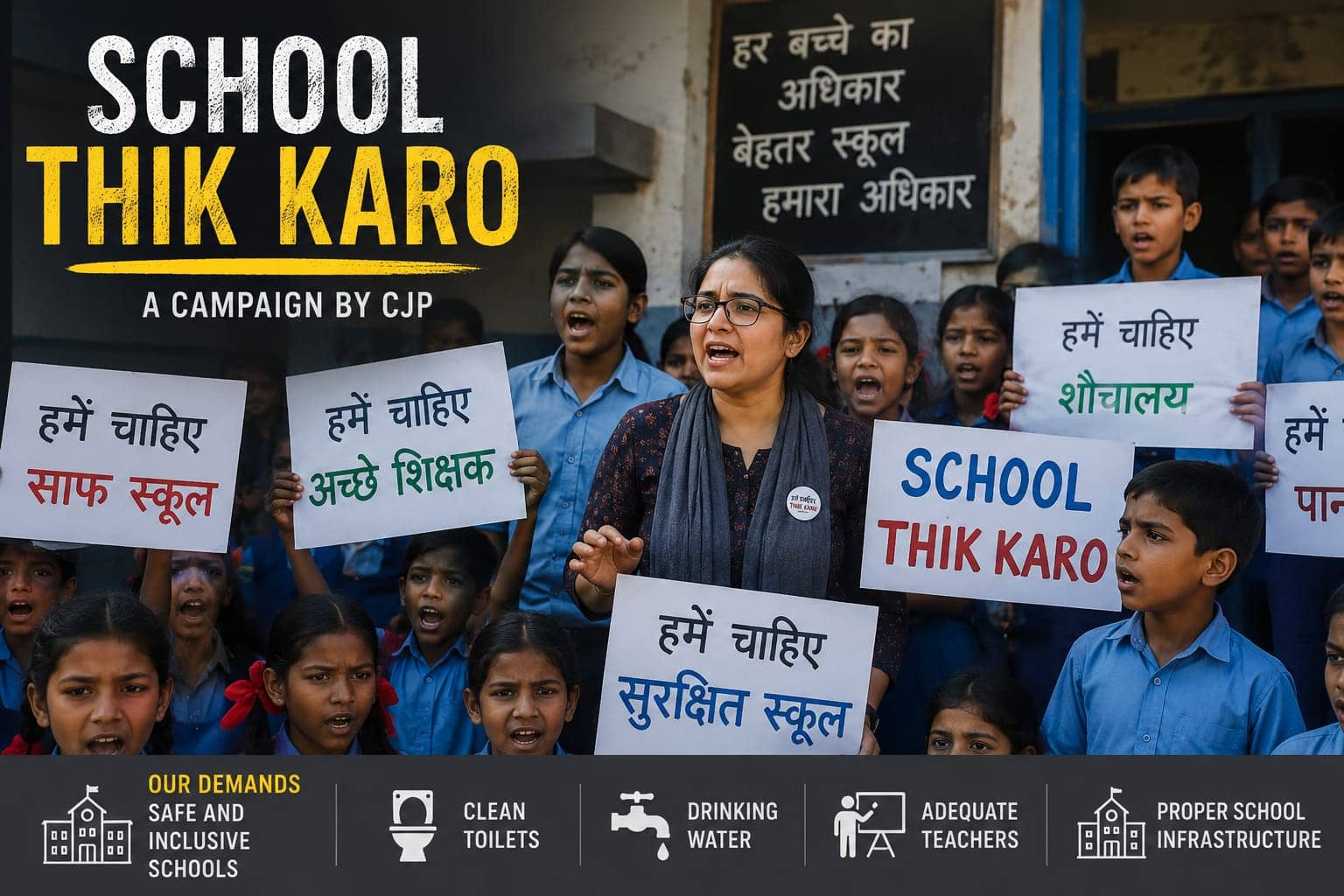
The Cockroach Janta Party (CJP), led by founder and national convenor Abhijeet Dipke, launched its ‘School Thik Karo’ (Fix the Schools) campaign on August 15, with a focus on the condition of government schools, particularly in rural parts of India. The campaign seeks to record and document deficiencies in school infrastructure and push governments and local authorities to address them.
What is the ‘School Thik Karo’ campaign?
The campaign was launched from Santuk Pimpri village in Maharashtra’s Hingoli district, where Dipke conducted an audit of a local Zilla Parishad school after attending the Independence Day flag-hoisting ceremony.
According to reports, the audit identified several basic problems, including inadequate drinking-water facilities, insufficient seating, unhygienic washrooms, broken windows and inadequate water supply.
CJP has called for such audits to be carried out more widely. The campaign encourages citizens and volunteers to inspect government schools, document deficiencies and bring them to the attention of the authorities.
The campaign is therefore not limited to criticism of individual schools instead its larger objective is to make the condition of public-school infrastructure a matter of public accountability.
From classrooms to social audits
One of the distinctive features of School Thik Karo is its emphasis on social audits.
CJP has prepared a checklist-based mechanism through which volunteers can record whether schools have basic essential facilities. Reports indicate that around 1,200 - 1,500 volunteers have participated in school audits during the campaign's early phase, documenting problems across several states. These included shortages of teachers and basic infrastructure, unsafe drinking water, locked or unusable toilets, inadequate classrooms, unhygienic mid day meals and other deficiencies.
The central idea for this movement is : rather than relying only on official claims about school development, citizens should be able to examine whether basic facilities actually exist on the ground.
Why rural government schools are at the centre ?
The campaign has placed particular emphasis on rural schools, where government institutions remain crucial for children from economically weaker sections.
For many families, a government school is not simply an alternative to private education but it may be the only accessible option. When classrooms lack basic facilities, teachers are unavailable or sanitation and drinking-water arrangements are inadequate, the consequences can go beyond physical discomfort which ultimately affects their attendance, learning and career opportunities.
CJP has also linked the issue of deteriorating government schools with the growing dependence on private education and rising school fees. Dipke has demanded greater attention to public schools as well as a limit on private school fees.
A campaign emerging alongside student protests
The campaign took birth when school students themselves have increasingly begun speaking publicly about the conditions in which they study.
Reports from different parts of India have highlighted protests by schoolchildren over issues such as broken classrooms, poor roads leading to schools, inadequate drinking water, sanitation problems and shortages of basic facilities. School Thik Karo has attempted to amplify some of these concerns and connect them to a wider national conversation about public education running under the Government.
South Asians & Diaspora
This has also brought the younger generation into conversations that have traditionally been dominated by parents, teachers, education departments and political parties. The Gen Alpha can be seen demonstrating their courage by raising their voices onto the streets in the form of protests.
Resistance of the "School Thik Karo" Campaign
Though, the campaign initiated with the agenda for showcasing the condition of government schools , it went through a lot of resistance and controversies from the authorities and political parties along with a few locals.
The biggest challenge for the “School Thik Karo” campaign was not merely identifying the problems in government schools, but gaining institutional access and ensuring that authorities accepted scrutiny and translated the campaign’s demands into sustained action.
In Rajasthan, CJP representatives joined students protesting the condition of a government school in Alwar's Thanagazi area. Soon afterwards, the state government issued guidelines restricting the entry of outsiders into school premises and requiring prior permission for photography and videography.
CJP criticised the move, arguing that restrictions should not prevent public scrutiny of government institutions.
This incident raises an important question: how should transparency and student privacy be balanced when citizens seek to document shortcomings in public institutions?
While photographing children or entering school premises without authorisation can raise legitimate privacy and security concerns, public scrutiny of government-funded institutions is also an important component of accountability. Any mechanism for documenting deficiencies therefore needs to protect children while ensuring that genuine complaints can reach the appropriate authorities.
Governments under pressure to respond
The campaign has already begun entering the political conversation.
In Rajasthan, the state government recently announced a ₹12,500-crore, three-year school overhaul plan, amid growing scrutiny over government-school infrastructure. The move came as the School Thik Karo campaign and other political voices intensified attention on the issue.
CJP has also issued an open appeal to education ministers across states, arguing that even decades after Independence, many public schools continue to lack basic facilities.
Whether individual government announcements can translate into actual improvements at the school level, however, will depend on implementation, monitoring and accountability.
Beyond politics: What does ‘fixing schools’ really mean?
The significance of School Thik Karo lies in the fact that it shifts the discussion from educational policy documents to the ground realities of the government institutions and their effects on the students.
A school may have a building, but does it have safe drinking water ?
A classroom may have students, but does it have adequate seating and ventilation?
A toilet may exist on paper, but is it clean and usable?
A school may be listed as operational, but does it have enough teachers?
These questions are basic, yet their answers can determine whether a child experiences school as a safe place to learn or merely a poor structured building labelled as a "SCHOOL"
At the same time, campaigns such as this need to go beyond individual photographs and viral videos. Sustainable improvement requires reliable data, transparent government records, regular inspections, functioning grievance mechanisms and clear responsibility at the local and state levels.
The Larger Question
School Thik Karo has brought a fundamental issue back into public discussion: Can India claim educational progress if millions of children still struggle for basic facilities in their schools?
The campaign's success should ultimately not be measured by the number of schools photographed or videos circulated on social media. It should be measured by whether those complaints result in functioning toilets, safe drinking water, adequate classrooms, sufficient teachers and a dignified learning environment.
For students, particularly those who depend almost entirely on the public education system, these are not political slogans or any kind of political agendas. They are basic requirements and it needs to be addressed.
The real test of School Thik Karo, therefore, will be whether the campaign can convert public attention into measurable and lasting improvements in India's government schools.