
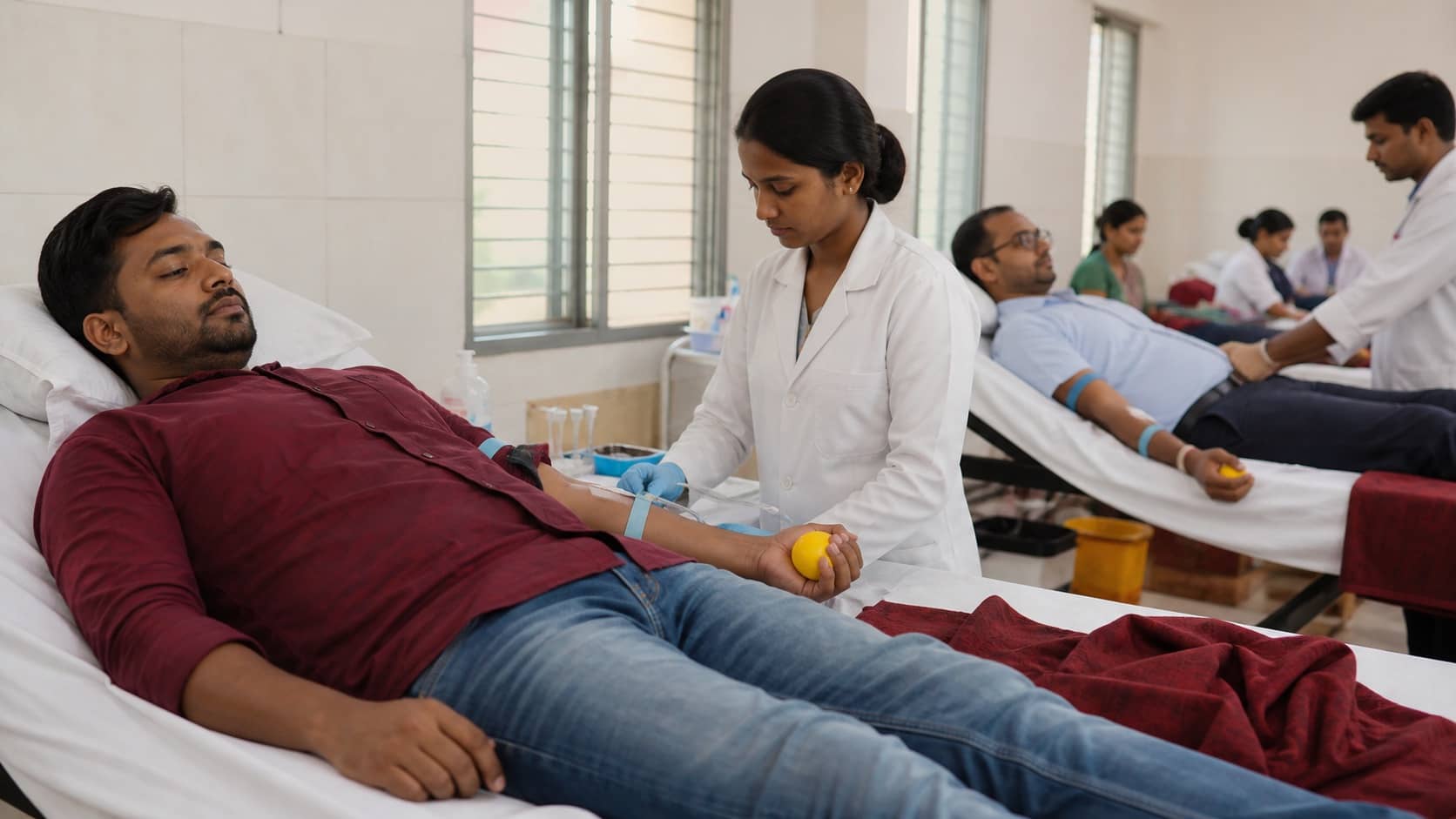
VARANASI: More than 60 people donated blood at a community camp organised by the Ravindrapuri Welfare Committee at Shah Nursing Home on Sunday. The programme brought residents, doctors and two hospital blood-bank teams together at a time when dependable voluntary donation remains essential for emergency surgery, trauma care, complicated deliveries and cancer treatment.
Chief Medical Officer Dr Narendra Pratap Singh attended the event and encouraged eligible residents to donate regularly. Medical teams from the district hospital and Mahamana Pandit Madan Mohan Malaviya Cancer Centre handled donor screening, collection and post-donation observation. Each participant was assessed before giving blood, the basic safeguard that determines whether donation is safe for both donor and recipient.
Committee president Anuj Didwania said the camp was designed as a neighbourhood initiative rather than a one-off ceremonial event. Among those recognised was Sandeep Prahladka, who completed his twenty-fifth donation. Regular donors play an important role in normalising the process, particularly for first-time participants who may be anxious about needles, weakness or eligibility rules.
Dr Ruby Shah and Ajit Bajaj were also honoured during the programme for their support. Volunteers helped with registration and refreshments, while the medical teams monitored donors after collection. Standard advice includes resting briefly, drinking fluids and avoiding strenuous activity for the remainder of the day.
Blood cannot be manufactured, and hospitals depend on a steady flow of screened donations. Demand is not limited to headline emergencies. Patients receiving chemotherapy, children with blood disorders, people undergoing major operations and women facing obstetric complications may require transfusions at short notice. Seasonal illness and holiday periods can also create gaps in supply when routine donations fall.
Community camps help close that gap by taking the donation process closer to residents. Their value, however, depends on coordination with licensed blood banks. Proper testing, storage, temperature control and traceability are as important as the number of units collected. Donors should always ensure that a recognised medical team is present and that sterile, single-use equipment is being used.
Most healthy adults can donate if they meet age, weight and haemoglobin requirements, but eligibility is decided through medical screening. Recent illness, certain medicines, pregnancy and some travel or treatment histories may lead to a temporary deferral. A deferral is a safety decision, not a judgment on a volunteer’s willingness to help.
Sunday’s turnout gave Ravindrapuri a solid base for future drives. The more useful measure will be whether first-time donors return and whether camps are scheduled around the year rather than concentrated on commemorative dates. A neighbourhood that builds a dependable donor network creates a quiet form of emergency preparedness—one that becomes visible only when a family suddenly needs it.