Rain Trips 191 Gurugram Feeders as Neighbourhoods Face Long Outages
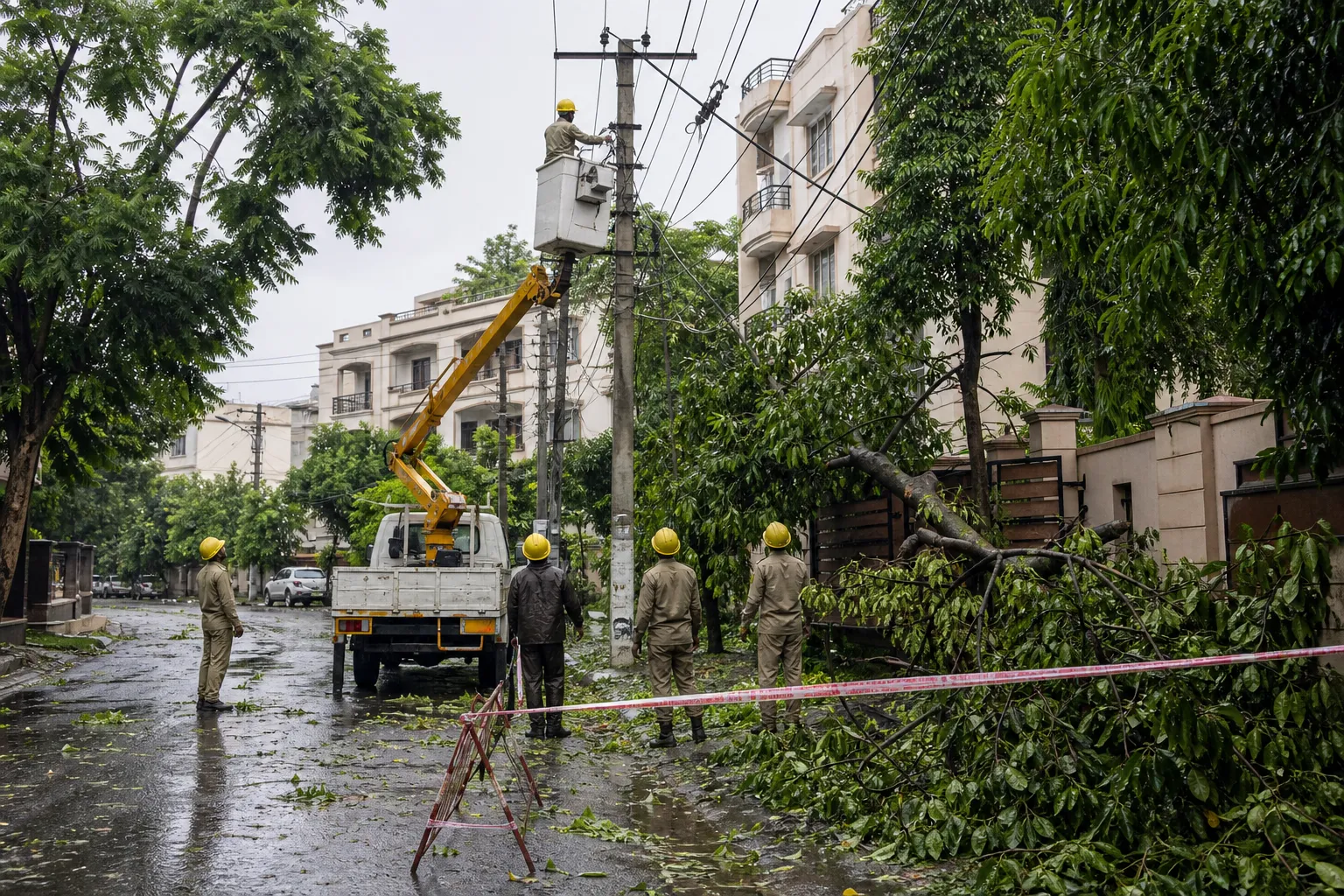
Heavy rain exposed the fragile edge of Gurugram's electricity network this week, with 191 of the city's 1,261 11kV feeders tripping or breaking down by Wednesday midnight. The failures carried into Thursday, leaving several neighbourhoods without power for periods ranging from two hours to most of the working day.
DLF phases 1 and 2, Sector 23 and Sector 23A were among the affected areas. Electricity officials said uprooted trees and broken branches fell on overhead lines at multiple locations. Some feeders were also shut as a precaution while crews removed vegetation, checked damaged cables and repaired poles in waterlogged conditions.
In DLF Phase 1, a tree fell near N Block and struck supply cables, leading to outages reported at up to three hours. DLF Phase 2 faced a longer interruption of six to eight hours after branches became entangled with lines in several blocks. Officials said supply had returned to almost all affected blocks by 6pm after field teams cleared the debris and completed repairs.
Sector 23A saw a tree fall onto overhead cables, disrupting both electricity and traffic. Some homes remained without power for up to five hours. Elsewhere, residents reported two-to-four-hour cuts linked to sparking and feeder breakdowns. Two feeders suffered the longest interruptions because of cable damage, according to the distribution company.
A feeder trip during intense rain can be a protective response rather than proof of equipment failure. Cutting supply may prevent electrocution or a larger fault when trees, poles or exposed conductors are involved. The problem is the scale: when nearly one in six 11kV feeders is affected, restoration teams and complaint lines come under pressure at the same time.
That makes pre-monsoon maintenance crucial. Tree pruning must be done with arborists and resident bodies so branches are removed safely without indiscriminate cutting. Weak poles, low cables and repeatedly faulting joints should be mapped before the rainy season. Underground networks are not immune either; poorly sealed joints and flooded distribution boxes can create their own failures.
Residents should treat fallen wires as live, keep children away and use the official complaint system rather than approaching damaged equipment. Housing societies relying on diesel generators must ensure exhaust, fuel storage and electrical changeover systems remain safe during long outages. Lifts and basement pumps need tested backup plans, particularly in buildings where water can rise quickly.
DHBVN's restoration effort returned supply to most locations on Thursday, but a proper post-event review should identify the feeders that failed, outage duration and repeat-fault history. Publishing that data ward by ward would show where pruning solved an exceptional problem and where capital upgrades are overdue. In a city dependent on lifts, pumps, remote work and digital services, power resilience is part of monsoon preparedness, not a separate utility issue.
Sources and reporting
Based on DHBVN feeder-breakdown data and neighbourhood restoration updates following heavy rain, wind and tree falls across Gurugram.
Related Stories
CAG Flags Rs 949 Cr HSPCB Sewage Gap
HHRC Orders Citywide Drainage Audit
MCG Fines 32 Shopkeepers Rs 91,500
MCG Contractors Allege Bribes After Arrest
Garbage Piles Persist in Sectors 3, 5 and 6