GURUGRAM: Overnight rain exposed fresh weaknesses in Gurugram's power-distribution network, leaving several neighbourhoods without electricity for as long as five hours before repair teams restored supply on Saturday morning.
Outages were reported from Sushant Lok 1, 2 and 3, Sectors 52, 57, 71, 99, 102 and 103, and DLF Phases 1, 2 and 3. The disruptions affected localities in both city circles of Dakshin Haryana Bijli Vitran Nigam, including several high-rise societies along Dwarka Expressway.
Residents said supply began failing soon after rain started around 12.30 am in parts of the city. In Sector 103, some societies reportedly lost power at about 1 am and saw it return only after 6 am. Complaints from Sushant Lok and other sectors similarly described hours without supply during a humid night.
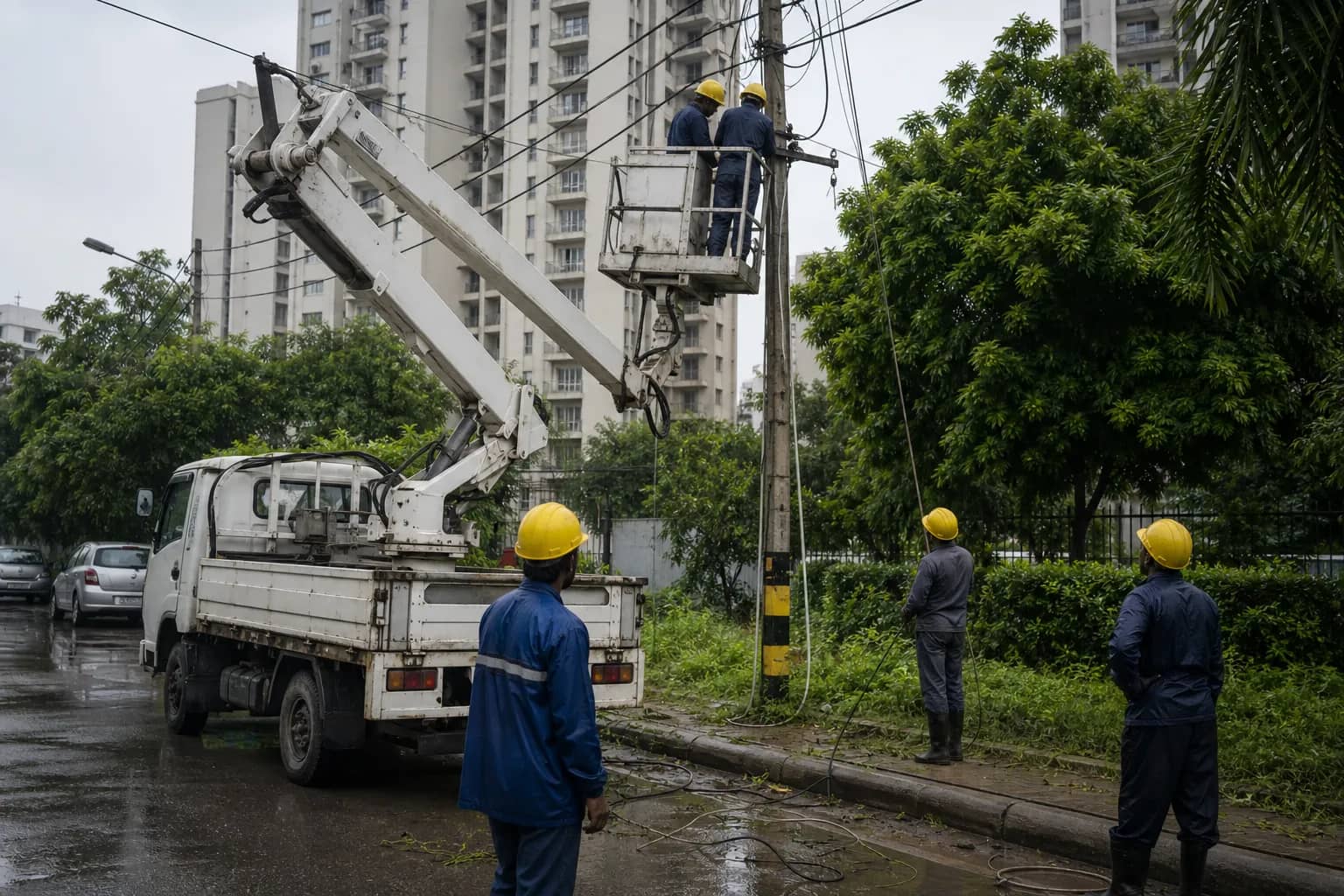
DHBVN officials attributed the breakdowns to a combination of feeder faults, damaged overhead lines, broken poles, transformer problems and branches falling on the network. Underground feeders near Farrukhnagar and Sector 99 also developed faults, affecting societies in the Dwarka Expressway belt.
Restoration completed by morning
The utility said field teams began repairs after the rain eased and restored the affected faults by morning. That response brought the immediate outage to an end, but it does not settle the recurring concern raised by residents: why moderate-to-heavy rain so often produces a multi-hour power failure across widely separated pockets.
A weather event can damage even a maintained network, especially when branches fall or water reaches vulnerable equipment. Repeated feeder failures, however, point to the need for pre-monsoon tree pruning, inspection of joints and transformers, drainage around substations and quicker isolation of the damaged section so that an entire feeder does not remain down.
Communication remains part of reliability
Several consumers also complained that they could not get a reliable estimate for restoration. In a high-rise society, a long outage affects more than lights and air-conditioners. It can interrupt lifts, water pumping, access-control systems and mobile connectivity, while diesel backup raises maintenance costs for residents.
Timely information cannot replace electricity, but it lets households and facility managers plan. A location-specific outage message with the fault, crew status and expected restoration window would reduce repeated calls and make performance easier to assess. It would also distinguish a major feeder failure from a local building problem.
The Saturday episode came as Gurugram was dealing with rain-related road disruption and standing water in several areas. It underlined how closely the city's systems are connected: waterlogged access can slow repair vehicles, falling trees can damage lines, and powerless pumps can worsen drainage at properties.
DHBVN's morning restoration prevented the failure from stretching into the day. The longer-term measure of readiness, though, will be whether the next spell of rain produces the same map of complaints. Gurugram's monsoon power plan needs to be judged not only by how fast crews respond after a fault, but by how many repeat failures preventive maintenance can stop.