NGT Halts Construction and Waste Dumping at Ghamroj Aravalli Sites
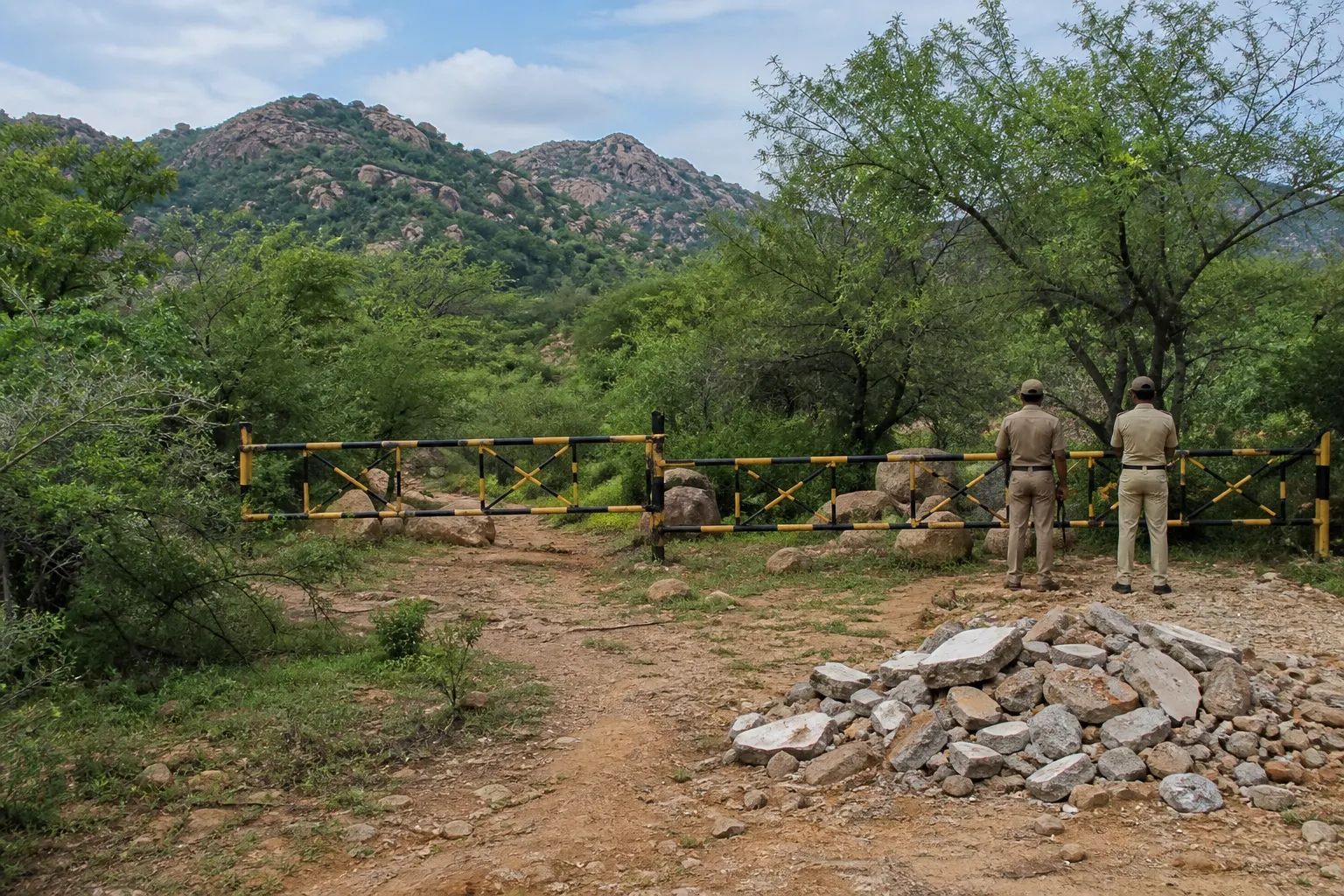
The National Green Tribunal has directed Haryana authorities to prevent further illegal construction and waste dumping on Aravalli plantation land in Ghamroj, Sohna. The order puts the focus on enforcement at specific plots where geo-tagged photographs were placed before the tribunal, rather than another broad promise to protect the hills.
In its July 29 order, the principal bench took note of material showing construction in land marked for the Aravalli plantation project and waste at Khasra numbers 80/8 and 80/11. The directions arose in a pending case in which the applicant has alleged illegal plotting, structures and a road on protected forest land.
The allegations remain part of ongoing proceedings, and the final status of individual parcels must be determined through revenue and forest records. The tribunal's immediate instruction is preventive: the state and its agencies must ensure that no illegal construction continues in the plantation area and that dumping does not add fresh damage while the case is heard.
The forest department said inspections were intensified after the hearing. Officials reported that three large structures had been demolished on July 14 following 18 notices to alleged encroachers. The gram panchayat has separately applied for diversion of 8.95 hectares of forest land, a process that does not by itself authorise work before statutory approval.
Older land-allotment records complicate the dispute. A committee led by the Sohna sub-divisional magistrate found that former panchayat resolutions from 1969 and 1972 referred to land in different parcel numbers from the designated area. That mismatch is precisely why enforcement must be based on surveyed boundaries and speaking orders, not only on a machine arriving at a site.
Waste dumping presents a parallel threat. Construction debris can bury native vegetation, alter runoff and create an access surface for later encroachment. Mixed municipal waste adds plastic, leachate and fire risk. Removing it requires a chain-of-custody record showing volume, origin where traceable, transporter and authorised disposal destination.
The state and forest authorities have sought four weeks to file an additional response. The matter is listed for September 29. Before then, a joint inspection should mark the disputed khasras on the ground, photograph current conditions and record any new activity. Public disclosure of that inspection would make it harder for violations to resume between hearings.
Ghamroj is not just a land-title contest. Aravalli plantation areas slow runoff, hold soil and provide ecological continuity on Gurugram's southern edge. The NGT order gives authorities a clear stop signal. Its value will depend on round-the-clock prevention and careful documentation, not a short demolition drive followed by another season of unmonitored dumping.
Sources and reporting
Based on the National Green Tribunal's July 29 order, geo-tagged site material, forest department action records and the next-hearing schedule in the pending Ghamroj matter.
Related Stories

Court Issues Arrest Warrant for HSVP Brass

MCG Finalises Sohna Site for Fresh Waste

GMDA Seeks Station-Wise Metro Parking Plans

Thar Rams Rapido Cab After Sector 89 Quarrel

FDA Raids 3 Outlets Over Paneer Quality