
Median Cleaning Begins on Sultanpur–Varanasi Four-Lane Highway
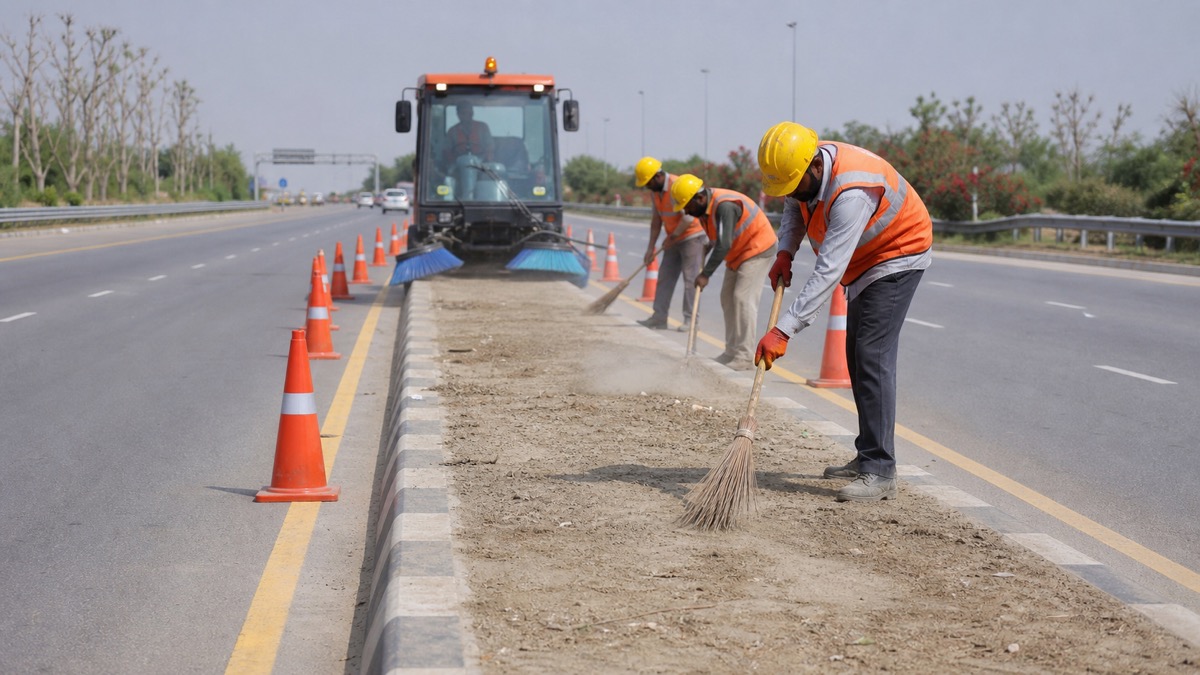
VARANASI: Maintenance teams have begun removing dust, soil and accumulated debris from the central divider of the Sultanpur–Varanasi four-lane highway, a basic intervention intended to improve visibility and reduce the chance of loose material contributing to crashes.
Median cleaning rarely attracts the attention given to a new road, yet it directly affects how that road performs. Soil spilling into the fast lane narrows usable space, creates a skid risk for two-wheelers and can block the small outlets that carry rainwater away from the carriageway.
The current drive should cover more than the most visible junctions. A highway functions as a continuous corridor, and leaving untreated pockets can move the hazard a few kilometres rather than remove it.
Working safely in live traffic
Crews operating beside fast vehicles need advance warning signs, cones, reflective clothing and a protective vehicle where required. Cleaning should be scheduled to avoid peak traffic, but workers must remain visible in poor light and rain.
Mechanical sweepers can collect fine dust more efficiently than dry manual brushing, which may simply throw particles into the air. Where manual work is necessary, water suppression and protective masks can reduce exposure. Collected material must be removed from the site, not piled beside an opening where the next shower will wash it back.
The drainage connection
Dust on a median is often mixed with leaves, plastic and fragments shed by vehicles. When that material reaches a drain, even a short spell of rain can produce waterlogging. Highway maintenance teams should therefore inspect inlet grates and the downstream channel during the same operation.
Officials should also check broken kerbs and unauthorised median cuts. A clean divider with a dangerous gap remains a collision risk, particularly at night when drivers may encounter vehicles turning unexpectedly.
Making maintenance visible
The responsible agency can publish the start and end points covered each day and a schedule for the next cycle. That allows residents and commercial drivers to report missed sections with precision instead of making general complaints about dust.
Long-term road safety depends on repeated, unglamorous work: sweeping, drain clearing, line painting and barrier repair. The Sultanpur–Varanasi highway campaign is worthwhile if it becomes a routine standard rather than a one-off exercise before a review visit. The real test will come after the next period of heavy traffic and rain, when the fast lane should remain clear and the drainage system should still carry water away.
Drivers can support the maintenance by slowing through the work zone and not cutting between cones. Enforcement against dumping construction debris on the highway shoulder should accompany cleaning, otherwise crews will repeatedly remove material introduced by avoidable private activity.
Sources and reporting
Based on a Dainik Bhaskar report published August 13, 2026. The safety benefits are expected outcomes; the highway agency should document the completed stretch and maintenance schedule.
Related Stories
HC Flags Gurugram Water Crisis, Sets Oct 1 Hearing
Haryana Notifies Tolls on Three GF Road Sections
HSVP Clears Eatery and Warehouses in Sector 18

Rain-Soaked Ramnagar Stages Ram’s Birth on Ramlila Day Two
DTCP Notices 80 Homes in BPTP Astaire Garden