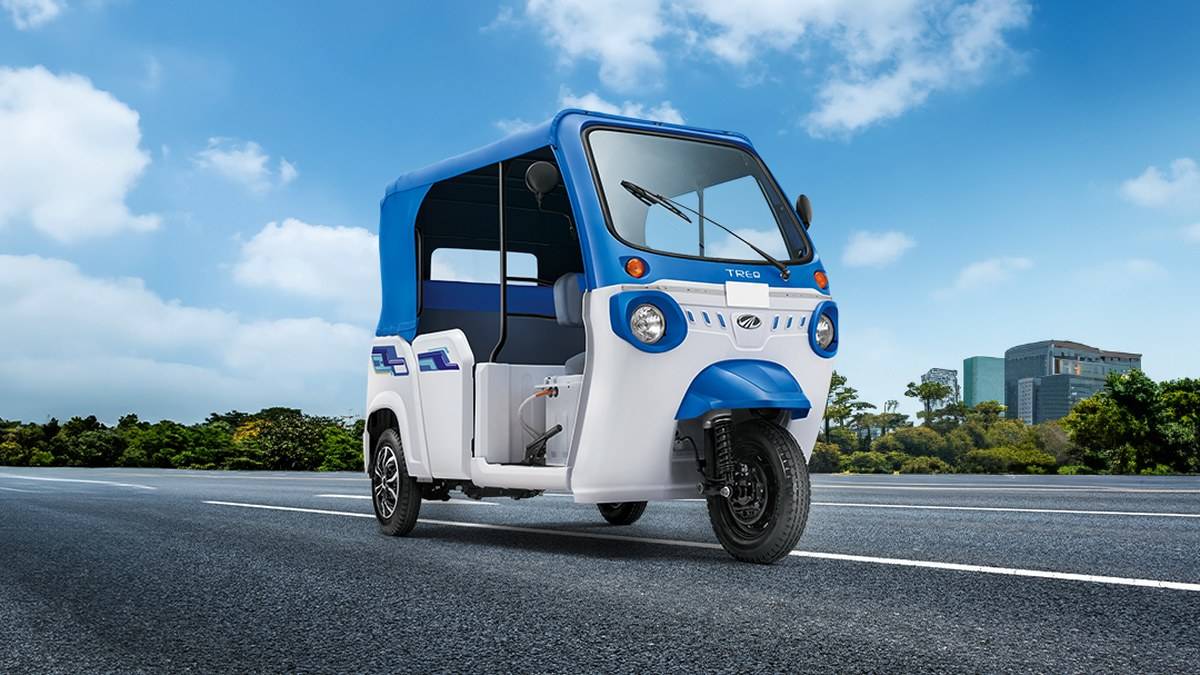
NEW DELHI: Mahindra's Treo product page qualifies its 55 km/h top speed with the words “On Boost mode”. It separately describes Economy mode as an option for extending range. A driver reading the specification should keep those claims apart: the speed figure is mode-specific, while the published driving-range figures are not a promise of distance at that speed.
| Official Treo entry | What Mahindra states |
|---|---|
| Top speed | 55 km/h, on Boost mode |
| Boost description | For faster acceleration in traffic |
| Economy description | For extended range on longer routes |
| Typical real-world range | 110 km, dependent on driving conditions |
| ARAI-certified range | 139 km |
| Passenger capacity | Driver and 3 passengers |
Start with the mode shown on the dashboard
Mahindra says the digital instrument cluster displays battery status, remaining range, speed and driving mode. Before setting off, ask the authorised representative to identify each item on the actual vehicle. A useful handover should make the mode indication recognisable to the driver, rather than leave it as a feature mentioned only in the sales discussion.
Request a demonstration of mode selection using the supplied operating instructions. The product page describes the modes but does not set out a complete button sequence or switching procedure. This guide therefore does not invent one. Establish the correct procedure for the delivered version and practise it under the representative's guidance before relying on it during a passenger shift.
For an owner who shares the Treo with a relief driver, make mode familiarity part of the handover between shifts. Record the displayed battery condition and the operating mode when the vehicle changes hands. That gives the next driver useful starting information and avoids a later discussion based only on how lively the auto felt when leaving the stand.
Do not combine the highest speed with the range claim
The speed entry and the range entries measure different things. Mahindra publishes a typical real-world distance alongside an ARAI-certified distance, with a disclaimer that actual range depends on driving conditions. The page does not establish that the typical distance can be covered while continuously travelling at the stated Boost-mode top speed.
That distinction matters on a station-feeder service. The outward run might have passengers, traffic and repeated stops, while the return can have a different load and waiting pattern. A single dashboard observation does not describe the whole shift. Keep a route record that notes those circumstances instead of explaining every change in remaining range through the mode selection alone.
Use the vehicle's actual working pattern to organise that record. Note the route, passenger load, starting display and finishing display, and whether charging took place between runs. These are practical observations an operator can make without claiming to have reproduced a certification test. They also make a workshop conversation more concrete if the vehicle's behaviour changes.
Economy mode has no published distance bonus here
The official description gives Economy mode a range-oriented role, but it does not quantify a guaranteed extra distance over Boost on the page reviewed. Do not add a fixed kilometre allowance to a day's dispatch plan simply because Economy is selected. Ask for any vehicle-specific guidance and judge the route against recorded operation.
Equally, the mode description does not publish an Economy-mode top-speed figure in the specification entries used here. It would be misleading to fill that gap using another Mahindra passenger auto, a cargo Treo Zor or an older brochure for a different version. Keep the model identity attached to the operating information supplied at handover.
A change in response also deserves a clear description. Instead of telling a workshop only that the auto feels slow, record the mode indication, passenger load and any warning displayed. Let the authorised technician assess the cause. A mode setting is useful information for that assessment, but it is not a diagnosis of an electrical or mechanical problem.
Keep the passenger vehicle's job in view
Mahindra identifies this Treo as a passenger auto with seating for a driver and three passengers. Its working-route assessment should reflect that use. Ask how the controls and displays should be checked before service, and keep the applicable manual accessible to the regular and relief drivers. A top-speed specification is not an instruction to target that speed on a route.
For separate Treo-family questions, see our Treo Plus NEMO setup guide, Treo Plus warranty explainer and Treo Yaari HRT charging report. Those cover different versions and subjects; use this Treo's own instructions for its mode controls.
The Boost-mode maximum should also stay out of a timetable calculation. Dividing a route's distance by the headline top speed would ignore passenger boarding, waiting at the stand and the traffic encountered between stops. For this passenger Treo, record the elapsed time of the actual service as well as the distance covered. That gives the operator a useful dispatch record without presenting the manufacturer's speed figure as an achievable average. It also keeps a discussion about a delayed trip separate from a question about which driving mode was selected.
Official source: Mahindra Last Mile Mobility Treo specifications, driving-mode description and range disclaimer.