Leopard Gecko Recorded at Gurugram's Aravali Biodiversity Park
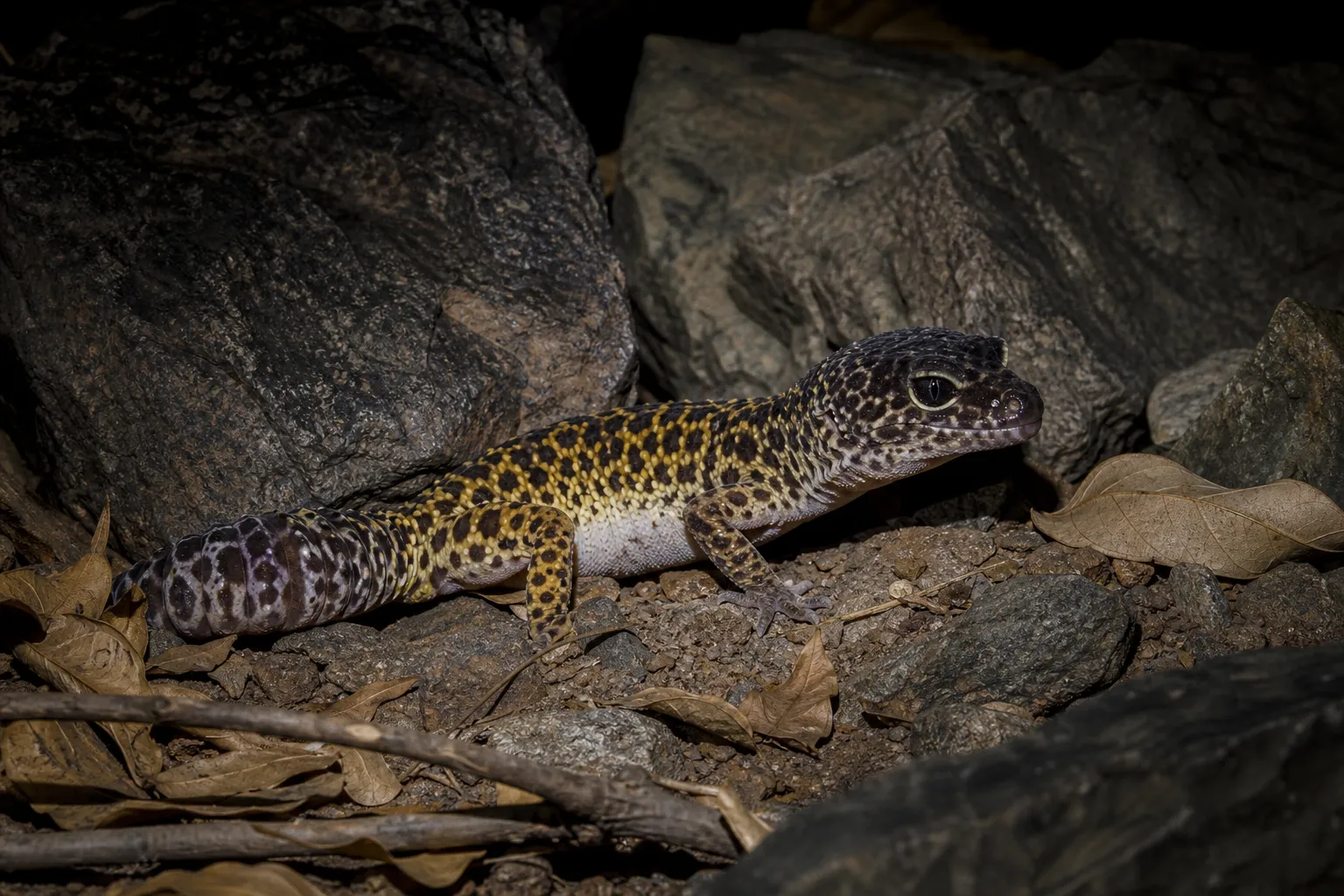
A night survey looking for amphibians has produced an unexpected record for Gurugram's best-known restored city forest. Researchers encountered a leopard gecko in a rocky section of Aravali Biodiversity Park on August 1, a sighting described by the survey lead as the first recorded observation of the species at the site.
The team was led by Dr Robin Suyesh, a herpetologist and assistant professor at Delhi University's Sri Venkateswara College, along with two field biologists. They found the reptile after dusk in a microhabitat containing rocks and abundant leaf litter. Such cover provides daytime shelter, retains some humidity and supports the insects on which the animal feeds.
Leopard geckos are ground-dwelling reptiles, unlike the common house geckos that climb walls using adhesive toe pads. They spend daylight hours concealed and emerge at night to hunt insects and other small invertebrates. Their secretive habits make them easy to miss even where suitable habitat survives.
The individual observed in the park carried the species' striking pattern: dark markings around the head and body, bright yellow bands, large eyes and vertical pupils adapted to low light. The animal is roughly palm-length. Its scientific name is Eublepharis macularius, and its wider habitat includes arid and rocky landscapes of north-western India.
One observation does not establish the size of a local population, a breeding site or a permanent range expansion. It is a verified field record that justifies more monitoring. Repeated nocturnal surveys across seasons, along with photographs and precise habitat notes retained by researchers, can show whether the park supports more individuals.
The sighting is significant because Aravali Biodiversity Park is surrounded by intense urban development. Its restored rocky ground, native vegetation and leaf litter can function as a refuge for species that are rarely noticed in city limits. Removing fallen leaves, lighting every path or over-landscaping rocky sections could erase the very conditions that made the record possible.
Visitors should not treat the news as an invitation to search under rocks or handle reptiles for photographs. Disturbing shelters can injure small animals and expose them to predators or heat. Park management can protect the location by avoiding excessive night lighting, retaining habitat structure and keeping any precise sighting coordinates out of casual circulation.
Gurugram often measures its landscape through acres developed and roads built. A palm-sized nocturnal reptile offers another measure: whether restored land has become ecologically complex enough to support specialist wildlife. The leopard gecko is not proof that every conservation problem is solved. It is evidence that patient habitat restoration can still produce surprises inside a rapidly expanding city.
Sources and reporting
Based on the August 1 nocturnal field observation, the survey team's account and established characteristics of the leopard gecko's habitat and behaviour.
Related Stories
Mayor Announces Stricter MCG Drive Against Stray Cattle

Court Stays Further Eviction at Baba Balak Nath Temple Complex

HRERA Orders Rs 19.28 Lakh for Delayed Sector 82 Flat Possession

STF Arrests Agra Man With Six Country-Made Pistols in Sohna

FDA and Police Seize Codeine Syrup, Alprazolam in Sohna Raid