400-Year-Old Kali Turbat Chehlum Procession Moves Through Varanasi in Quiet Mourning
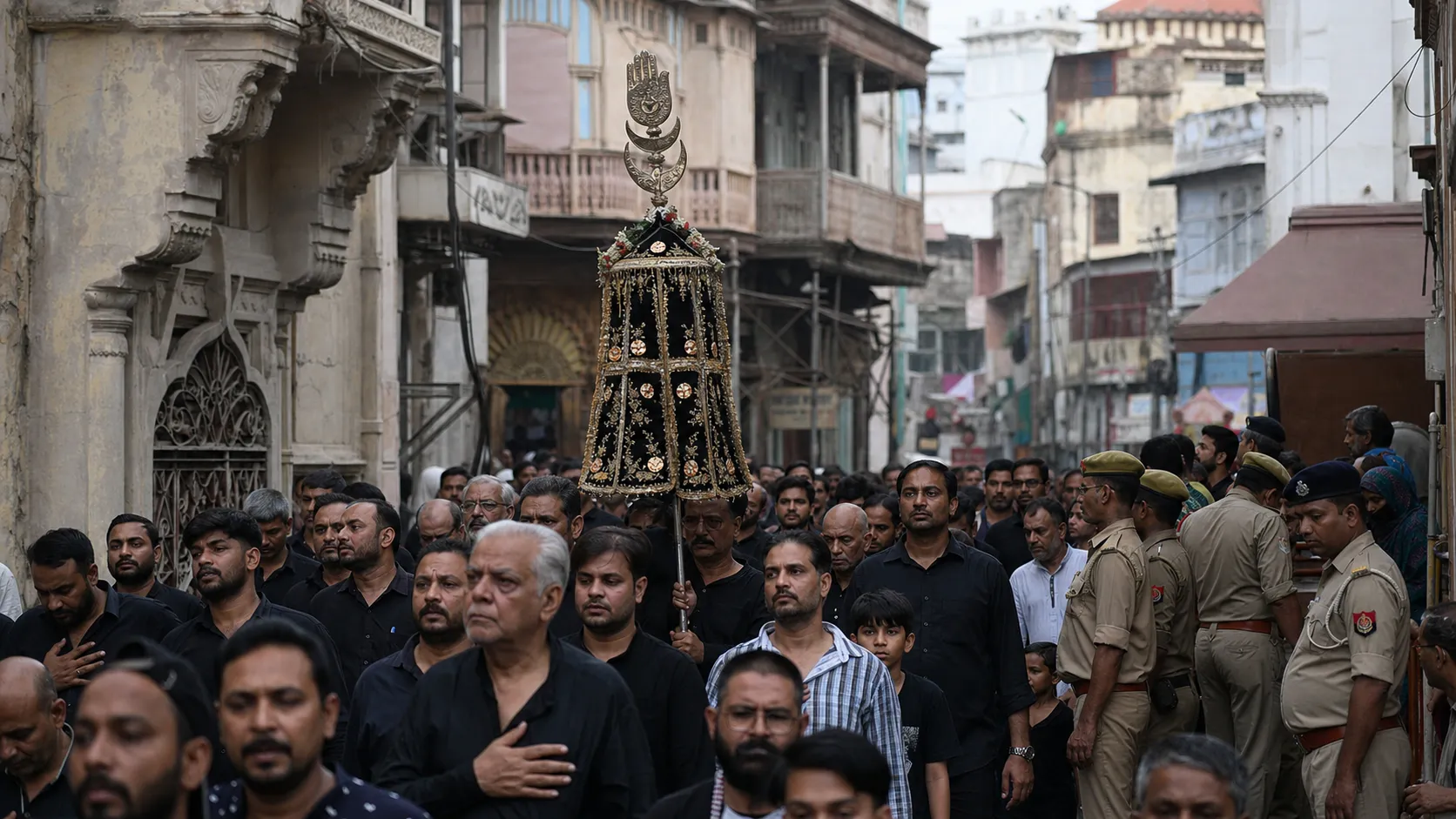
By late Tuesday morning, the lanes around Dalmandi had taken on a different rhythm. Shops looked onto a moving column of mourners as Varanasi’s Kali Turbat alam—part of a tradition described locally as 400 years old—was lifted for the Chehlum procession.
The procession began at about 11 am from Imambara Kachchi Sarai in Dalmandi. It moved through Nai Sadak, Phatak, Salim Kali Mahal and Pitarkunda before concluding at Fatman. Anjuman Jawadia led the observance, while Syed Iqbal Hussain and Zafar Hasan oversaw the alam.
Chehlum marks the period of mourning after the martyrdom of Imam Hussain at Karbala. In Varanasi, the day belongs not only to the religious calendar but also to the city’s layered neighbourhood memory. The route crosses commercial streets and residential pockets where generations have watched the procession pass the same bends.
Mourners performed matam and offered tribute along the way. Noha recitations carried through the procession, including a composition by city poet Kavish Banarasi presented by reciter Sajid Hussain. The atmosphere was sombre rather than celebratory; the gathering’s visual scale came with deliberate restraint.
Among those taking part were Imran Hussain Zaidi, Zargam Haider, Shakeel Hussain Zaidi, Haider Mulai and other members of the community. Shakeel Ahmed Jadugar conducted the procession. Large numbers joined at different points along the old-city route before the concluding observances at Fatman.
Police personnel were deployed across the route and monitored the gathering. The procession concluded peacefully, with no untoward incident reported. In congested Dalmandi and Nai Sadak, that requires close coordination: temporary movement restrictions, space for emergency access and communication with traders whose frontage opens directly onto the route.
The Kali Turbat tradition offers a view of Varanasi that quick tourist itineraries often miss. The city’s public culture is not held only at its most photographed temples and ghats. It also lives in imambaras, neighbourhood associations, oral histories, poetry and processions that move through the shared street.
Calling a practice 400 years old carries a historical claim that deserves careful documentation, but its continuity is visible in the community roles passed down around it—the people who care for the alam, organise the route, recite the noha and return each year.
On Tuesday, that continuity was neither displayed as a museum piece nor packaged as spectacle. It simply travelled through Varanasi at walking pace, accompanied by grief, memory and the discipline of a tradition still being practised. For a few hours, the old city did what it often does best: it made history present without needing to announce it.
Sources and reporting
Based on the procession schedule, route and organiser details recorded in Varanasi on 4 August 2026. The report distinguishes observed ceremonial elements from historical claims carried by the tradition.
Related Stories
Railways Orders Weekly Puja Special 09465 via Varanasi Through November
Hindi Diwas Marked Across BHU, Sanskrit University and Kashi Vidyapith
Lohta Police Register FIR After Bhitari Villager Alleges Hostage Beating
Baragaon Police Book Named Youths After Kazisaray Tea-Stall Assault and ₹1,900 Loot
Mayor Announces Stricter MCG Drive Against Stray Cattle