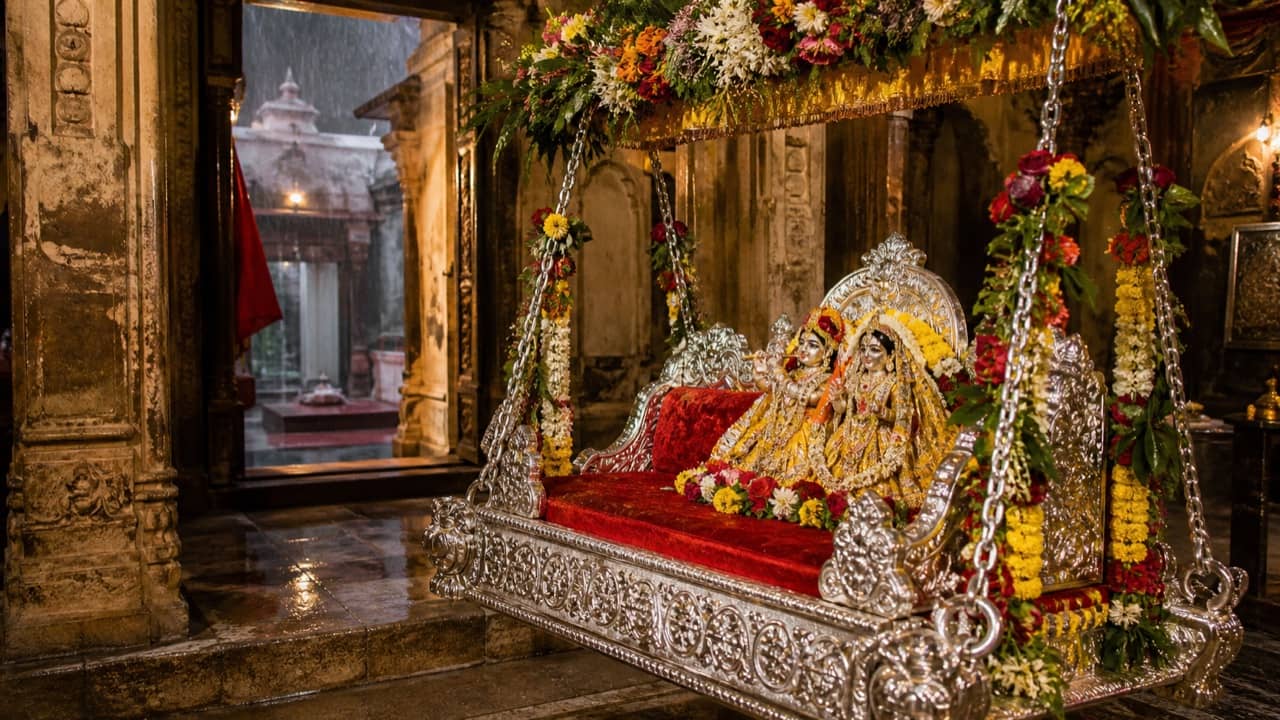
VARANASI: Kajri returned to its natural season and setting at Teliyana's ancient Shri Ram Janaki temple, where the second evening of the Jhula festival placed the child form of Ram on a silver swing and filled the courtyard with monsoon folk melodies. The programme was devotional, but it also worked as a small public archive for a musical tradition that survives through performance rather than textbooks.
The temple's festival runs from Shrawan Shukla Ekadashi to the full-moon day. Folk singer Manoj Singh opened the musical presentation, and devotees joined the evening programme around the decorated swing, according to the report. The source described the atmosphere as enthusiastic and noted the central role of Kajri songs, a repertoire closely associated with rain, longing, reunion and the landscape of eastern Uttar Pradesh.
A neighbourhood temple is an intimate stage. There is little distance between singer and listener, and older participants often supply a forgotten line or alternate tune from memory. That informality gives Kajri its warmth, but it also makes documentation valuable. A clean audio recording, performer list and identification of the compositions would allow the evening to be heard after the seasonal decorations are removed.
Jhula festivals symbolically place deities on swings during the monsoon, when the landscape turns green and seasonal poetry acquires fresh meaning. In Banaras, the observance overlaps with a living culture of thumri, dadra and Kajri shaped by temple, courtyard and concert traditions. The Teliyana programme belongs to that continuum without needing to become a large ticketed spectacle.
Such gatherings keep local performers visible and give younger residents a low-pressure introduction to folk music. They can also support small flower sellers, decorators and prasad vendors around the temple. The challenge is scale: organisers need clear walking space, safe temporary wiring and considerate loudspeaker hours so the celebration remains welcome to neighbours, including those who are elderly, ill or studying.
The remaining festival nights offer a chance to widen participation without diluting the ritual. Announcing the programme and performer credits in advance, reserving space for women and older listeners, and inviting a young student to learn one traditional composition would create a modest bridge between generations. Heritage survives when people are allowed to take part, not only watch from the edge.
Visitors should follow temple instructions, keep footwear and bags out of narrow access routes, and avoid using flash close to the shrine. Recordings should be made only where permitted and should credit the singer when posted online. In a feed crowded with disposable clips, a correctly named Kajri from a Teliyana evening can become a useful cultural record rather than just another unlabelled festival video.
This report is based on a Live Hindustan account published on 26 August 2026. Dalimss News independently rewrote, checked and contextualised the available information. Where a claim, allegation or opinion is attributed to a person or institution, it remains their statement; no on-scene reporting or independent interview is claimed.