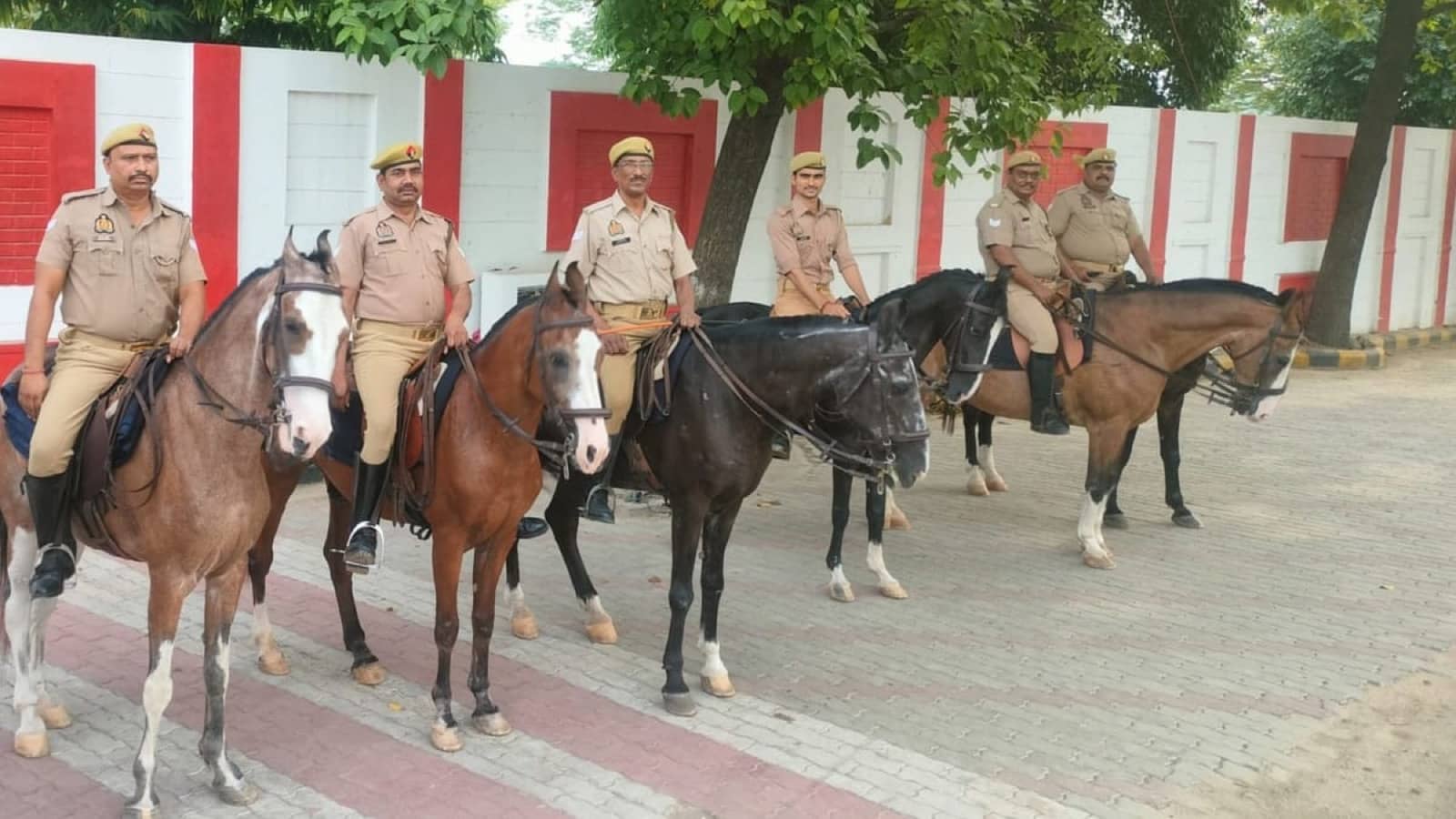
VARANASI: As the first light reaches the ghats, a different morning rhythm begins at the Reserve Police Lines in Pandeypur: hooves on the riding ground, short commands from trainers and the daily drill of Varanasi Police's mounted unit.
The commissionerate has nine horses used for ceremonial duties, patrol and crowd management. Their routine begins with inspection and exercise rather than deployment. Riders work on formation, pace, turns and response to commands, building the coordination required when an animal and officer have to move through noise, traffic and a dense public gathering.
Mounted police remain useful in places where a rider's height provides visibility and a horse can move through a crowd without the footprint of a large vehicle. In Varanasi, that can include festival routes, large processions, open grounds and busy approaches where officers on foot may struggle to see across several rows of people. The horses are not a substitute for barriers or patient crowd planning; they are one tool within it.
The animals' care is as important as the drill. The unit's routine includes grooming, feed, hydration, hoof checks and rest. Sand baths help horses roll, scratch and maintain their skin, but the ground and timing need supervision. During humid monsoon weather, handlers must watch for fungal conditions, slippery surfaces and heat stress even when the temperature appears moderate.
A trained police horse also has to become accustomed to stimuli that would startle an ordinary animal: loudspeakers, drums, flags, vehicle horns and sudden movement. Desensitisation is gradual and should never be confused with forcing an exhausted or frightened horse into a crowd. A calm deployment depends on the trust built between rider and animal long before an event.
Public conduct around the unit matters. People should not approach from behind, feed a horse without permission or push children forward for a photograph while officers are moving. Flash photography and sharp noises can create avoidable risk.
The mounted section carries an old-world visual appeal, particularly in a city associated with ceremonial processions. Yet its work is practical and repetitive: the same circles, halts and formations every morning until rider and horse react together.
What residents see on a festival day is the polished end of that routine. Behind it are early hours at Pandeypur, stable work, veterinary attention and an unusual partnership in public service—nine animals whose training has to balance discipline, welfare and the unpredictable energy of Kashi's streets.