India hosted the second meeting of a United Nations-backed initiative on artificial intelligence in agriculture on 10 October, bringing together work on farm technology, international standards and the organisation of its specialist working groups. Teams from a preceding hackathon also demonstrated their solutions at the meeting in New Delhi.
The Global Initiative on AI for Agri-Food Systems, or GI-AI4FS, met alongside India Mobile Congress 2026. The Telecommunication Engineering Centre, part of the Department of Telecommunications, jointly hosted the event with the Indian Council of Agricultural Research. Around 70 delegates attended in person and 25 joined online, the Ministry of Communications said.
The initiative is coordinated by the International Telecommunication Union, working with the Food and Agriculture Organization, the International Fund for Agricultural Development and the World Food Programme. The ministry's account of the completed meeting was released on Saturday evening. It describes discussions and demonstrations, without announcing a new farm subsidy or an approved deployment programme.
Hackathon teams demonstrate farm applications
The meeting followed a two-day international hackathon held on 8 and 9 October at the ICAR campus in New Delhi. Students and researchers worked alongside developers and other participants on technology intended to address problems in agriculture and food systems, according to the ministry.
Shortlisted teams then presented the applications developed during the hackathon. The programme included winning solutions and an awards ceremony recognising teams and other contributors. The release does not identify the winners or provide technical results that would allow readers to compare the performance of their systems.
The ITU's official meeting programme had set out the next question for that work: how promising demonstrations might lead to pilot projects, commercial use or international collaboration. It also included discussion of research partnerships and financing. These were areas for exploration, rather than commitments to pay for or deploy a particular product.
The distinction matters for farmers considering new digital tools. A demonstration shows what a team has built, while a funded pilot would need a defined location and a way to assess results in use. The meeting release does not provide those details or say when participating solutions will be available to farmers.
Working groups and common standards
Delegates discussed the initiative's proposed governance and coordination structure. The agenda covered working-group chairs, co-chairs and members, their terms of reference, and the identification of initial priorities. The official account mentions nomination and confirmation processes but does not publish a full membership list or the final terms agreed.
The ITU programme places the Delhi meeting after an inaugural gathering in Rome in June 2026. Its stated purpose was to take the earlier work forward and define priorities and deliverables for the working groups. The programme also called for systems that are trusted and interoperable, so separate tools can work together.
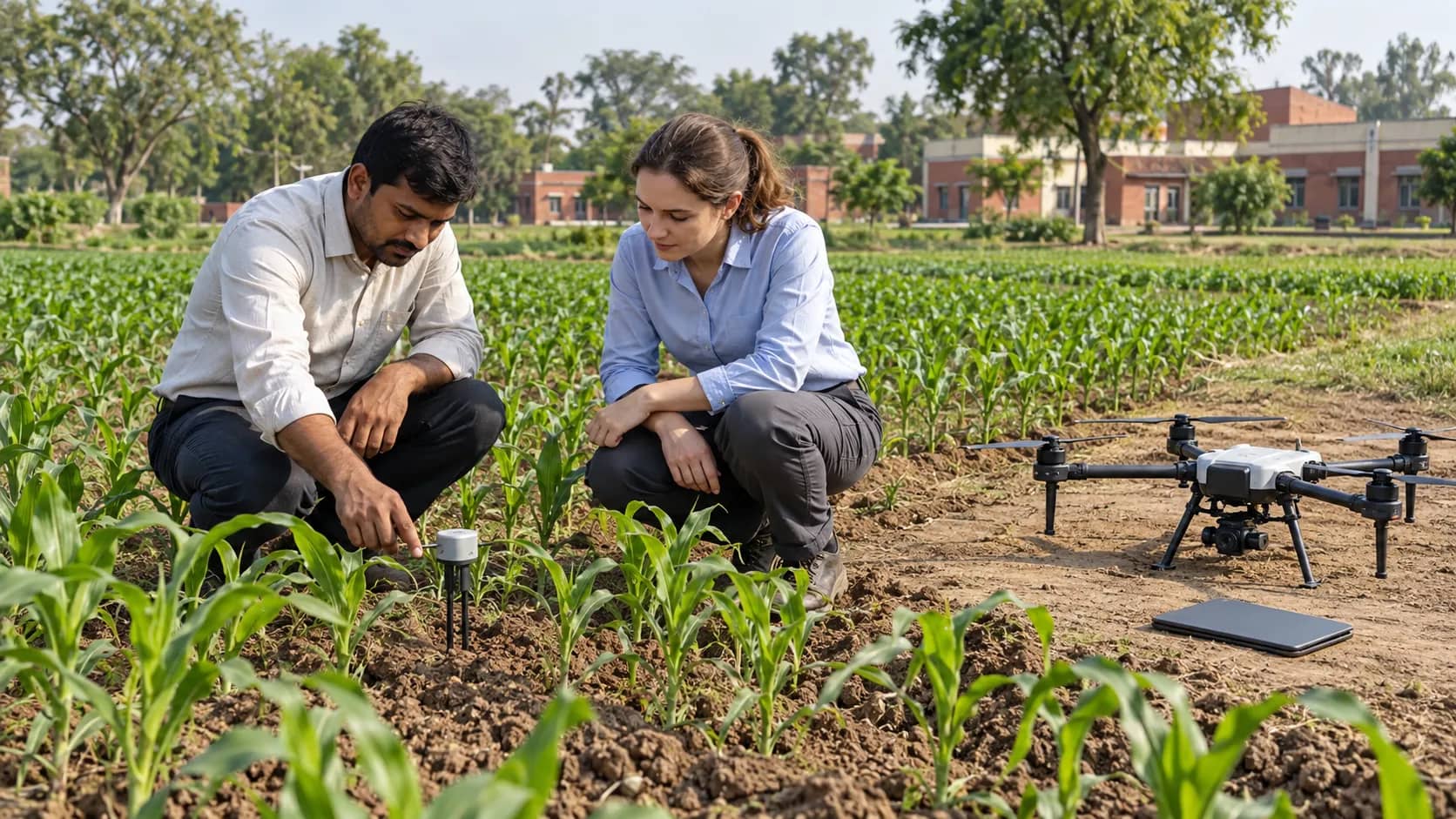
According to the ministry, connected sensors and weather stations can be combined with drones, satellite systems and AI-based analysis to support decisions on farms. It identified earlier detection of crop diseases and more precise use of resources as possible applications. These are the potential uses described by the organisers, not measured improvements reported from this meeting.
The ministry also pointed to food traceability and reducing losses after harvest. That widens the initiative's focus beyond growing a crop to what happens while produce is handled and moves through supply chains. Its account gives no percentage reduction in waste or increase in yield, and does not put a value on expected savings.
Where the India discussion goes next
The meeting brought India's telecom engineering and agricultural research institutions into the same international programme. Its combination of working-group discussions and practical demonstrations reflects the organisers' stated effort to connect standards work with applications that farmers can use.
Dalimss News has separately examined Marut's agricultural and other drone systems and the IndiaAI Centre of Excellence in Thiruvananthapuram. Those reports provide background on India's wider applied-technology sector. The Delhi meeting's own next steps remain the working-group priorities and possible pilot collaborations described in its programme; no farmer application window or rollout timetable has been announced in the release.