IIT-BHU to Mentor 30-Plus Madhya Pradesh Institutes in Emerging Technology
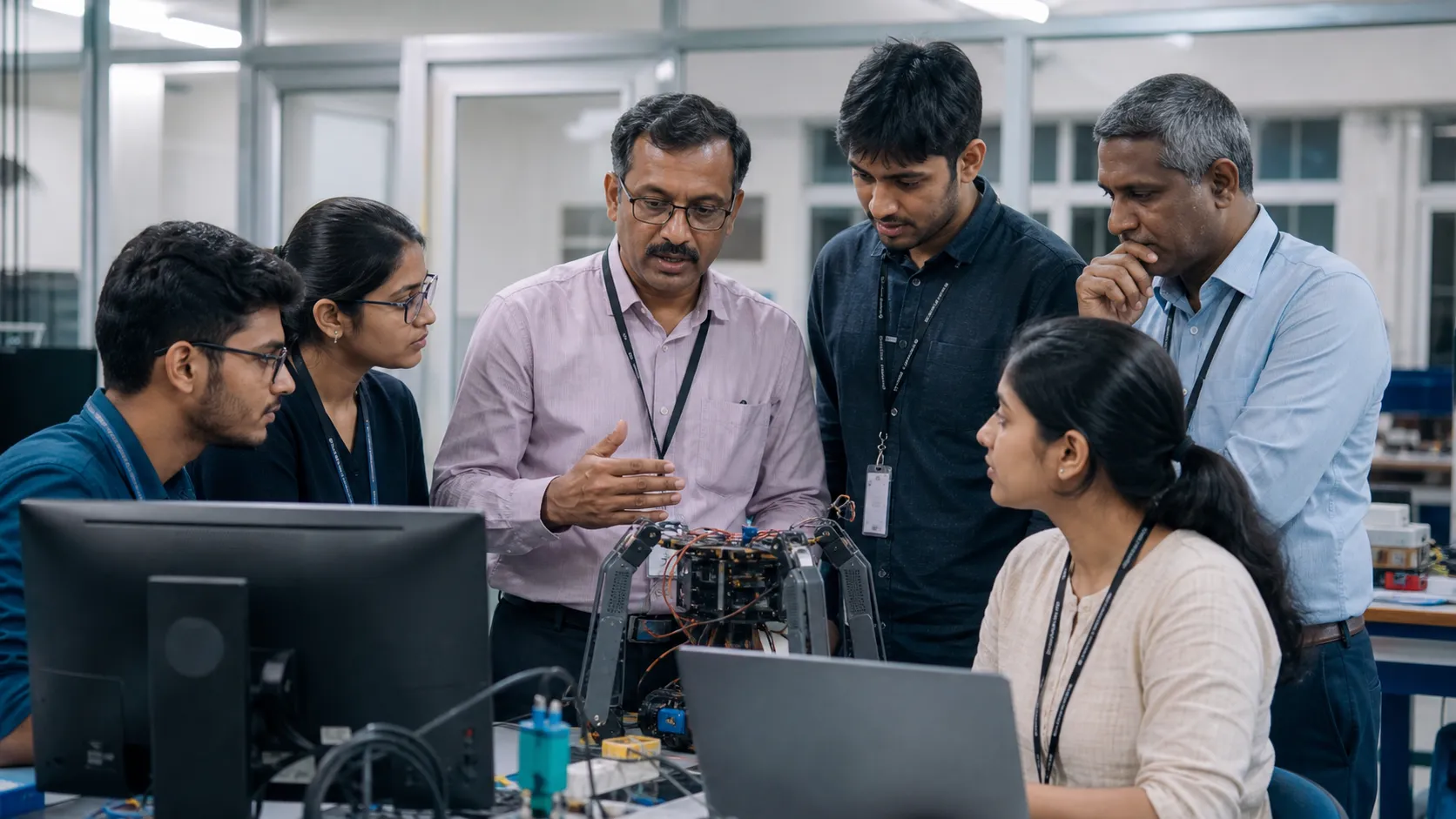
IIT (BHU) Varanasi will work with more than 30 higher-education institutions in Madhya Pradesh under a five-year agreement designed to spread advanced technical training, research access and startup support beyond a single campus. The memorandum was signed in Bhopal on Tuesday by IIT-BHU Dean of Research and Development Prof Rajesh Kumar and Madhya Pradesh Higher Education Commissioner Prabal Sipaha.
The partnership covers a wide field: artificial intelligence, machine learning, data science, robotics, the Internet of Things, cybersecurity, semiconductor technology, smart manufacturing, Industry 4.0, quantum technology, drones, smart cities and high-performance computing. Planned formats include certificate courses, faculty-development programmes, workshops, boot camps and technical training.
The list is ambitious enough to sound like a technology catalogue, so execution will matter more than the announcement. A short workshop can introduce a subject, but it cannot by itself build an AI laboratory or a semiconductor programme. Each participating institution will need to identify what it already has—faculty time, computing capacity, laboratories and interested students—and select a realistic track.
For IIT-BHU, the agreement extends its role from teaching its own students to helping shape a larger regional ecosystem. Its Centre for Innovation, Incubation and Entrepreneurship is expected to support mentoring, incubation, patents, technology transfer and commercialisation. Those words become meaningful when a student team can move from an idea to a tested prototype, receive clear advice on ownership and meet a user or investor who can challenge the business case.
The Madhya Pradesh institutions are described as including universities and nationally important technical campuses. Their needs will not be identical. A college beginning with data analysis should not be measured against an institution already doing advanced robotics. Shared course material can help, but mentoring must be tiered rather than delivered as one uniform package.
Faculty development may be the partnership’s most durable component. Equipment ages quickly; a teacher who learns to redesign a course, supervise a project and collaborate across campuses can influence several student cohorts. The programme should therefore publish participation criteria, contact hours and outcomes instead of counting attendance alone.
IIT-BHU Director Prof Amit Patra said the institute intends to share its academic and research strengths more widely while encouraging innovation and entrepreneurship. The presence of Madhya Pradesh Governor Mangubhai Patel and Chief Minister Mohan Yadav at the signing gave the agreement political visibility. It now needs an academic calendar to match.
A useful first-year scorecard would be simple: programmes delivered, faculty trained, student projects completed, research facilities actually accessed and startups that reach a verifiable milestone. If those results are made public, the MoU can become a working network rather than a ceremonial file.
From Varanasi, IIT-BHU is positioning itself as a technical mentor across state lines. The next test is whether students in those 30-plus institutions feel the connection in their classrooms and laboratories—not just in the language of the agreement.
Sources and reporting
Based on the five-year memorandum signed on 4 August 2026 between IIT (BHU) Varanasi and Madhya Pradesh's Higher Education Department. Dean (R&D) Prof Rajesh Kumar and Higher Education Commissioner Prabal Sipaha signed in Bhopal.
Related Stories

BHU: Below 4.0 CGPA Will Cost Hostel and Health Facilities

Sewer and Water Pipeline Work Starts in Four Wards Under CCTV Watch

BHU Issues 69-Page PhD Bulletin for About 1,500 Seats in Three Modes

Lolark Shashthi Draws Long Queues at Bhadaini’s Lolark Kund

Ganga Level Keeps Falling; Silt Clearing Starts as Boat Ban Holds