
IIT-BHU Opens Two Centres for Startups and Sustainability Research
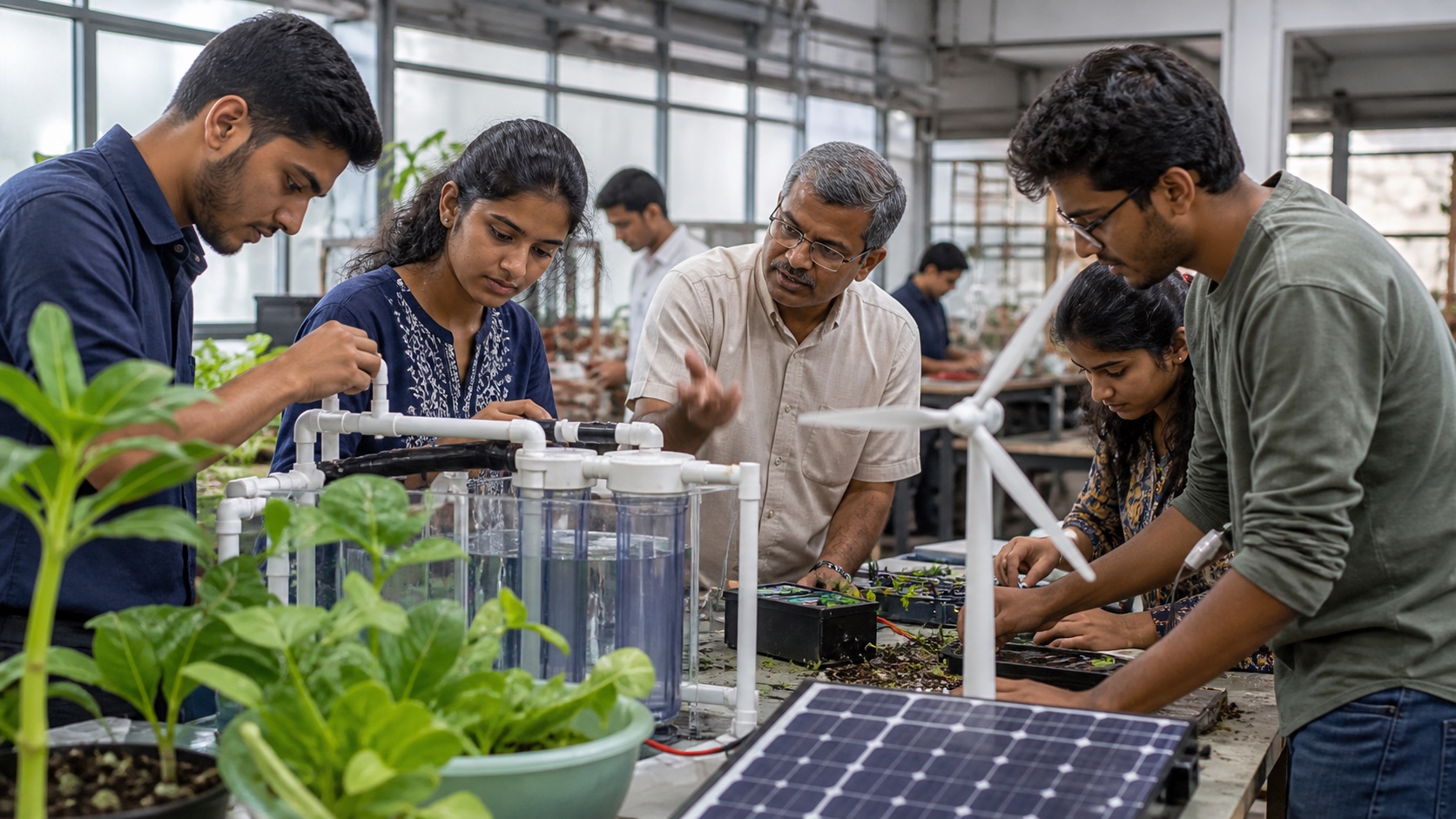
IIT-BHU has brought two new institutional centres into operation: the Centre for Innovation, Incubation and Entrepreneurship and the Virtual Sustainability Centre. Both took effect on July 1 after approval by the institute’s Board of Governors at its May 12 meeting. The pair is designed to address a familiar university problem—how to move promising ideas beyond papers while keeping long-term social and environmental questions in view.
The innovation centre, known as CIIE, is the nodal platform for startup incubation, prototype support, intellectual-property work, technology transfer and industry collaboration. It will coordinate closely with the institute’s I3 Foundation, a Section 8 organisation that supports venture acceleration and commercialisation. Its published brief spans the full path from design thinking and proof of concept to mentoring, licensing and investor connections.
The Virtual Sustainability Centre, or vSDC, is structured as an interdisciplinary platform rather than a single-department laboratory. Its mandate covers education, research, outreach and policy engagement aligned with the institute’s Sustainability Mission 2.0 and the United Nations Sustainable Development Goals. The virtual model can connect specialists across departments without first waiting for a large new building.
Putting the centres side by side creates a productive tension. Incubators are often rewarded for speed, valuations and company formation; sustainability research asks what a technology costs communities and ecosystems over time. If the two units genuinely collaborate, student founders may encounter lifecycle analysis, accessibility and resource use before a product is locked in, rather than treating those questions as late compliance work.
The structure also needs safeguards. University laboratories, public grants and student labour can produce valuable intellectual property, so rules on ownership, licensing, founder selection and conflicts of interest should be understandable. Sustainability claims require measurable baselines rather than green branding. Publishing annual data on prototypes, patents, startups, funding and verified outcomes would make the centres easier to assess.
Varanasi has no shortage of problems that can anchor responsible innovation: river health, heat, waste, mobility, public health and the survival of craft economies. The new centres will matter if they connect institute expertise to those realities while still supporting nationally competitive research. Their launch is the administrative beginning. The substantive story will be the ideas they help test, the people they train and the benefits that remain after a pitch event ends.
Students and local founders will also need a clear front door. The institute should say who can submit an idea, how proposals are evaluated, what support is free and what equity or licensing conditions apply. A transparent intake process would keep the centres from serving only people who already know the right office, and it would widen the pool of problems and entrepreneurs they encounter.
Sources and reporting
Based on IIT-BHU’s official order establishing the Virtual Sustainability Centre on 30 June 2026, its order establishing CIIE on 1 July 2026, and the institute’s published CIIE description. No independent interview by Dalimss News is documented.
Related Stories

Redmi 17C 5G will launch in India on October 1 via Amazon

itel Zeno 300 brings a 6,000mAh battery to India at Rs 9,649

Vi makes international roaming free on select postpaid, prepaid plans

Pine Labs ties up with Google Cloud to build AI shopping agents

Belden to make RUCKUS ICX network switches at its Pune plant