NEW DELHI: The 2026 Harley-Davidson Street Bob uses a 102 mm analogue speedometer with digital information for gear position, fuel, range, ride modes and rider-assistance systems. Its traditional-looking instrument is therefore more than a speed dial. The useful way to understand it is to separate the main needle, the changing digital readouts and the alerts that need attention.
| Street Bob instrument detail | Official India specification |
|---|---|
| Main instrument | 102 mm analogue speedometer |
| Riding information | Gear, odometer, trip, fuel level, range and tachometer indication |
| Status information | Ride modes, traction control, ABS and TPMS indication |
| Charging provision | USB-C |
This concerns the model shown on Harley-Davidson's India website, checked on 8 November 2026. It is an equipment explainer, without an Indian price claim. The page's gauge description lists information functions; it does not mean every accessory associated with an indicator is included with the motorcycle.
A compact dial can carry several kinds of information
The distinction between analogue speed and digital supporting information explains much of the Street Bob's cockpit. A rider can keep speed as the main visual reference while using the other readouts for specific questions. Is the selected gear appropriate? How much fuel remains? Which mode is active? Those are separate checks rather than one continuous display-reading task.
A sensible familiarisation session begins with the motorcycle stationary. Locate the information controls, see which items appear together and identify the symbols before riding. The point is to learn where information lives, not to rehearse a menu sequence from a different Harley-Davidson model. The product page is a specification summary, not a substitute for the correct owner's manual.
The India gauge list includes both fuel level and range. Those answer different questions: one concerns the fuel remaining, while the other expresses a distance estimate. For a planned ride, reading both is more useful than treating the distance number as a fixed promise. No tank-to-empty mileage has been calculated here.
Read an alert as a request to investigate
Tyre-pressure monitoring is part of the Street Bob's stated equipment. Harley-Davidson describes TPMS as alerting the rider to low or high tyre pressure through the information display. It supplies information about pressure; it does not physically correct the tyre or establish that the tyre is free of damage.
For example, a pressure warning deserves its own check before a planned outing. Dismissing it because the tyre looks normal would confuse appearance with measurement. The precise pressure target should come from the documentation for the motorcycle and tyre configuration, rather than a number copied from an unrelated cruiser.
The same distinction helps with ABS and traction-control indications. Harley-Davidson describes ABS as addressing wheel locking under braking, and traction control as addressing excessive rear-wheel spin under acceleration. They deal with different situations, even though their status information occupies the same small instrument area.
Mode information is separate from mechanical specification
The Street Bob page identifies selectable ride modes, but this article does not invent a mode count or a button-by-button activation procedure. An indicator showing the selected setting is useful only when the rider understands that setting's behaviour. Confirming the selection while stopped avoids making the cockpit itself a distraction.
Harley-Davidson's US page uses the description of a four-inch analogue gauge with digital functions. That reinforces the instrument layout, but US engine output and local market figures should not be imported into an India specification story. Market labels remain relevant even when the photographs look identical.
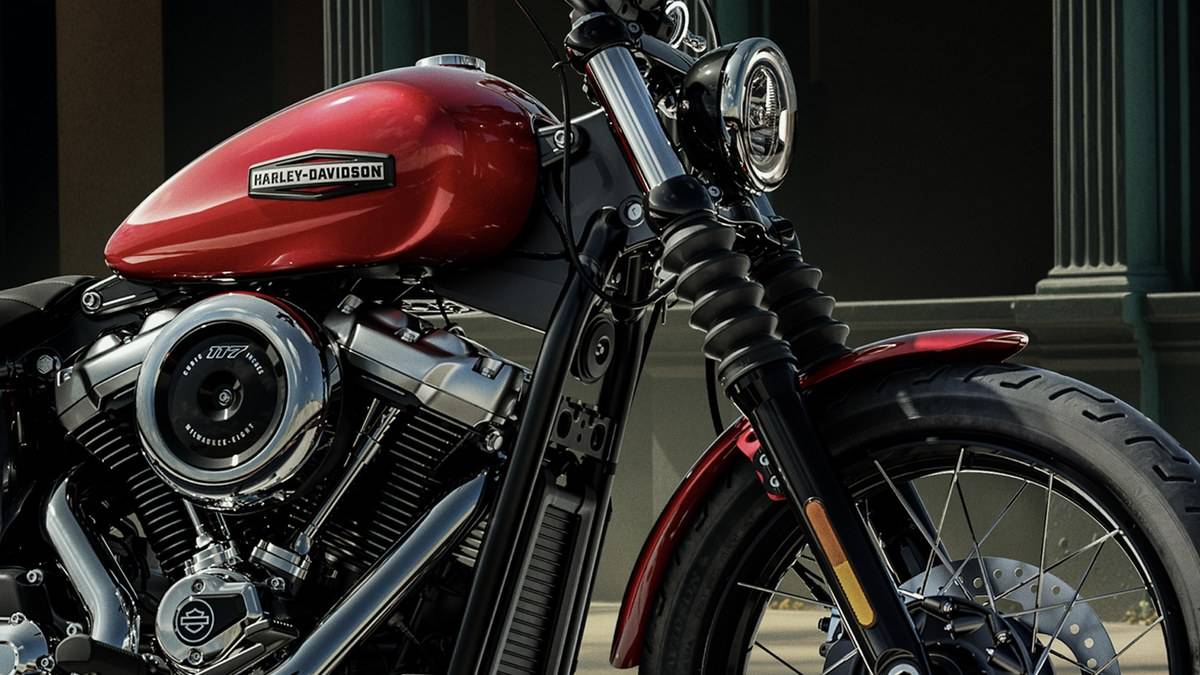
There is another configuration distinction around the wheels. The official pages identify cast Annihilator wheels and optional tubeless laced wheels. A spoke-like appearance in an image therefore does not establish a standard wheel specification. It is worth recording the wheel configuration alongside the instrument and pressure-monitoring information when learning the motorcycle.
Charging and documentation complete the cockpit picture
USB-C charging is listed, but the product description does not provide a charging-output figure that can be quoted here. A connector's shape alone does not establish how quickly a particular phone will charge. Likewise, the presence of a traditional speedometer says little about how much electronic assistance sits behind it.
Harley-Davidson's India service page links to owner's manuals, maintenance schedules and recall information. Keeping the correct manual available gives the rider an authoritative reference for a symbol or control that the short product page does not explain. It also avoids mixing instructions from another model year.
For related reading, our Sportster S navigation guide covers a different display type. The X440 T mode explainer concerns another motorcycle's controls, while our Nightster warranty guide explains a separate ownership issue.
Official sources: Street Bob India specifications, US instrument description and India service resources.