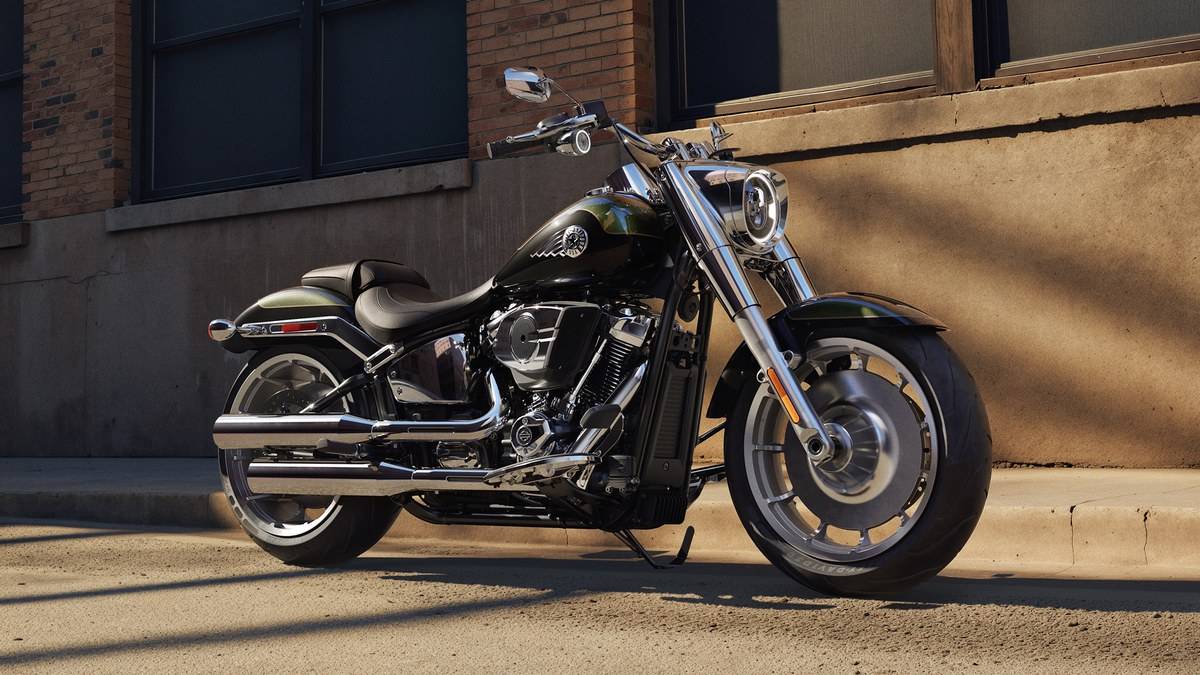
NEW DELHI: The 2026 Harley-Davidson Fat Boy's India specification lists a Michelin Scorcher 11 front tyre in 160/60R18 70V and a rear in 240/40R18 79V. Both fit an 18-inch wheel, but their width, profile and load-index markings differ. Reading the complete codes explains more than describing the motorcycle as having a wide rear tyre.
| Position | Official tyre specification | Tyre family |
|---|---|---|
| Front | 160/60R18 70V | Michelin Scorcher 11 |
| Rear | 240/40R18 79V | Michelin Scorcher 11 |
| Wheels | Machined Lakester cast aluminium, front and rear | Harley-Davidson specification |
The model specification was checked on 8 November 2026. Harley-Davidson also supplies an official service table identifying Fat Boy by the FLFB model code. That table repeats the tyre sizes, providing a separate reference beyond the short product description. Matching the motorcycle's own documentation remains essential when interpreting service values.
The front and rear codes describe different tyres
Michelin's official motorcycle-size guide explains that the first number describes tyre width in millimetres. Applied to the Fat Boy's stated sizes, that means a nominal 160 mm front and 240 mm rear. These figures describe the tyre section, rather than a measurement of the rubber's contact patch on the road.
The next number is the aspect ratio, expressing sidewall height relative to tyre width. The Fat Boy therefore pairs a front profile marked 60 with a rear marked 40. Those are proportions, not sidewall heights in millimetres. Comparing the numbers without their different widths would give an incomplete picture.
The R indicates radial construction, while 18 identifies the wheel's bead-seat diameter in inches. It does not describe the complete outside diameter of an inflated tyre. This is why a shared wheel diameter does not make the Fat Boy's front and rear tyres interchangeable.
Keep the rating letters and numbers in the record
The remaining 70V and 79V markings are part of the published specification, rather than decorative text. Michelin explains that the number is a load index and the letter is a speed rating. They should remain attached to the size when recording the specified tyre for a service discussion.
A load index is a code, not a kilogram figure printed directly in the tyre name. Similarly, a speed-rating letter is a classification, not an instruction about how to ride. No speed or load conversion is needed to notice that the front and rear load indices are different.
For the Fat Boy, the practical lesson is to copy the entire front and rear entries separately. Recording only the width, or only the tyre family, discards part of the manufacturer's specification. A photograph of each sidewall alongside the motorcycle's paperwork can make a later discussion more precise.
Pressure is a separate specification
Harley-Davidson's FLFB service table gives cold pressures of 36 psi at the front and 42 psi at the rear, with its cold reference stated as 20 degrees Celsius. These are the values in that official table, not a substitute for checking the manual and vehicle information applicable to a particular motorcycle.
Michelin's motorcycle FAQ explains why the pressure marked as a maximum on a tyre should not be treated as the vehicle's normal operating target. Its guidance points riders to the vehicle manufacturer's recommendation. The tyre-size code and the required inflation pressure therefore answer different questions.
The same FAQ says pressure should be assessed cold and explains that normal running heats the air inside the tyre. Removing air from a hot tyre to reach a cold target can leave it underinflated in normal operation. The measurement condition belongs beside the number whenever a pressure reading is discussed.
The front and rear entries should also stay distinct in a maintenance record. A single pressure number written beside the motorcycle's name leaves out which wheel was measured and under what conditions.
The Fat Boy's stance does not prove a grip advantage
Harley-Davidson makes the broad tyres and Lakester wheels central to the Fat Boy's appearance. That is a model-specific design choice, but the visual impression is not a measured braking or wet-grip result. The official material opened for this story does not establish comparative stopping distances against narrower-tyred cruisers.
Michelin's guidance also distinguishes wet-road performance from width alone, pointing to tread and rubber compound. A large-looking rear tyre is therefore a poor shortcut for judging how a motorcycle will behave in rain. The documented size, condition and pressure each need their own reading.
For other Harley-Davidson ownership topics, see our Nightster warranty explainer, X440 T mode guide and Sportster S display and navigation article. Their model-specific information should not be used as Fat Boy service settings.
Official sources: Fat Boy India specification, Harley-Davidson FLFB tyre table, Michelin size guide, rating guide and motorcycle tyre FAQ.