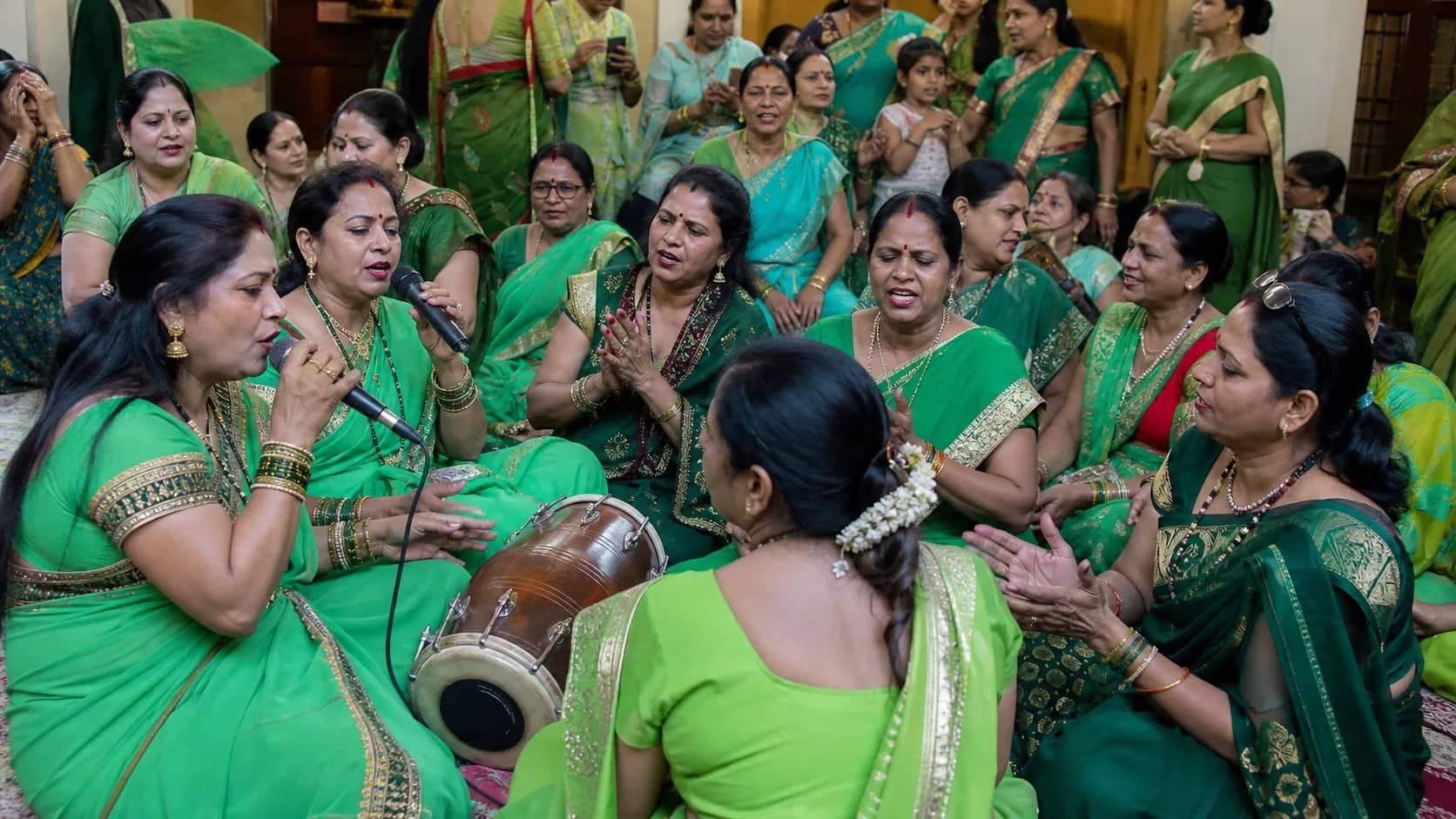
VARANASI: Kajri, group dance and traditional games took centre stage in Mahmoorganj on Thursday as women gathered to mark Hariyali Teej along with the foundation day of Sarva Kalyan Brahmin Mahila Sangathan Kashi.
The programme, held at a hotel in the neighbourhood, was designed around the festival’s older cultural vocabulary rather than a conventional stage show. Participants presented songs associated with the monsoon, performed dance pieces and joined games that organisers said were intended to revive the social atmosphere of Teej gatherings. Mandavi and Shambhavi opened the cultural segment with a Ganesh Vandana.
Dr Ruchi Mishra, an assistant professor at Dhirendra Mahila Mahavidyalaya, inaugurated the event. The organisation’s founder-president Sarita Tripathi presided, Professor Namrata Mishra conducted the programme and Rajni Sharma delivered the vote of thanks. A large group of members and guests participated, making the occasion as much a community meeting as a performance.
Hariyali Teej is closely associated with the rainy season, swings, green clothing and songs of separation and reunion. In eastern Uttar Pradesh, kajri gives the season its most recognisable sound. The form has travelled from courtyards and village gatherings to classical and semi-classical stages, but its intimacy comes from collective singing—one voice starting a line and others carrying it forward.
That community context is why small local programmes matter. A tradition survives differently when people perform it themselves instead of only watching a professional recording online. Younger participants learn the refrain, vocabulary and gestures almost by accident, while older women retain a social space where memory and humour can be shared without needing a formal lesson.
The revival language should still be used with care. Folk culture is not a fixed costume that can be reconstructed once a year. Kajri continues to change with performers, neighbourhoods and media. The goal is not to police a single “authentic” version, but to keep enough knowledge alive that new versions remain connected to the form’s roots.
Women-led cultural organisations also provide networks that extend beyond festivals. Regular meetings can support social work, health awareness and practical assistance among members. Public events make those networks visible, although inclusion and accessibility determine whether they reach beyond an established circle.
For Varanasi, the programme added another layer to a monsoon season often discussed only through rain alerts and river levels. Teej reads the same season through music, colour and relationships. That does not erase the hardships of the rains; it shows how communities have historically made emotional and artistic meaning from them.
Thursday’s gathering ended after the performances and games, but its more lasting result may be modest: a kajri remembered, a younger participant encouraged to sing, or a traditional celebration treated as something to practise rather than merely photograph. In a rapidly changing city, that kind of continuity is cultural work in its own right.