
GURUGRAM: A five day teacher development programme opened at DAV Public School in Sector 49 on Monday, November 16, 2026, bringing NCERT's reimagined NISHTHA training to Haryana. NISHTHA stands for the National Initiative for School Heads' and Teachers' Holistic Advancement. The programme covers the foundational, preparatory and middle stages of school education, with trained resource persons expected to carry the work onward to teachers across the state.
NCERT's announcement and photographs identify the Gurugram school as the venue. The event banner gives the programme dates as November 16 to 20, 2026. The council published its announcement at 8:33 pm IST on November 16. This is a local training event, separate from the ongoing online courses offered under the wider NISHTHA programme.
Resource persons will take training across Haryana
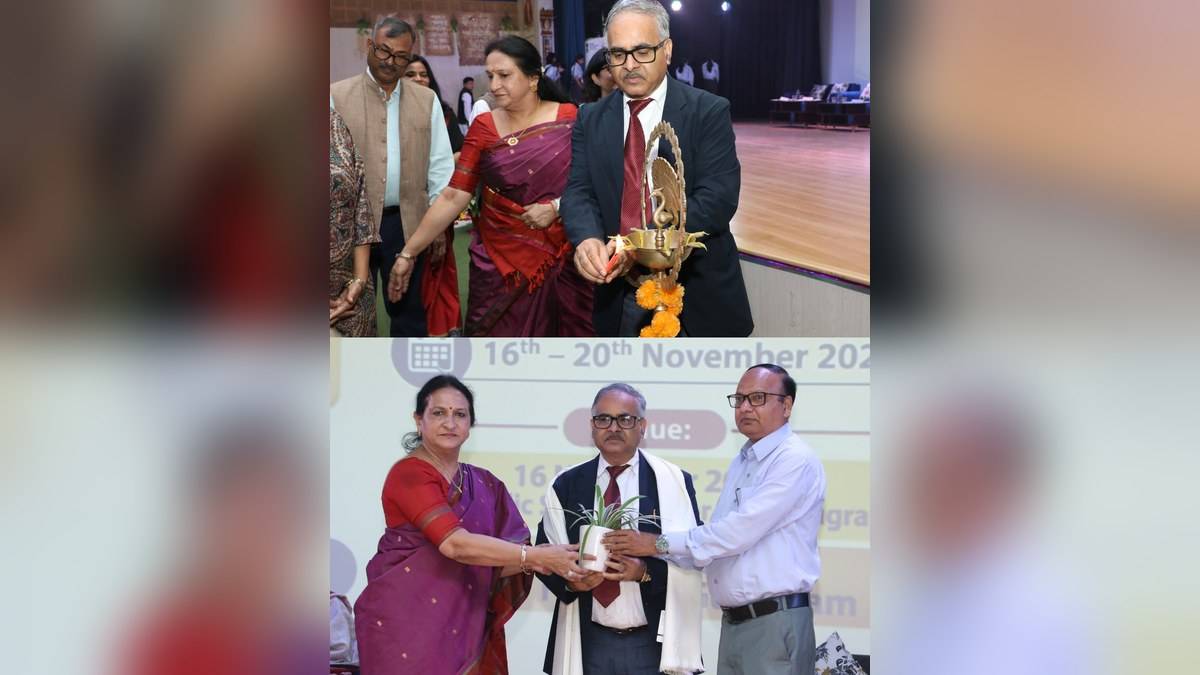
NCERT director Prof. Dinesh Prasad Saklani inaugurated the programme as chief guest. The opening included a ceremonial lamp lighting and performances by schoolchildren. The council's official photographs show the inauguration, an address to participants, the children's programme and a wider gathering in the school auditorium.
Around 25 members of NCERT's National Resource Group are to facilitate sessions during the training, according to the announcement. That figure describes the resource group involved in delivering sessions. It should not be treated as the total number of teachers attending, or as the number of schools covered across Haryana.
The next stage is a cascade: the Key Resource Persons trained through this programme will subsequently conduct training for teachers elsewhere in Haryana. The immediate Gurugram gathering therefore prepares a group that can support further professional development, rather than being described as a completed statewide training exercise.
Prof. Reetu Chandra and Dr. Sukhvinder from NCERT are coordinating the programme. CIET, an NCERT constituent unit, is supporting coordination, while Dr. Madhup Kumar, head of teacher education at SCERT Haryana, is facilitating state level coordination. These responsibilities connect the national resource group with the state institution responsible for teacher education.
- Venue: DAV Public School, Sector 49, Gurugram.
- Programme dates: November 16 to 20, 2026.
- Organisers: NCERT in collaboration with Haryana.
- Stages covered: foundational, preparatory and middle.
- Session facilitators: around 25 National Resource Group members.
- Next step: further teacher training by Key Resource Persons.
What the three school stages cover
The announced priorities are stronger professional competencies, a better understanding of the National Curriculum Frameworks and teaching that centres on learners, competencies and experience. The programme is aligned with the National Education Policy 2020. These are the stated training objectives, rather than measured results already achieved in classrooms.
For parents trying to place those terms, the government's official explanation of school stages describes the foundational stage as three years of preschool or Anganwadi education followed by Classes 1 and 2, covering ages 3 to 8. Play and activity form the central approach at this stage.
The preparatory stage covers Classes 3 to 5 and ages 8 to 11. It develops the earlier play and discovery approach while introducing textbooks and interactive classroom learning. The middle stage covers Classes 6 to 8 and ages 11 to 14, with subject teachers and more abstract concepts across sciences, mathematics, arts, social sciences and humanities.
Those existing stage descriptions explain why the Gurugram event is aimed at more than one level of teaching. They are not a new admission age order or a change to a particular school's class structure announced on November 16.
Curriculum frameworks and professional development
An August 10, 2026 Ministry of Education statement explains that the foundational framework of 2022 and school education framework of 2023 underpin curricular goals, competencies, learning outcomes, syllabi, textbooks, classroom approaches and assessment. That established policy background helps explain the November programme's emphasis on understanding frameworks, rather than treating them simply as textbook lists.
CIET's official NISHTHA programme page also describes the policy expectation that teachers and head teachers participate in at least 50 hours of continuous professional development each year. It identifies foundational literacy and numeracy, assessment of learning outcomes, competency based learning, experiential learning, arts, sports and storytelling among the relevant areas.
The 50 hour expectation is general policy context. The Gurugram announcement does not specify that attending this five day programme automatically completes it, nor does it give a certificate credit calculation. Further training dates for individual Haryana districts and schools are not set out in the announcement examined.
Other local education developments include the Vidyanjali meeting on school support, the school child safety sessions and the school heads' case study deadline. These are separate initiatives with their own participants and requirements.