Gurugram Missing 16 of 20 Planned C&D Waste Collection Centres
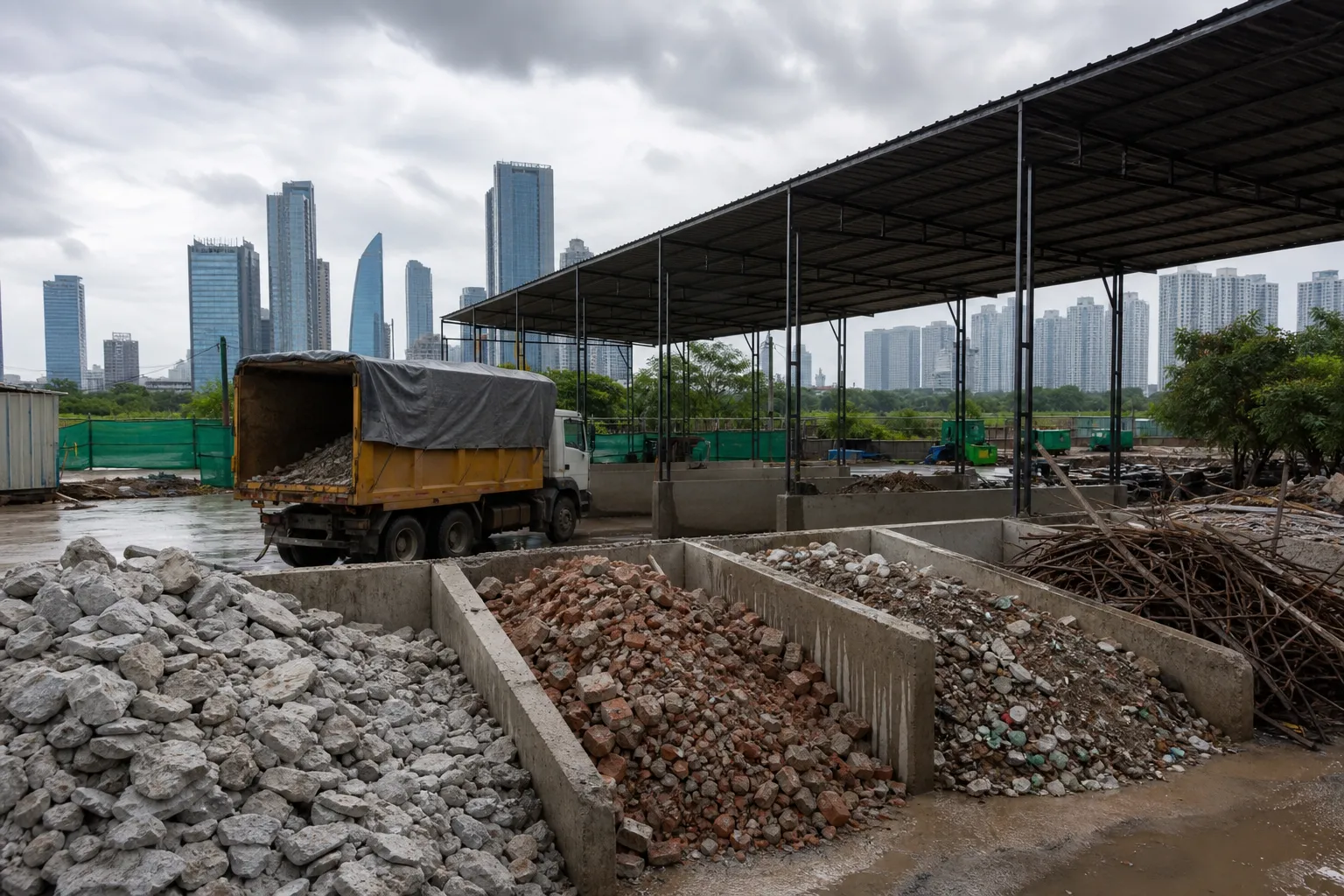
Gurugram's construction boom is producing debris much faster than the city is building the neighbourhood collection network meant to control it. Pollution-control data available up to June 30 shows that only four of 20 required secondary collection centres for construction and demolition waste have been established. Sixteen are still pending, the largest gap among the seven Haryana urban bodies covered in the review.
The shortfall is not a small administrative footnote. Gurugram generates an estimated 1,500 tonnes of C&D waste every day, nearly three-fourths of the combined volume reported by the seven cities. A secondary collection centre gives builders, contractors and residents a designated place to deposit debris before it is transferred to a processing plant. Without nearby legal drop-off points, broken concrete and soil often end up on roadsides, empty plots, drains and the edges of green areas.
The state plan requires Gurugram to complete the remaining centres by December 31. That is an ambitious five-month catch-up, and the public will need more than a final number. Each site has to be selected, notified, made accessible to authorised vehicles and operated without simply shifting dust and nuisance into a residential pocket. Hours, charges and accepted material should also be made clear to small renovators who do not generate a full truckload.
Officials maintain that the city's existing recycling facility is currently collecting and processing the daily quantity generated. A separate 400-tonne-per-day plant has also been proposed to increase capacity. Processing capacity, however, is only one end of the chain. If the collection points are too few or too distant, the material may never reach the plant in the first place.
The figures show how much larger Gurugram's challenge is than that of neighbouring bodies. Faridabad needs 12 centres and has five, while Manesar has three of the four required. Sonipat and Panipat have established their prescribed number. Volume also varies sharply: Faridabad reports 300 tonnes a day, Manesar 50 tonnes and Gurugram 1,500 tonnes.
A new state web portal launched on July 17 is intended to support monitoring, along with geo-tagging of storage and processing sites and GPS tracking of debris vehicles. Those tools can help, but only if trip records are checked against actual disposal. A truck visible on a dashboard is not proof that its load reached an authorised centre or that recycled material returned to public works.
For 2026, Gurugram is expected to process about 5.47 lakh tonnes of construction waste. Government agencies have also been assigned a target of using 36,500 tonnes of recycled material. Procurement departments can make that target meaningful by specifying recycled aggregates where technically suitable and publishing how much was actually consumed.
The immediate accountability point is the December deadline. MCG should identify all 16 pending locations, give a commissioning schedule and publish monthly tonnage received at each centre. Gurugram cannot treat illegal debris dumping as only an enforcement problem while the legal collection network remains mostly unfinished. The city's building economy needs a disposal system that is as easy to find as the next construction site.
Sources and reporting
Based on Haryana pollution-control data reviewed up to June 30, municipal targets and the notified role of secondary C&D waste collection centres.
Related Stories

Mayor Announces Stricter MCG Drive Against Stray Cattle

Court Stays Further Eviction at Baba Balak Nath Temple Complex
HRERA Orders Rs 19.28 Lakh for Delayed Sector 82 Flat Possession

STF Arrests Agra Man With Six Country-Made Pistols in Sohna

FDA and Police Seize Codeine Syrup, Alprazolam in Sohna Raid