
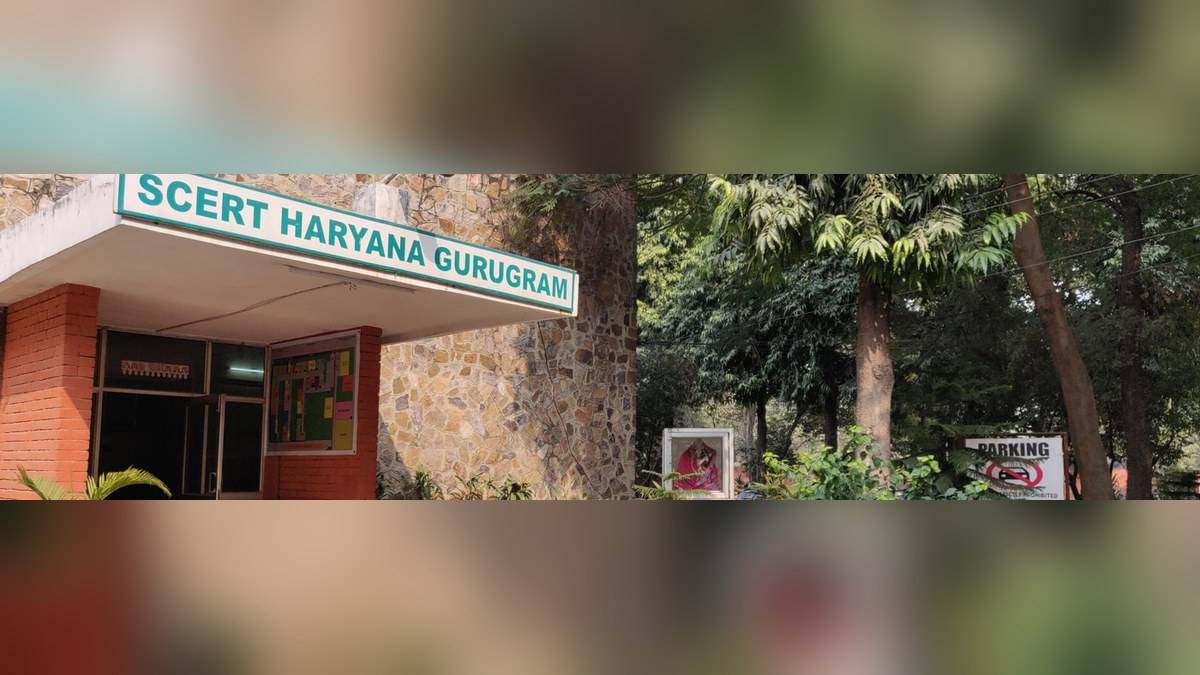
GURUGRAM: Students at Government Girls Senior Secondary School in Jacobpura debated air pollution, inflation and examination integrity during a divisional youth parliament on Friday, November 20, 2026. The classroom exercise, described in two local reports dated November 22 and 23, brought government and opposition roles into a school setting under the guidance of SCERT Haryana and DIET Gurugram.
The students discussed a simulated examination cheating prevention measure carrying the year 2026. Its passage belonged to the youth parliament exercise: it was a school learning activity, with no change to examination law announced through the programme. That distinction matters for parents and pupils reading references to an examination prevention Act in accounts of the event.
What the Jacobpura students discussed
Students playing the opposition raised rising prices, revision of electoral rolls, adulterated fuel and pollution affecting Delhi and the surrounding region. Those taking the government benches responded with arguments and figures. The two reports agree on these subjects and on the passage of the examination measure after discussion. Neither provides the text of that measure, so its proposed clauses cannot be independently described.
Dr Sanjay Kumar inspected the programme as the divisional observer. Amit Kajal and Vinod Napa served on the judging panel. Arun Kumar Raghav, Kanika Bhardwaj and Rashmi Pawar were also associated with the proceedings. The published accounts describe encouragement for the students' confidence, reasoning and understanding of parliamentary procedure, without supplying individual scores or a competition ranking.
Principal Seema Saini led the school preparations. Reena Yadav, Sharmila Yadav and Arvinder Kaur helped prepare the students. The reports identify school teachers and DIET personnel as contributors to the event, establishing a teaching and training role behind the performance. No student names are needed to explain the exercise or its educational purpose.
- Venue: Government Girls Senior Secondary School, Jacobpura, Gurugram.
- Event date: Friday, November 20, 2026.
- Level: Divisional youth parliament.
- Guidance: SCERT Haryana and DIET Gurugram.
- Subjects included: Pollution, inflation, electoral rolls and examination cheating.
Where youth parliament fits in school education
SCERT Haryana's published objectives explicitly include youth parliament among its creative programmes for students. The same list names science fairs, drama, student science seminars, essay writing and debates. It places these activities within the council's wider responsibility for improving school education and supporting teaching practice across Haryana.
The council also describes academic guidance for District Institutes of Education and Training among its functions. That provides institutional context for DIET Gurugram's involvement in the Jacobpura programme. It does not establish a new statewide competition result. SCERT's youth parliament section contains earlier competition schedules and results, which are historical records rather than the outcome of Friday's sitting.
For families, the practical educational point is that pupils were asked to examine public issues from different positions. The reported proceedings required students to frame questions, respond to criticism and discuss a proposed measure. The exercise joined environmental concerns familiar to Gurugram households with the separate issue of fair examinations.
Resources for schools planning a similar exercise
The Ministry of Parliamentary Affairs publishes institutional youth parliament guidelines with a stated focus on democratic values, discipline, tolerance and knowledge of parliamentary practice. These are national programme resources, offered here as background for interested schools. They do not prove that the Jacobpura sitting was registered on the national portal.
Under those guidelines, Kishore Sabha is intended for Classes VI to XII and Tarun Sabha for undergraduate and postgraduate students. A sitting should last no more than an hour. Institutions select participants with the approval of their head, and students may speak in any Scheduled language. The guidance suggests about 50 to 55 participants, but that figure is not an attendance count for Jacobpura.
Environment and education are among the discussion subjects expressly listed in the national guidelines, giving schools a published basis for selecting these themes.
The national portal supplies tutorials, model questions, a model list of business and sample proceedings. Schools can use those materials when preparing pupils to understand how a sitting works. The portal separately provides institutional, group and individual participation routes, rather than treating every school performance as an automatically registered national event.
The national portal was launched on November 26, 2019. Its current participation framework also lets citizens form formal or informal groups to conduct sittings, while individual participants can take a quiz on democracy. These give interested families additional ways to explore the subject beyond a school competition.
Other recent local education developments include teacher training in Sector 49, school teacher mentoring enrolment and child safety sessions in Gurugram schools. These are separate programmes, with their own participants and purposes.