Gurugram Plans AI Cameras for Lane and No-Entry Violations
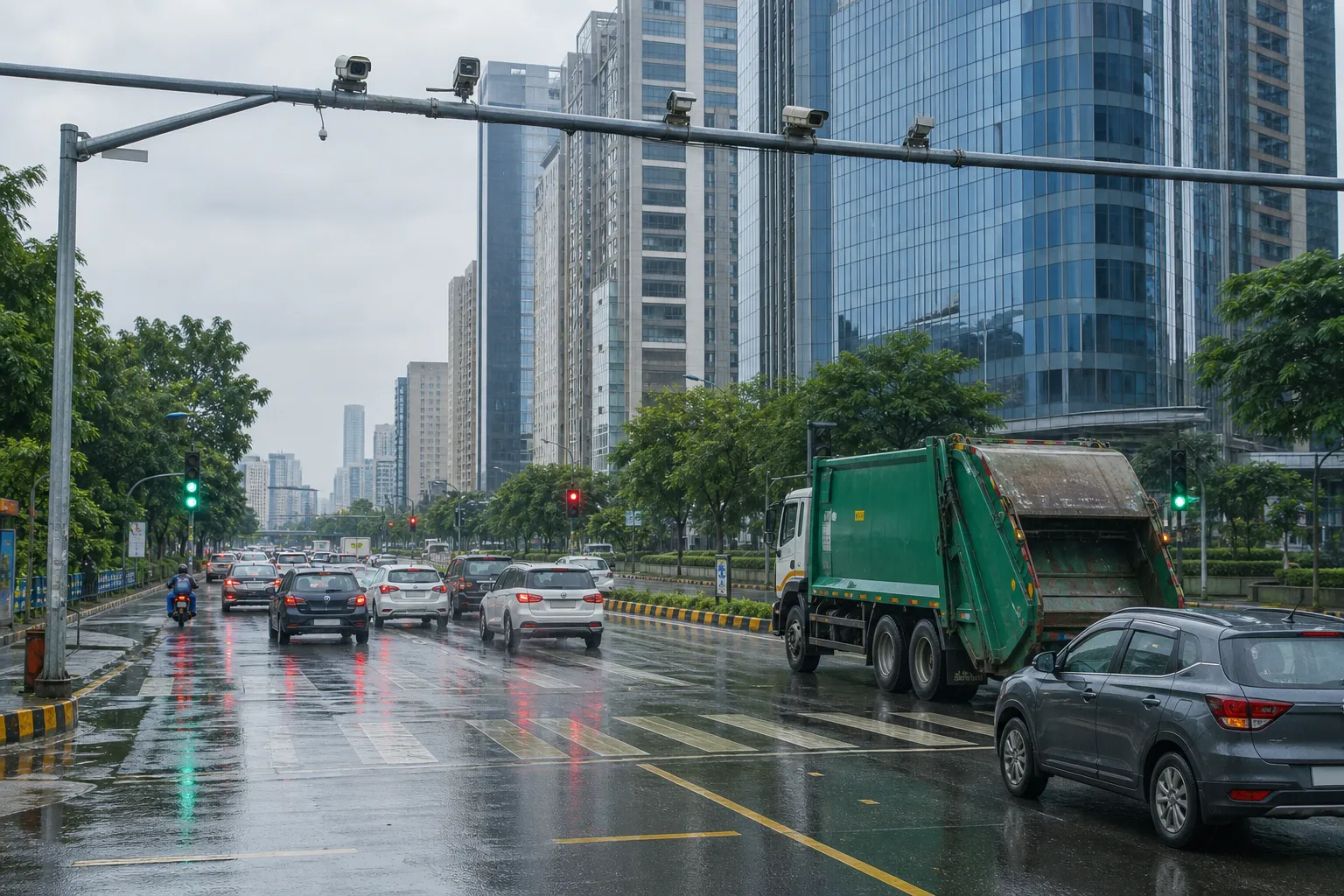
Lane cutting and heavy-vehicle entry during restricted hours may soon trigger automated challans across more of Gurugram. GMDA is working with traffic police to expand the role of its integrated command and control centre, using artificial intelligence and the existing CCTV network to detect violations that are still largely enforced by officers on the road.
The first proposal concerns lane discipline. Cameras would identify a vehicle crossing or changing lanes in violation of the applicable markings, create an evidence package and send an e-challan to the registered owner. At present, automatic detection is concentrated on Dwarka Expressway and NH-8, where an intelligent traffic management system is already operating.
Between January 1 and July 15, cameras generated 61,650 challans for lane-changing violations on those stretches. The penalty is Rs 500 for a first offence and Rs 1,500 for a subsequent violation, according to traffic police. Expanding the system to sector roads will require consistent lane markings; an algorithm cannot fairly enforce a line that has faded, disappeared under repairs or directs motorists into a blocked lane.
A second system is being planned for heavy vehicles entering the city during no-entry hours. Cameras would read number plates and compare them with traffic-police permissions. Vehicles with valid exemptions would pass, while an unauthorised entry could produce an online challan. The database must be updated quickly so emergency, essential-service or specifically permitted trips are not repeatedly flagged.
The command centre is also being used for sanitation oversight. Registration numbers of all 31 municipal solid-waste vehicles carrying garbage to the landfill have been mapped to the CCTV network. Officials say this will allow real-time movement checks, faster response to operational problems and investigation of littering or improper disposal during transit.
That is a useful accountability tool if the monitoring follows a defined route and trip schedule. A camera sighting can show where a truck travelled, but weighbridge records and disposal receipts are still needed to establish how much waste reached the authorised destination. Drivers should also know what data is collected and how it is used.
About 1,200 cameras are currently linked to the city command centre, with another 2,700 planned in the second phase. The network already supports monitoring for speeding, wrong-way driving, helmet and parking violations, crashes, abandoned objects and vehicles of interest. A larger system increases coverage, but it also increases the cost of false matches and weak data security.
Before citywide enforcement, GMDA and police should publish the locations covered, evidence standards, error-review process and basic accuracy figures. Technology can make rule-breaking harder to ignore, but it cannot repair a bad road design or replace a fair appeal. Gurugram's smart cameras will earn trust only when the markings are clear, exemptions are current and an incorrect challan is simple to correct.
Sources and reporting
Based on GMDA's proposed enforcement expansion, traffic-police penalty details and the integration of municipal waste vehicles with the city command centre.
Related Stories
Four Held for Stone Attack on Manesar Drive
GMDA Plans Rs 20 Cr Dwarka Sector Road Works
Metro Phase-2 Tender Delay Puts 2029 at Risk

SC Flags IAF Depot Buffer Encroachments

DTCP Seals 17 Sites in Sushant Lok Drive