Gurugram Issues 2,834 Illegal-Parking Challans in Three Weeks
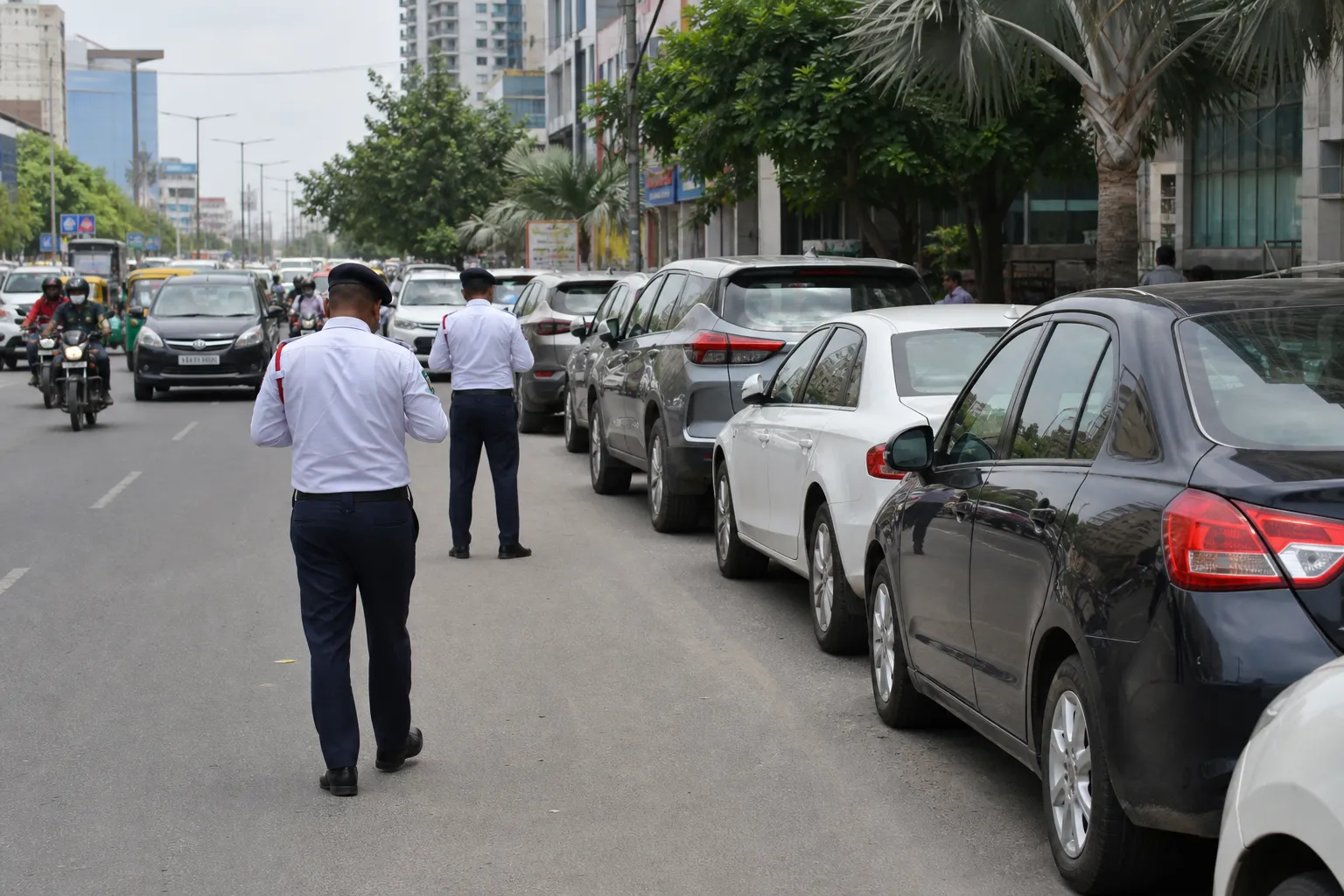
Gurugram Traffic Police issued 2,834 challans for illegal parking during a three-week enforcement drive, imposing fines worth Rs 24.52 lakh between July 1 and July 22. The numbers show how routinely parked vehicles consume road space in a city where a single blocked lane can turn a junction into a long queue.
The drive targeted vehicles left on main roads, intersections, no-parking stretches and other locations where they obstructed traffic. Under the stated penalty structure, a first violation attracts a Rs 500 fine, while repeat offenders can face Rs 1,500. Police may also impound vehicles in repeated or serious cases.
ASI Vikas Verma, a spokesperson for the traffic police, said teams were identifying places where illegal parking regularly disrupts movement and maintaining surveillance at those points. The department has indicated that special drives will continue rather than ending with the July tally.
The headline number works out to roughly 129 challans per day. That is substantial enforcement, but fines alone do not reveal whether a street stayed clear after a police team left. A useful assessment would compare repeat violations at the same locations, average traffic speeds and the number of vehicles towed, instead of treating every challan as a permanent solution.
Parking behaviour is partly an enforcement problem and partly a planning failure. Markets, hospitals, offices and high-density residential areas often generate more vehicles than their approved or functioning parking spaces can hold. Informal attendants then convert service lanes and road shoulders into fee-charging lots, while delivery vehicles stop wherever a customer pin appears.
That does not excuse blocking a carriageway. Wrongly parked vehicles narrow sight lines for pedestrians, force cyclists into moving traffic and obstruct emergency access. Near junctions, even a few cars can erase turning space and create conflict between vehicles trying to merge. At night, poorly lit stationary vehicles add another crash risk.
The city needs enforcement data that residents can use. Police could publish a monthly map of the top twenty violation hotspots, action taken and available legal parking nearby. MCG and GMDA could then address missing signs, broken footpaths, poorly designed lay-bys or unregulated commercial loading at the same locations. Market associations should be involved in setting practical loading hours instead of allowing delivery vehicles to improvise throughout the day.
For motorists, the message is simpler: a hazard-light switch does not create a parking bay, and a short stop can still block hundreds of people behind it. The July drive shows that police can issue challans at scale. The next test is whether repeated, location-specific action can keep those lanes open without requiring a traffic officer to stand there every day.
Sources and reporting
Based on Gurugram Traffic Police figures drawn from the NIC challan system for the July 1-22 special drive and the enforcement rules stated by police spokesperson ASI Vikas Verma.
Related Stories
Four Held for Stone Attack on Manesar Drive
GMDA Plans Rs 20 Cr Dwarka Sector Road Works
Metro Phase-2 Tender Delay Puts 2029 at Risk
SC Flags IAF Depot Buffer Encroachments

DTCP Seals 17 Sites in Sushant Lok Drive