
The goalkeeper eight-second rule means a corner kick is awarded to the opposition if a keeper controls the ball with their hands or arms inside their own penalty area for more than eight seconds. The referee decides when control begins and visibly counts down the final five seconds with a raised hand.
The rule appears in section 12.3 of the International Football Association Board's 2026/27 Law 12. It concerns possession during play. A keeper waiting to take a goal kick is dealing with a different restart procedure, even though excessive delay can also result in a corner.
| Question | Answer |
|---|---|
| What is the limit? | Eight seconds of hand or arm control |
| What does the referee show? | A visible countdown for the last five seconds |
| What is the sanction? | A corner to the opposing team |
| Does bouncing restart the clock? | No |
| Is a yellow card automatic? | No, but repeated offences can bring a caution |
When does the goalkeeper's eight-second count start?
Control is broader than standing upright with the ball clasped against the chest. The law includes holding the ball between the hands or arms, trapping it between a hand or arm and the ground or body, and holding it on an outstretched open hand. Bouncing the ball or tossing it into the air also counts as control.
That means a keeper cannot extend possession simply by bouncing the ball. The action remains part of the same period of control. Nor does the count necessarily wait until the goalkeeper stands up: the IFAB's official background and questions document explains that clear control can begin while the keeper is on the ground.
For example, a goalkeeper who easily catches a weak shot, lies down without being challenged, then gets up does not receive a fresh eight seconds on standing. The referee judges the entire period of control. Watching only the time spent upright would miss part of the possession that the rule measures.
Why does the referee count down only five seconds?
The visible signal covers the final five seconds of an eight-second allowance. It is not an additional allowance after eight seconds have passed. The IFAB explains that the raised hand and finger countdown help the goalkeeper release the ball in time and alert team-mates to offer a passing option.
For viewers, the signal is a better guide than starting a stopwatch at the first contact between the keeper and ball. The referee must decide when clear control exists. A touch during a scramble and secure possession are different situations, and the law places that judgement with the match official.
Which corner is awarded, and can the keeper be booked?
Under the corner-kick procedure in Law 17, the kick comes from the corner area nearest the goalkeeper's position when penalised. It is not automatically taken from whichever side an attacker prefers. The ball must be stationary and becomes live when it is kicked and clearly moves.
The defending players must stay at least 9.15 metres from the corner arc until the ball is in play. These are ordinary corner-kick conditions. The unusual reason for awarding the corner does not create a special type of delivery or allow the attacking team to take it from inside the penalty area.
The IFAB's plain-language goalkeeper guide says that exceeding eight seconds does not automatically produce a card. Repeating the offence can lead to a caution. Conceding the corner and receiving a disciplinary sanction are therefore separate consequences, rather than an automatic combination on the first offence.
Can an attacker force an eight-second offence?
An opponent cannot challenge a goalkeeper who has hand or arm control, or stop the keeper releasing the ball. The current Law 12 questions explain that, unless advantage can be played, interference produces a free kick for the goalkeeper's team: direct if the attacker makes contact, indirect if there is no contact.
Once the keeper releases the ball onto the ground within the limit, opponents may challenge for it. That is why dropping the ball changes the situation whereas bouncing it does not. If the goalkeeper handles it again before another player touches it, the referee awards an indirect free kick.
Why did football replace the six-second rule?
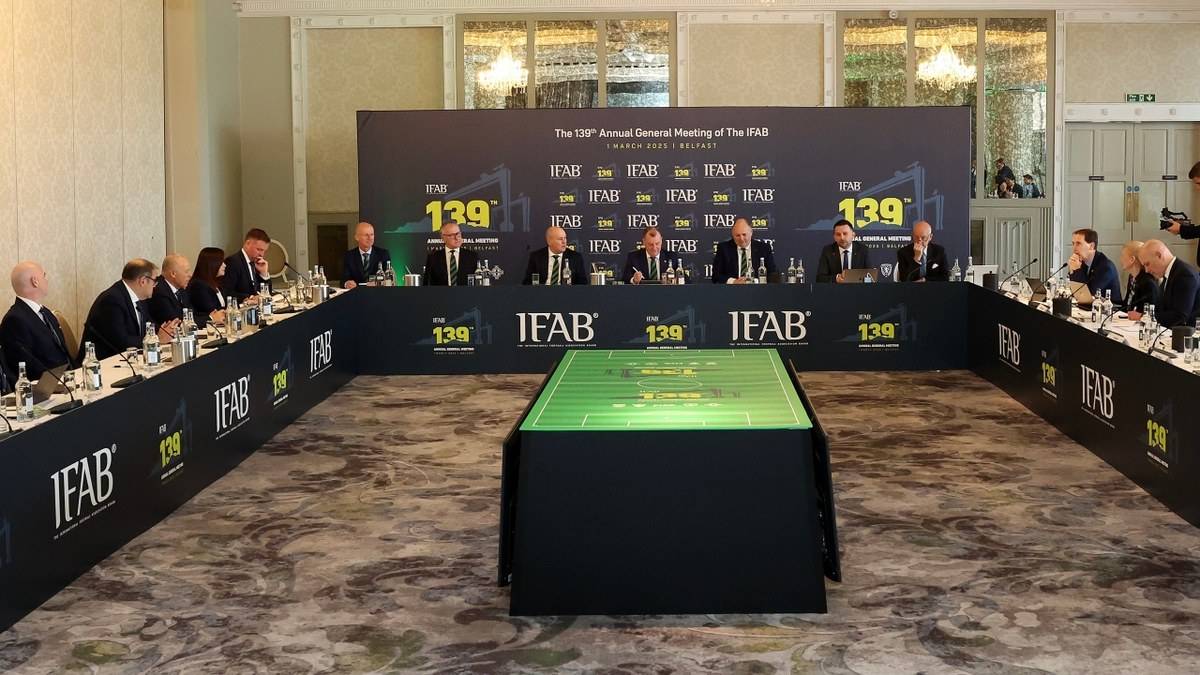
In its 1 March 2025 announcement, the IFAB replaced the earlier six-second limit and indirect-free-kick sanction with eight seconds and a corner. Its background document says the previous restart was difficult to manage inside a crowded penalty area and was rarely enforced.
Other timing questions have their own rules. Our guides explain how football added time works, offside decisions and delayed flags, and throw-in procedure and its five-second countdown. For the goalkeeper rule, the decisive questions remain when hand control began, whether it continued beyond eight seconds, and whether an opponent interfered.