GMDA Urges HSVP to Defend Rs 100 Crore Water Pipeline Arbitration
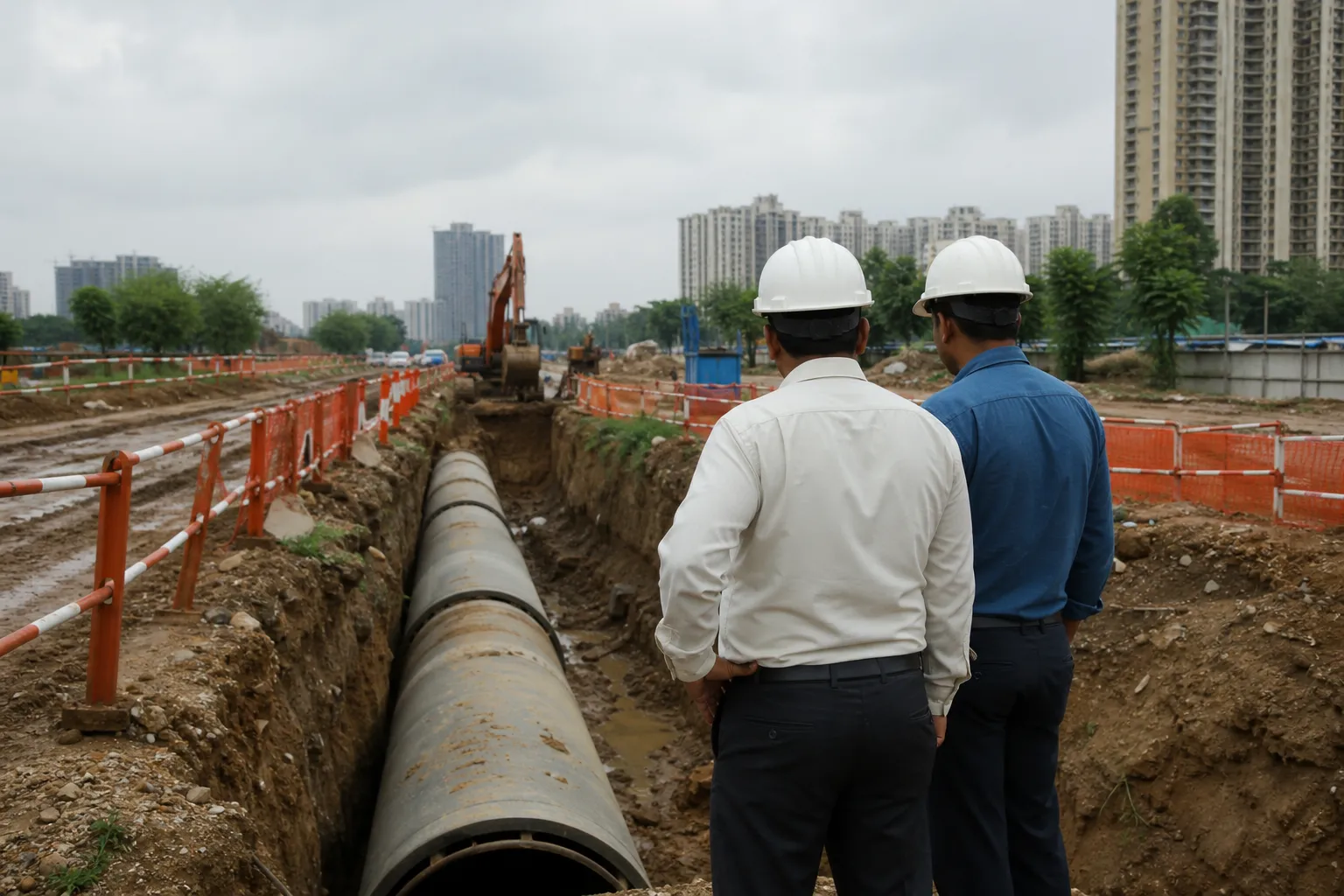
GURUGRAM: A long-running dispute over the city’s master water network has returned to the administrative foreground, with the Gurugram Metropolitan Development Authority asking the Haryana Shahari Vikas Pradhikaran to actively defend an arbitration claim of roughly Rs 100 crore. The claim has been raised by a contractor over alleged delays in an 18km pipeline project connecting the Chandu Budhera water treatment plant with Vatika Chowk.
The pipeline was awarded in December 2012 for about Rs 144 crore and was scheduled for completion within 21 months. Its execution stretched beyond that period amid land litigation and technical obstacles. The contractor has sought compensation for what it describes as delay-related losses. Those assertions are part of a pending legal process and have not been finally determined.
Institutional responsibility became more complicated after GMDA took over the master water-supply system in 2018. HSVP had awarded and supervised the original work, while GMDA later became responsible for the network as an operating asset. The contractor approached the Punjab and Haryana High Court in 2021, and arbitration proceedings began under a former Supreme Court judge in 2025.
In a communication dated July 10, GMDA expressed concern that HSVP had not adequately participated or filed its defence, warning that the absence of a full record could expose public agencies to an adverse outcome. GMDA has sought project documents and a more active response from the authority that handled the contract at the relevant time.
HSVP officials have maintained that available records were shared and that GMDA, as the agency now controlling the project, should manage the proceedings. They have nevertheless indicated that necessary action will be taken. The disagreement illustrates a recurring problem in transferred infrastructure: operational control may change, but contractual history and legal accountability do not move as neatly.
The case matters beyond the disputed amount. The pipeline is a critical part of the route intended to carry water from Chandu Budhera towards the Sector 72 boosting station and growing neighbourhoods along Southern Peripheral Road. Testing began in June, during which 32 leaks were reportedly repaired. Reliable commissioning is essential for reducing pressure on older supply routes and improving service at the network’s tail end.
A coordinated defence should place the full timeline before the arbitrator, including possession of land, design revisions, payment records, extensions and the responsibility for each delay. It should also protect the public interest without prejudging a contractor’s lawful claim. Arbitration is designed to settle precisely such contested facts.
For Gurugram residents, the immediate priority remains a leak-free pipeline delivering water as intended. For the two agencies, the priority is equally clear: stop arguing over who should appear and present a complete, evidence-based case. A Rs 100 crore exposure cannot be managed through fragmented files or institutional handoffs.
Related Stories

Wildlife Scientist Jamal A Khan Takes Charge as AMU Life Sciences Dean
AMU Schedules Campus March for Suicide Prevention on 10 September

Bhopal Teacher Aspirants Enter Day 20 of Protest Over Recruitment Vacancies

Telangana Puts Pending Student Fee Reimbursements at ₹8,591.62 Crore

Odisha Releases D.El.Ed Merit Lists for Urdu and Kandhamal Quotas