Ghata Road Closure Deepens Gurugram's Post-Rain Traffic Gridlock
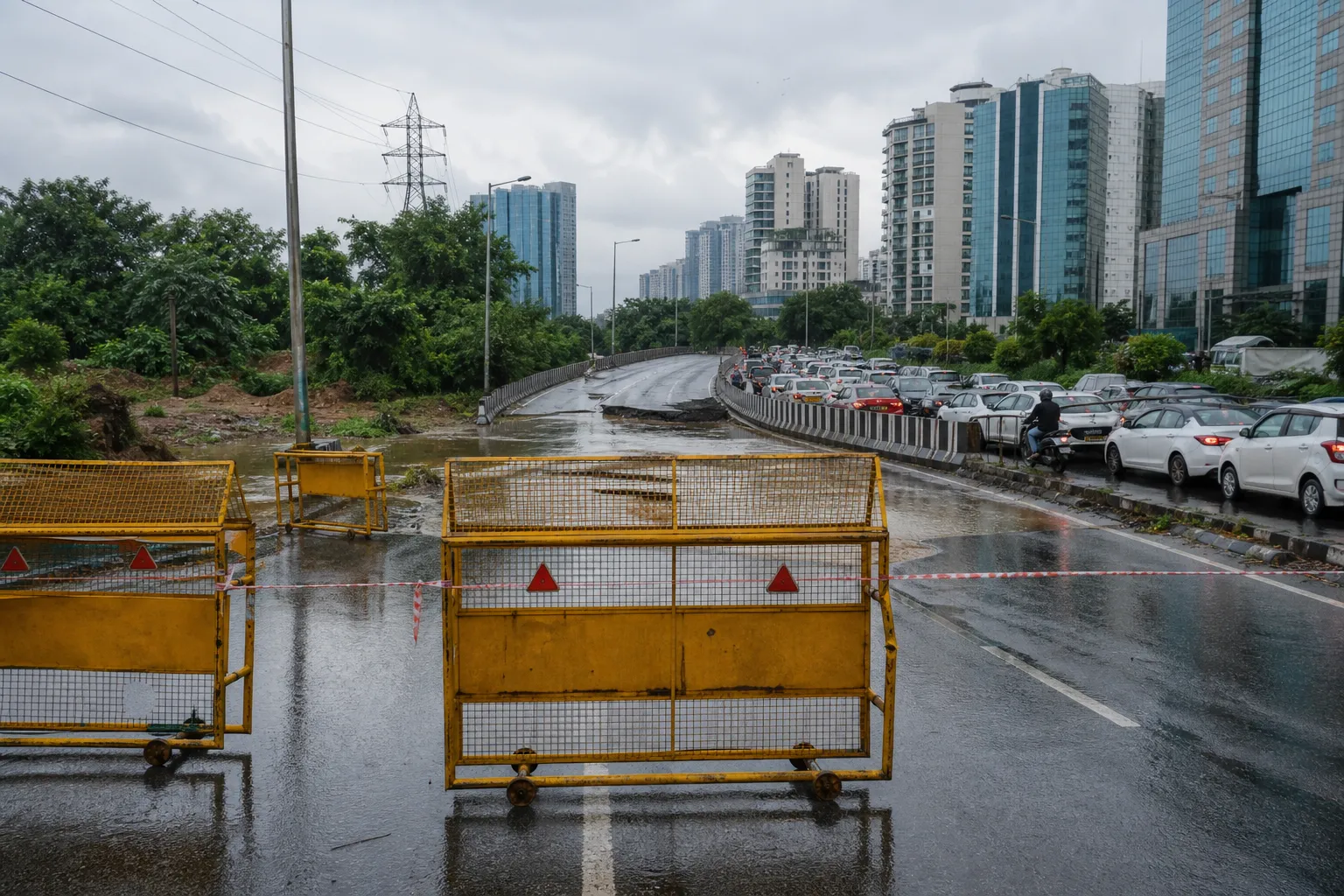
Gurugram's rain trouble did not end when Thursday's downpour eased. By Friday morning, commuters were still crawling through long queues after traffic police shut the Ghata Power House-Ghata T-point stretch, a key link for neighbourhoods around Golf Course Road and the eastern edge of the city.
The closure was announced on Thursday night after heavy waterlogging and road damage made the stretch unsafe. Potholes hidden under standing water left motorists with little room to judge the surface, and police chose to block the route rather than risk vehicles breaking down or losing control. More than 100 traffic personnel were deployed across affected corridors, according to the police.
The immediate knock-on effect was visible between Sector 54 Chowk and Ghata, where movement remained slow through the morning. Golf Course Extension Road also saw queues between Badshahpur and Vatika Chowk, with the pressure spreading towards sectors 66 and 69. Sohna Road was congested between Subhash Chowk and Rajiv Chowk, while traffic on Southern Peripheral Road slowed near Vatika Chowk and the Cloverleaf interchange.
That geography explains why closing one damaged link hurts far beyond Ghata. Drivers avoiding the barricade move onto corridors already carrying office traffic, school vehicles and cross-city trips. Navigation apps then push more cars through internal sector roads, where narrow turns and roadside parking quickly create fresh bottlenecks. A diversion may keep people away from danger, but it does not create extra road capacity.
The city received 117mm of rain on Thursday. The approach to Bajghera underpass remained among the difficult stretches after flooding, and stranded vehicles added to recovery time. Police were right to prioritise safety, but residents need more than a generic request to take an alternative route. Each closure advisory should name the barricaded points, recommended detours, vehicle restrictions and expected review time.
Civic agencies also need to inspect the road before reopening it. Once water recedes, the visible pothole may be smaller than the eroded cavity underneath. A quick layer of loose material can fail under the first line of heavy vehicles. The repair should include checking the sub-base, restoring drainage inlets and marking the damaged section clearly at night.
For commuters, Friday's gridlock was a reminder to check live traffic information before leaving and avoid driving through standing water even when another vehicle appears to cross safely. Two-wheelers face the highest risk because drain edges and potholes disappear beneath muddy water. Residents should also report missing barricades rather than moving them aside to create an unofficial shortcut.
The useful measure of recovery is not simply reopening Ghata T-point. Authorities must say what failed, what was repaired and whether the road can withstand the next heavy spell. Gurugram cannot treat every post-rain closure as an isolated inconvenience when the same detour network is asked to absorb disruption year after year.
Sources and reporting
Based on Gurugram Traffic Police's closure advisory for the Ghata Power House-Ghata T-point stretch, field traffic updates and the recorded 117mm rainfall that preceded the disruption.
Related Stories
CAG Flags Rs 949 Cr HSPCB Sewage Gap
HHRC Orders Citywide Drainage Audit
MCG Fines 32 Shopkeepers Rs 91,500
MCG Contractors Allege Bribes After Arrest
Garbage Piles Persist in Sectors 3, 5 and 6